Event
Nation-based statehood in the Balkans begins with…
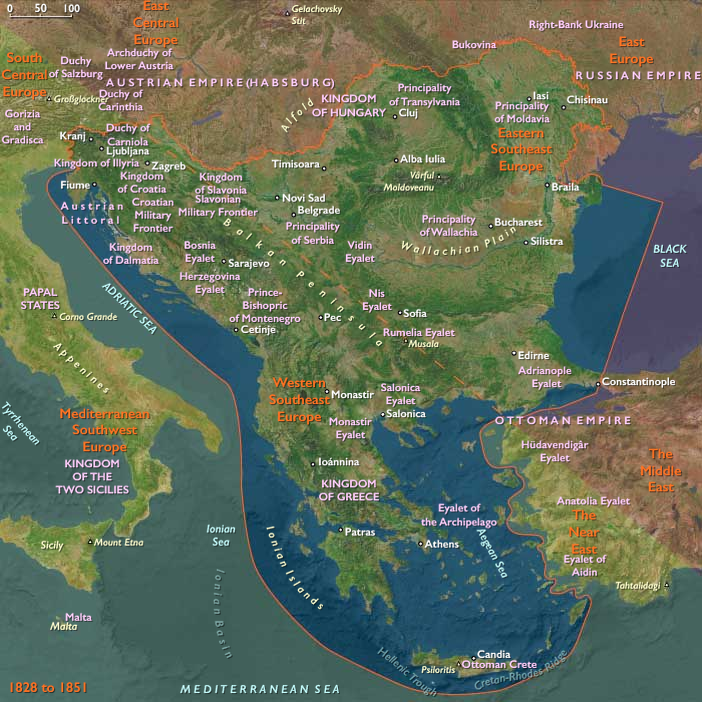
Nation-based statehood in the Balkans begins with the establishment of an independent Greek kingdom, the first of several score nations that will come into existence in this age.
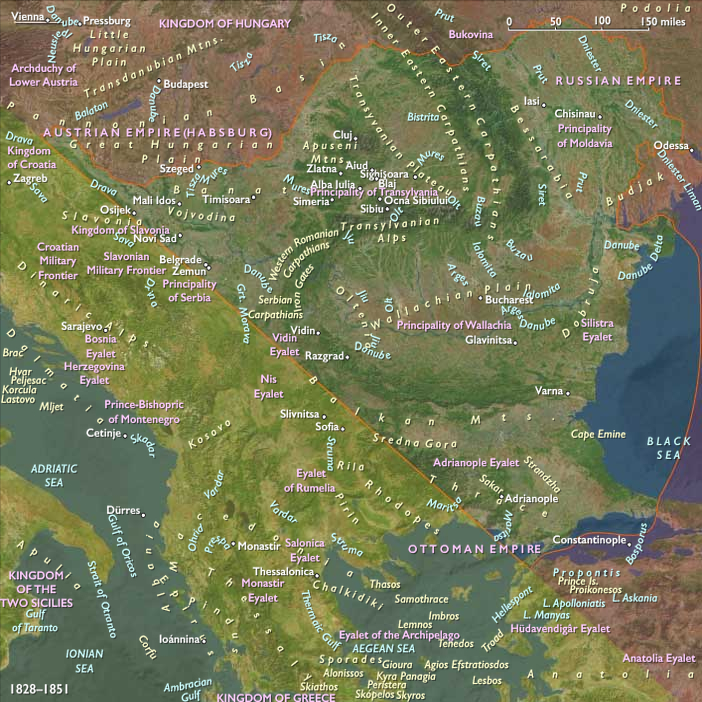
The treaty ending the Greek war also provides for an independent national administration in the Danubian principalities of Wallachia and Moldavia, confirms Orthodox rights in Ottoman territories and freedom of worship and commerce under Russian protection, and guarantees Russia control of the mouth of the Danube and all peaceful states access to the Turkish straits.
The principalities' economic condition is bleak during this period, in which a traveler to Wallachia in 1835 can report seeing no manor houses, bridges, windmills, or inns, and no furniture or utensils in peasant huts.
The Sublime Porte soon recognizes Serbia as a hereditary principality under Turkish control, granting the Serbian Church autonomy and reaffirming the Russian right to protect Serbia.
The Croatian-Hungarian language conflict reemerges in the 1830s, as Hungarian reformers grow more critical of Austrian domination.
French-educated Croatian leaders, fearing Hungarian linguistic and political domination, begin promoting the Croatian language and formation of a Slavic kingdom within the Austrian Empire.
The language issue reemerges also in Transylvania when the Diet finally reconvenes in 1834, as Hungarian deputies propose making Magyar the official language of Transylvania.
In the Ottoman realms, the Sublime Porte in 1839 introduces a series of reforms, known as the Tanzimat (Turkish: “Reorganization”), which are aimed at strengthening the empire by reining in fractious pashas.
The government organizes a recruitment program for the military and opens Turkish-language schools to propagate Islam and instill loyalty to the empire.
-
{# Image navigates to the detail page; the magnifying-glass chip is the only Fancybox lightbox trigger (kept a separate sibling — anchors can't nest). #}
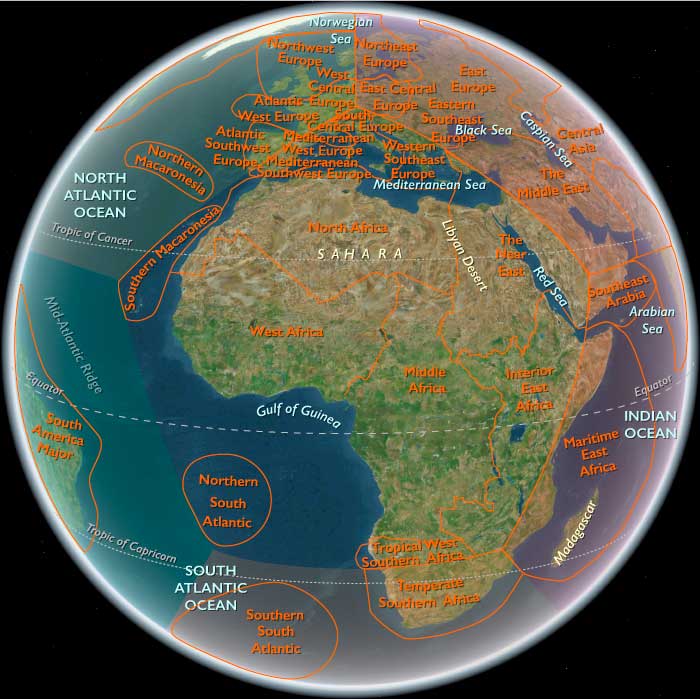
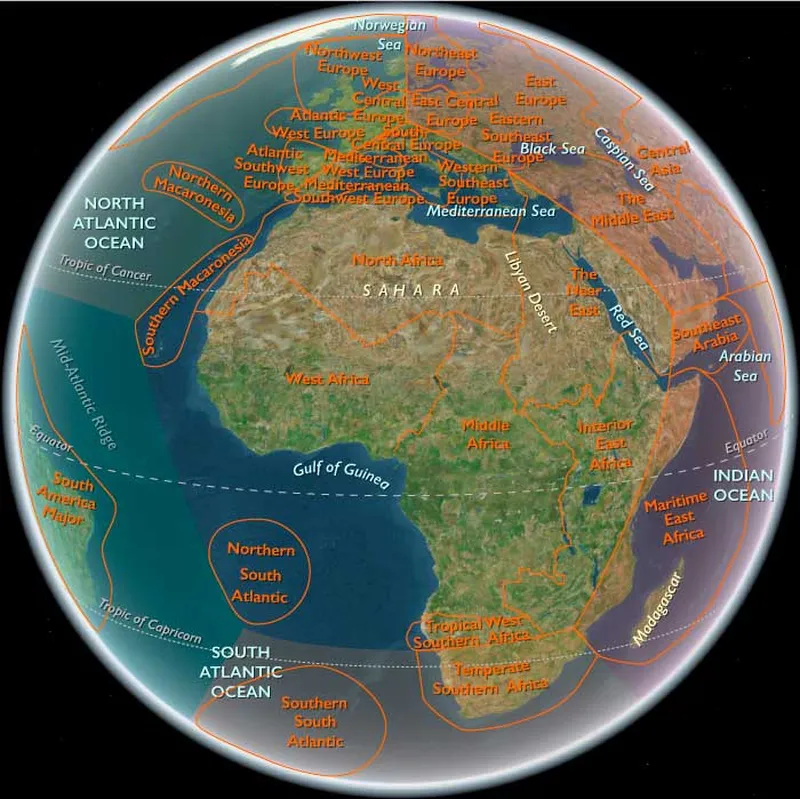 The Middle of The Earth
World
The Middle of The Earth
World
-
{# Image navigates to the detail page; the magnifying-glass chip is the only Fancybox lightbox trigger (kept a separate sibling — anchors can't nest). #}
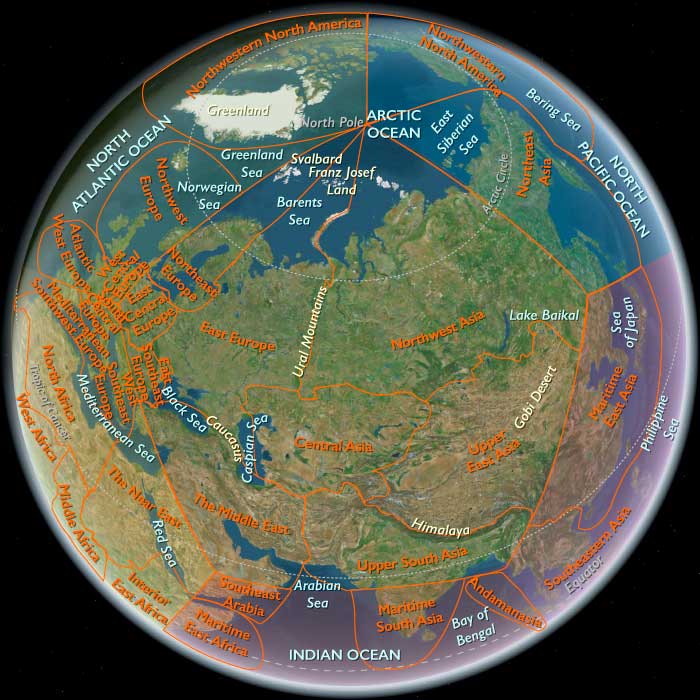
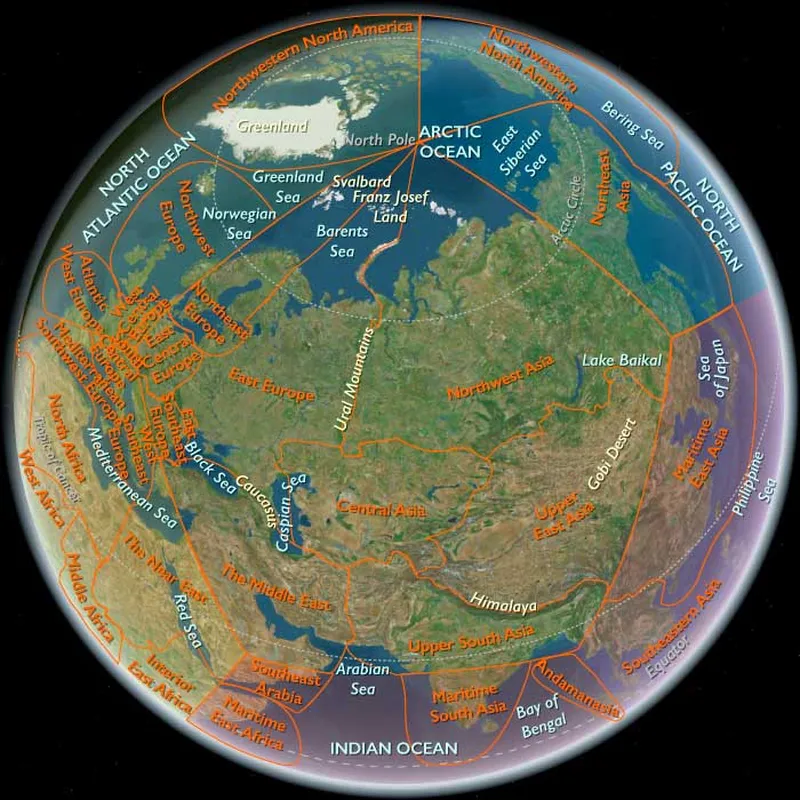 The Great Crossroads
World
The Great Crossroads
World
-
{# Image navigates to the detail page; the magnifying-glass chip is the only Fancybox lightbox trigger (kept a separate sibling — anchors can't nest). #}
 Southeast Europe
Region
Southeast Europe
Region
-
{# Image navigates to the detail page; the magnifying-glass chip is the only Fancybox lightbox trigger (kept a separate sibling — anchors can't nest). #}
 Eastern Southeast Europe
Subregion
Eastern Southeast Europe
Subregion
-
{# Image navigates to the detail page; the magnifying-glass chip is the only Fancybox lightbox trigger (kept a separate sibling — anchors can't nest). #}
 Western Southeast Europe
Subregion
Western Southeast Europe
Subregion