
Near East (249–238 BCE): Shifting Dynastic Fortunes…
249 BCE to 238 BCE
Near East (249–238 BCE): Shifting Dynastic Fortunes and Cultural Exchange
The Seleucid-Ptolemaic rivalry continues to dominate the Near East during this era. Ptolemy II Philadelphus, whose reign ends in 246 BCE, successfully consolidates Egyptian holdings and cultural influence, particularly through his extensive patronage of the Library and Museum of Alexandria. Under his son and successor, Ptolemy III Euergetes (246–222 BCE), Egypt briefly extends its dominion into Seleucid territories during the Third Syrian War (246–241 BCE), capturing important cities in Syria and Asia Minor.
This conflict, also known as the Laodicean War, results from internal Seleucid instability, notably involving the queen-mother Laodice and her sons, Seleucus II Callinicus and Antiochus Hierax. The Ptolemaic forces, capitalizing on this dynastic discord, advance as far east as Babylon, temporarily reinforcing Egypt’s hegemony in the Near East.
Cultural interactions intensify with Greek traditions becoming more deeply embedded within the local societies. The Jewish community in Palestine remains relatively autonomous under Ptolemaic oversight, preserving religious and cultural traditions while simultaneously engaging with Hellenistic influences. This dynamic balance contributes significantly to the distinctive cultural and religious identity developing during the Hellenistic period.
The flourishing Hellenistic culture also leads to increasing intellectual exchanges, exemplified by scholars and scientists in Alexandria who further develop knowledge in fields ranging from astronomy and mathematics to philosophy and literature. Thus, while political control fluctuates, cultural and intellectual integration across the Near East grows steadily more pronounced.
People
Groups
Regions
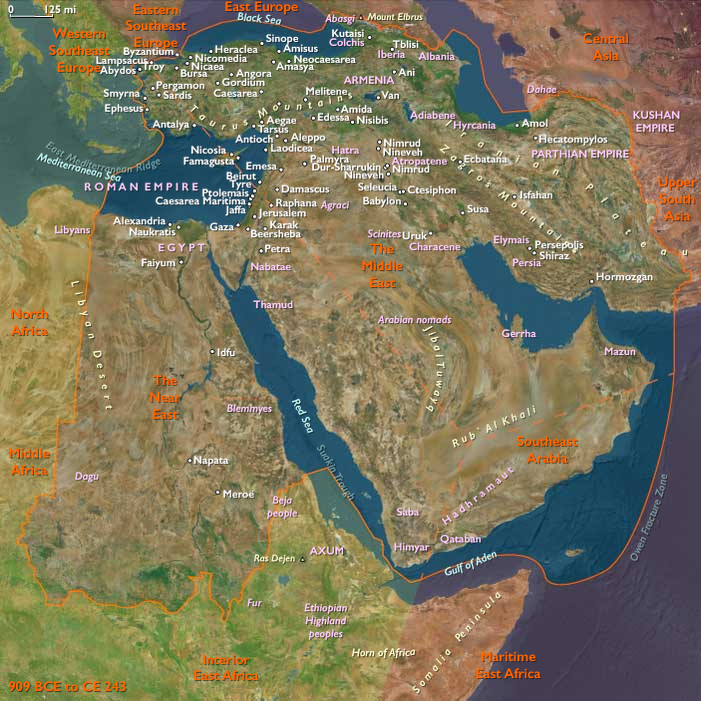
The Near and Middle East
View →Subregions
