
Near East (261–250 BCE): Canonical Consolidation and…
261 BCE to 250 BCE
Near East (261–250 BCE): Canonical Consolidation and Continuing Religious Developments
The cultural and religious landscape of the Near East continues evolving, particularly within the Jewish communities. The books of Ezra and Nehemiah, originally composed as a single historical and religious account in the Hebrew canon but later separated into two distinct works in the Old Testament, achieve their final form between 450 and 250 BCE. Named for the influential leaders Ezra and Nehemiah, these texts narrate significant aspects of Jewish history from approximately 538 BCE through 420 BCE, emphasizing the re-establishment and religious reform of the post-exilic community.
Concurrently, chapters 12 to 14 of the Book of Zechariah extend the apocalyptic themes of the previously composed "Second Zechariah." Scholars increasingly view these chapters—possibly finalized around 250 BCE—as a distinct literary and prophetic unit known as "Third Zechariah," further enriching the prophetic tradition of Judaism during the Hellenistic period.
These textual developments reflect broader patterns in which Jewish religious identity and scripture crystallize during the ongoing Seleucid-Ptolemaic rivalry. This rivalry intermittently affects local political stability in Palestine, providing a historical context for continued cultural and religious introspection and literary productivity among Jewish communities.
Groups
Topics
Regions
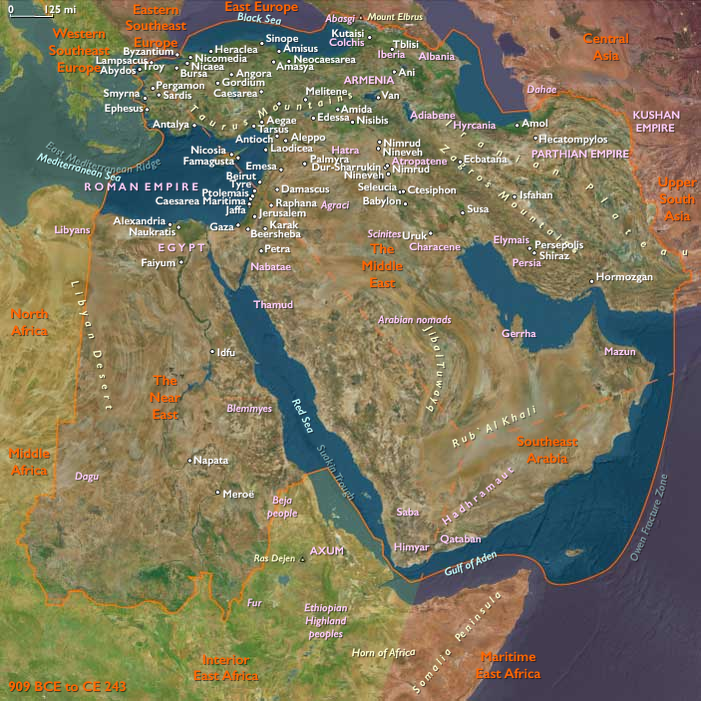
The Near and Middle East
View →Subregions
