
Near East (525–514 BCE): Reconstruction, Prophecy, and…
525 BCE to 514 BCE
Near East (525–514 BCE): Reconstruction, Prophecy, and Persian Consolidation
Persian Administration in Anatolia
The Aeolian city of Magnesia ad Maeandrum, which had been devastated by the Cimmerian invasions around 650 BCE, has gradually recovered its prominence. By the late sixth century, it serves as the residence of Oroetus, the influential Persian governor of Sardis, underscoring Persia’s increasingly stable administrative control over western Anatolia and the integration of previously Hellenic-dominated regions into its expanding imperial structure.
Judahite Disillusionment and Zechariah’s Prophecies
In Judah, initial optimism following the return from Babylonian captivity quickly gives way to disillusionment, as hopes of fully restoring the glory of the House of David fail to materialize. Frustration grows as efforts to reconstruct the Temple in Jerusalem falter, exacerbated by disputes with local populations—particularly groups later identified as the Samaritans. These tensions contribute to a hiatus in construction and spiritual stagnation among the returnees.
In response to this troubled atmosphere, the prophet Zechariah emerges prominently between 520 and 518 BCE, authoring the visionary, apocalyptic first eight chapters of the Biblical Book of Zechariah. Zechariah, himself among the exiles who returned from Babylon, records eight vivid visions steeped in eschatological themes. His prophecies reaffirm divine favor for the Temple project and herald a hopeful but challenging future for the Judahite community.
Zerubbabel and the Completion of the Temple
Central to this period is Zerubbabel, a descendant of the Davidic dynasty, who becomes governor of Judaea under Persian authority. Amid the imperial turmoil following the accession of Darius I to the Persian throne in 522 BCE, and inspired by prophetic exhortations from Zechariah and Haggai, Zerubbabel takes decisive action. Despite continued opposition from the Samaritans, he leads a renewed effort culminating in the successful reconstruction and dedication of the Temple in 515 BCE, significantly re-establishing Jerusalem as the spiritual heart of Judah.
This event is reinforced by a communal commitment to the Torah, symbolically renewing the people's covenantal identity. Zerubbabel’s reforms also introduce stringent prohibitions against mixed marriages, reflecting a deeper religious and ethnic consolidation aimed at preserving Judahite distinctiveness.
Cyprus under Persian Rule
In Cyprus, political realignments also reflect Persian expansion. Following Persia’s conquest of Egypt in 525 BCE, Cypriot kings shift their allegiance from Egyptian to Persian rule, initially retaining a measure of autonomy. However, this independence is short-lived; by the time Darius I ascends the Persian throne in 522 BCE, the island kingdoms are formally incorporated into the fifth satrapy of the Persian Empire, solidifying Persian dominance over the strategically critical eastern Mediterranean.
Legacy of the Era
This era is marked by intense spiritual and political consolidation in Judah and the deepening administrative integration of Anatolian and Cypriot territories into the Persian Empire. The rebuilding of Jerusalem’s Temple under Zerubbabel significantly reshapes Judahite religious identity, while Persian administrative reforms lay the groundwork for greater imperial stability throughout the Near East.
People
Groups
Regions
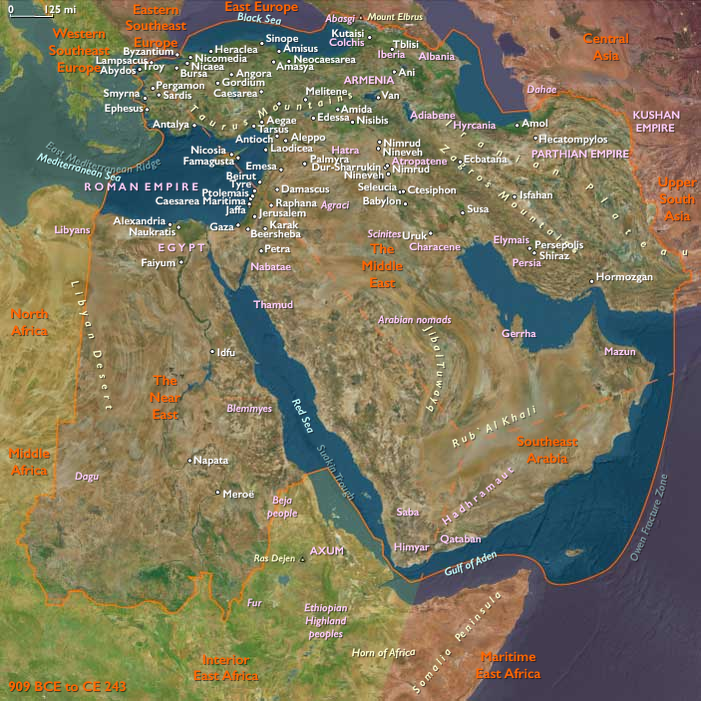
The Near and Middle East
View →Subregions
