Near East (604–615 CE): Revolt and Realignment…
604 CE to 615 CE
Near East (604–615 CE): Revolt and Realignment
The period from 604 to 615 CE is defined by dramatic upheaval and shifting power balances across the Near East, notably marked by intense military conflict, religious tension, and geopolitical realignments.
Jewish Insurrection and Persian Alliance
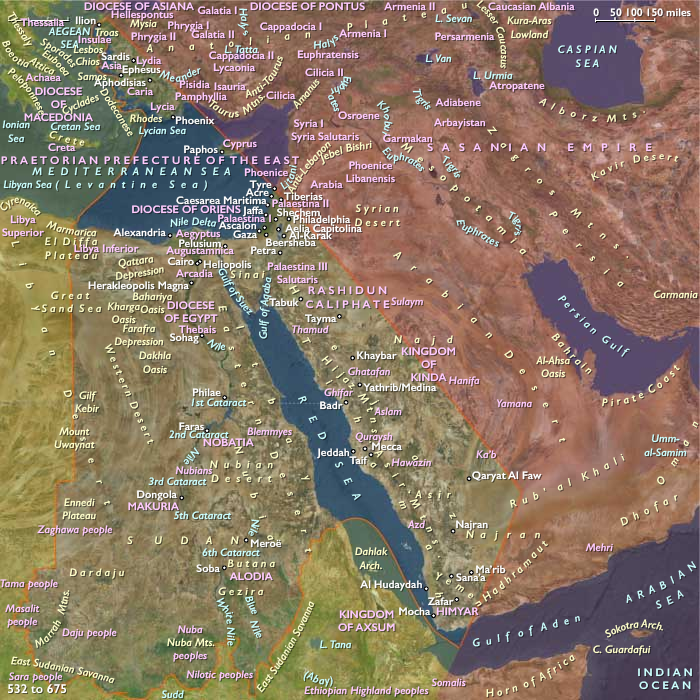
A major Jewish insurrection against the Eastern Roman (Byzantine) Empire erupts across the Levant, significantly altering regional dynamics. Initially supporting Sassanid Persia in the ongoing Byzantine–Sassanid War (602–628), this revolt culminates in the pivotal Battle of Antioch in 613. Persian and Jewish forces jointly capture Jerusalem in 614, briefly establishing Jewish autonomy in the city. This event marks a significant turning point, as longstanding tensions between local Jewish populations and Byzantine rule come to a head.
Persian Military Expansion
Under the leadership of King Khosrow II, the Persian Empire extends its military campaigns deep into Byzantine territories, taking advantage of internal Byzantine discord and the Jewish uprising. By capturing Jerusalem, Persia solidifies its presence and secures critical leverage over strategic trade and pilgrimage routes. The resulting Persian dominance significantly disrupts Byzantine authority and stability throughout the region.
Religious and Cultural Turmoil
The conquest of Jerusalem and the establishment of temporary Jewish autonomy exacerbate existing religious tensions. Christian communities throughout the Near East experience uncertainty and persecution, intensifying cultural and religious divides. This era becomes a critical moment for interreligious relations, deeply influencing subsequent religious dynamics.
Economic and Social Strains
Ongoing military conflict severely impacts regional economies, further weakening already struggling communities due to earlier infrastructure failures, such as the collapse of the Ma'rib Dam. Economic hardship deepens, compounding social unrest and prompting widespread migrations and demographic shifts, significantly altering local community structures.
Legacy of the Era
The years from 604 to 615 CE witness significant upheaval, characterized by religious conflicts, strategic Persian expansion, and economic distress. The brief establishment of Jewish rule in Jerusalem symbolizes the volatility of this period, foreshadowing the profound and lasting changes to come in the Near East, notably the rise of Islam and the subsequent transformation of the region's geopolitical and religious landscape.
People
Groups
Topics
Regions
The Near and Middle East
View →Subregions