Near East (628–639 CE): Plague and Aftermath…
628 CE to 639 CE
Near East (628–639 CE): Plague and Aftermath of Conflict
The era from 628 to 639 CE witnesses significant developments shaped by lingering warfare, epidemic disease, and changing political tides in the Near East, as Byzantine and Persian conflicts give way to new emergent forces.
Plague of Emmaus
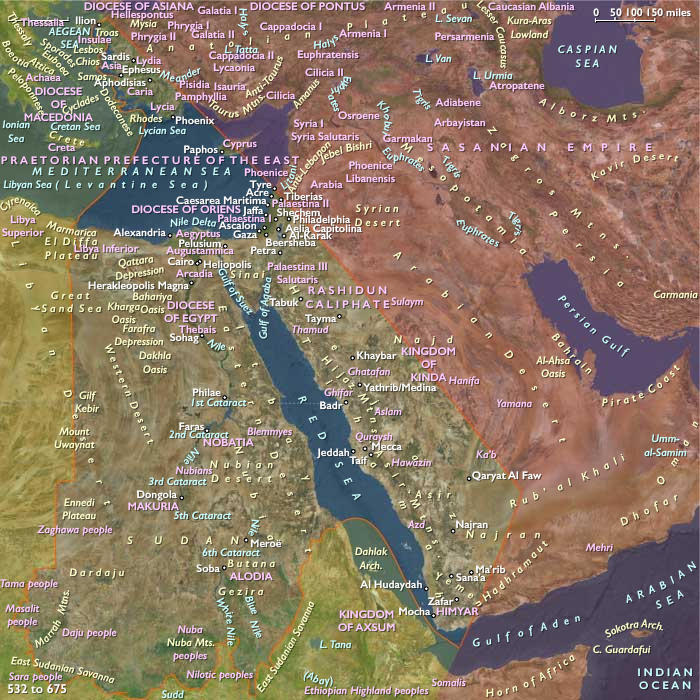
A devastating outbreak of plague, possibly bubonic in nature, severely impacts the Near East in 639 CE, striking the forces of the Rashidun Caliphate, who have set up a military camp at Emmaus during their ongoing conquest of Palestine. Known historically as the Plague of Emmaus, this epidemic results in approximately twenty-five thousand deaths, including several prominent companions of the Prophet Muhammad. It represents a continuation of the successive waves of epidemic disease that had followed the sixth-century Plague of Justinian, exacerbating regional instability.
Jewish Revolt and Byzantine Restoration
Following the capture of Jerusalem in 614 by Persian and Jewish forces, the Jewish revolt against Byzantine Emperor Heraclius persists until around 625 or 628. The withdrawal of Persian troops from the region weakens Jewish resistance, leading ultimately to their surrender to Byzantine authority. Heraclius, reestablishing control over the region, enforces punitive measures against the rebels, significantly impacting Jewish communities and altering demographic and religious dynamics.
Shifts in Regional Dominance
The conclusion of prolonged Byzantine-Sassanid hostilities results in significant realignment in the Near East. Emperor Heraclius successfully reverses previous Persian gains and restores Byzantine authority throughout Palestine and adjacent territories. Nonetheless, Byzantine control remains tenuous due to weakened administrative structures, ongoing economic hardships, and heightened religious tensions exacerbated by the recent conflicts.
Economic and Social Consequences
Years of warfare and disease substantially disrupt the Near Eastern economy, causing severe distress in trade, agriculture, and population stability. The demographic losses from plague and conflict, coupled with infrastructural damage, severely compromise the region's capacity for rapid recovery, thereby creating conditions of prolonged social and economic hardship.
Legacy of the Era
The period 628–639 CE marks a critical transitional phase in the Near East. Byzantine authority, although momentarily restored, is fundamentally compromised by internal instability and external threats. The devastating Plague of Emmaus further underscores regional vulnerabilities, paving the way for the swift expansion of Islamic forces, which in subsequent decades dramatically alter the religious, political, and cultural fabric of the Near East.
People
Groups
Topics
Subjects
Regions
The Near and Middle East
View →Subregions