
Filters:
The effects of the Greek occupation are …
Years: 333BCE - 190BCE
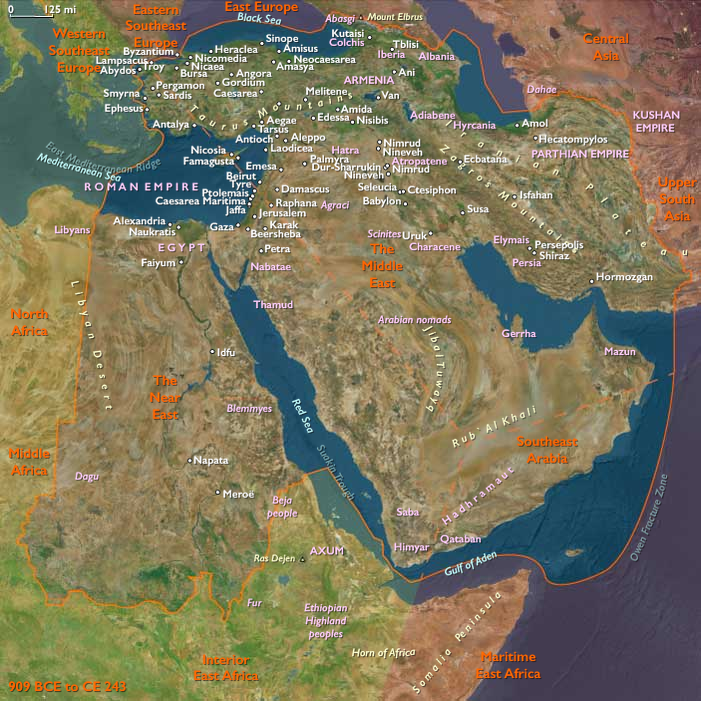
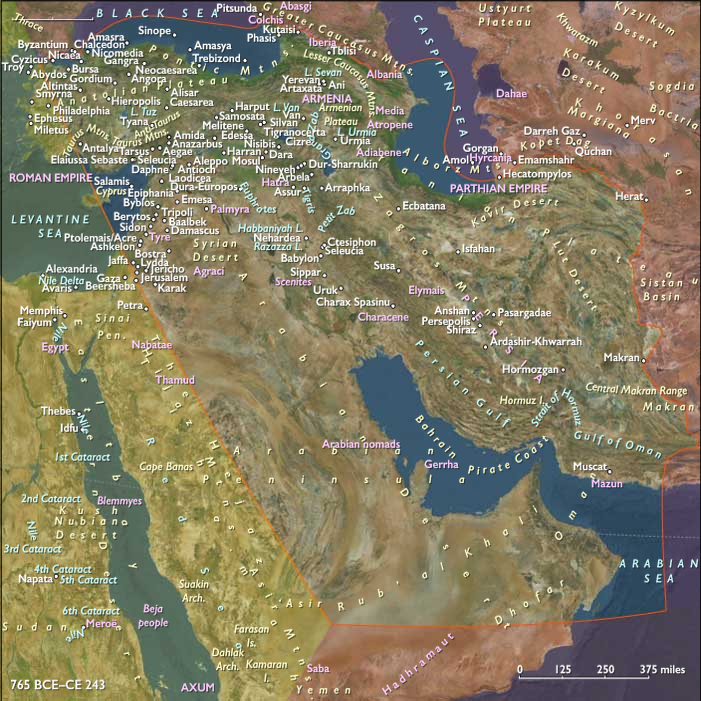
The effects of the Greek occupation are noteworthy, even though Alexander's major plans for Mesopotamia go unfulfilled, and his generals do little that is positive for Mesopotamia.
Alexander and his successors build scores of cities in the Middle East that are modeled on the Greek city-states.
One of the most important is Seleucia on the Tigris.
The Hellenization of the area includes the introduction of Western deities, Western art forms, and Western thought.
Business revives in Mesopotamia because one of the Greek trade routes runs through the new cities.
Mesopotamia exports barley, wheat, dates, wool, and bitumen; the city of Seleucia exports spices, gold, precious stones, and ivory.
Cultural interchange between Greek and Mesopotamian scholars is responsible for the saving of many Mesopotamian scientific, especially astronomical, texts.
Alexander and his successors build scores of cities in the Middle East that are modeled on the Greek city-states.
One of the most important is Seleucia on the Tigris.
The Hellenization of the area includes the introduction of Western deities, Western art forms, and Western thought.
Business revives in Mesopotamia because one of the Greek trade routes runs through the new cities.
Mesopotamia exports barley, wheat, dates, wool, and bitumen; the city of Seleucia exports spices, gold, precious stones, and ivory.
Cultural interchange between Greek and Mesopotamian scholars is responsible for the saving of many Mesopotamian scientific, especially astronomical, texts.
Locations
People
Groups
- Mesopotamia
- Iranian peoples
- Persian people
- Babylonia, Classical
- Achaemenid, or First Persian, Empire
- Greece, Hellenistic
Topics
Commodoties
- Gem materials
- Domestic animals
- Grains and produce
- Fibers
- Strategic metals
- Beer, wine, and spirits
- Spices
Subjects
- Commerce
- Language
- Engineering
- Sculpture
- Labor and Service
- Conflict
- Government
- Custom and Law
- Technology
- Finance
- Movements
Regions
Subregions
Years: 333BCE - 190BCE
Locations
People
Groups
- Mesopotamia
- Iranian peoples
- Persian people
- Babylonia, Classical
- Achaemenid, or First Persian, Empire
- Greece, Hellenistic
Topics
Commodoties
- Gem materials
- Domestic animals
- Grains and produce
- Fibers
- Strategic metals
- Beer, wine, and spirits
- Spices
Subjects
- Commerce
- Language
- Engineering
- Sculpture
- Labor and Service
- Conflict
- Government
- Custom and Law
- Technology
- Finance
- Movements
Regions
Subregions