The outbreak of disorder to the south…
1852 CE to 1863 CE
The outbreak of disorder to the south also allows the Nepalese army to take a more active role in international affairs.
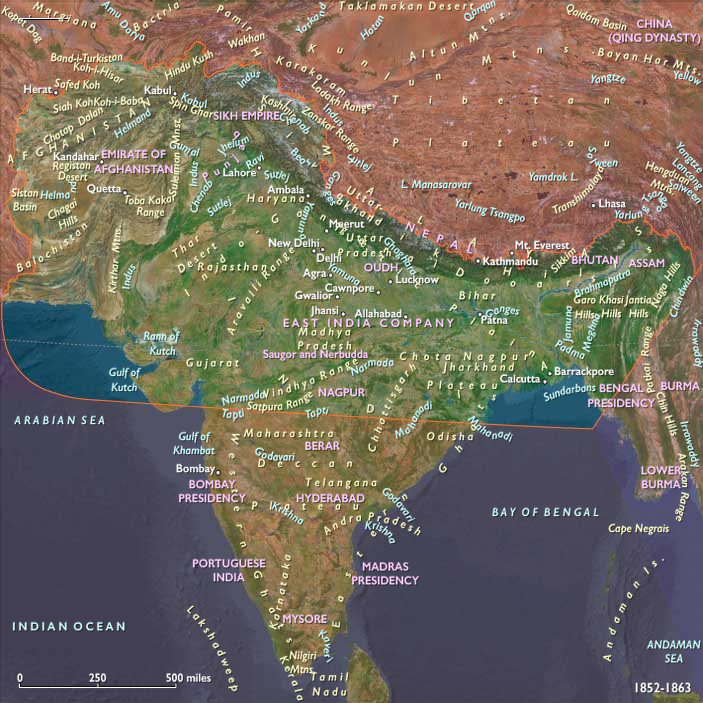
Beginning in May 1857, a series of related uprisings throughout north India—known as the Sepoy Rebellion—threatens to topple the power of the British East India Company.
The uprisings begin with widespread mutinies in the company's army and spread to include peasant revolts and alliances of the old Mughal aristocracy against the foreigners.
Most of the major cities west of Bengal fall into rebel hands, and the aged Mughal emperor is proclaimed the leader of a national revolution.
Initially there is some fear in British circles that Nepal will side with the rebels and turn the tide irrevocably against the British East India Company, but Jung Bahadur proves to be a loyal and reliable ally.
At this point, immediately following hostilities in Tibet, the army of Nepal has grown to around 2twentyt-five thousand troops.
Jang Bahadur sends several columns ahead, then marches with none thousand troops into northern India in December 1857.
Heading an army of fifteen thousand troops, he fights several hard battles and aids the British in their campaigns around Gorakhpur and Lucknow.
The prime minister returns to Nepal triumphantly in March 1858 and continues to aid the British in rooting out "rebels" who have been dislocated during the chaos and seek refuge in the Tarai.
Locations
Groups
Topics
Regions
South Asia
View →Subregions