
Filters:
Denmark becomes the model of enlightened despotism, …
Years: 1684 - 1827
Denmark becomes the model of enlightened despotism, partially influenced by the ideas of the French Revolution.
Denmark thus adopts liberalizing reforms in line with those of the French Revolution, with no direct contact.
Danes are aware of French ideas and agree with them, as it moves from Danish absolutism to a liberal constitutional system between 1750 and 1850.
The change of government in 1784 is caused by a power vacuum created when King Christian VII takes ill, and influence shifts to the crown prince (who later becomes King Frederick VI) and reform-oriented landowners.
Between 1784 and 1815, the abolition of serfdom makes the majority of the peasants into landowners.
The government also introduced free trade and universal education.
In contrast to France under the ancien regime, agricultural reform is intensified in Denmark, civil rights are extended to the peasants, the finances of the Danish state are healthy, and there are no external or internal crises.
That is, reform is gradual and the regime itself carries out agrarian reforms that have the effect of weakening absolutism by creating a class of independent peasant freeholders.
Much of the initiative comes from well-organized liberals who direct political change in the first half of the nineteenth century.
Denmark thus adopts liberalizing reforms in line with those of the French Revolution, with no direct contact.
Danes are aware of French ideas and agree with them, as it moves from Danish absolutism to a liberal constitutional system between 1750 and 1850.
The change of government in 1784 is caused by a power vacuum created when King Christian VII takes ill, and influence shifts to the crown prince (who later becomes King Frederick VI) and reform-oriented landowners.
Between 1784 and 1815, the abolition of serfdom makes the majority of the peasants into landowners.
The government also introduced free trade and universal education.
In contrast to France under the ancien regime, agricultural reform is intensified in Denmark, civil rights are extended to the peasants, the finances of the Danish state are healthy, and there are no external or internal crises.
That is, reform is gradual and the regime itself carries out agrarian reforms that have the effect of weakening absolutism by creating a class of independent peasant freeholders.
Much of the initiative comes from well-organized liberals who direct political change in the first half of the nineteenth century.
People
Groups
- Danes (North Germanic tribe)
- Icelanders (Scandinavians)
- Greenland, Norwegian Crown Colony of
- Norwegians (Scandinavians)
- Iceland (Danish dependency)
- Denmark-Norway, Kingdom of
- French First Republic
Topics
Commodoties
Subjects
Regions
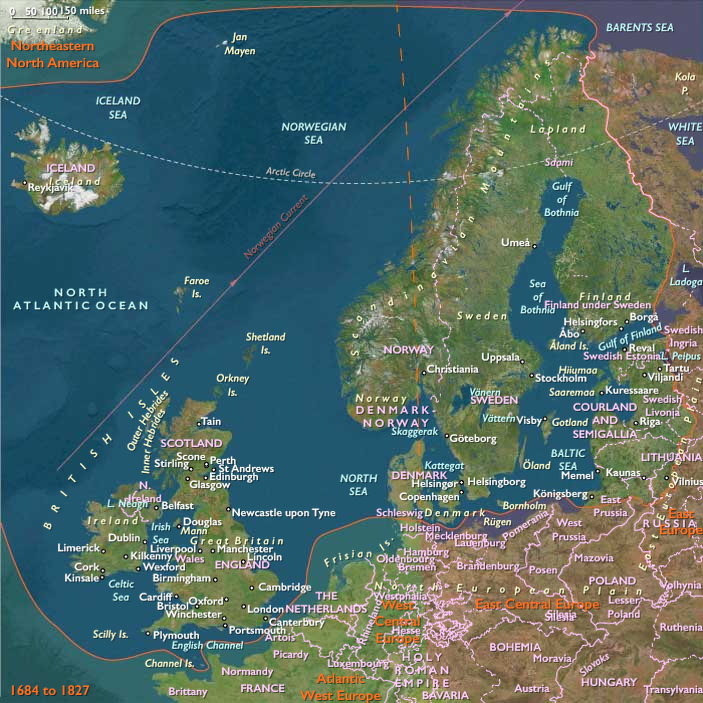
Subregions
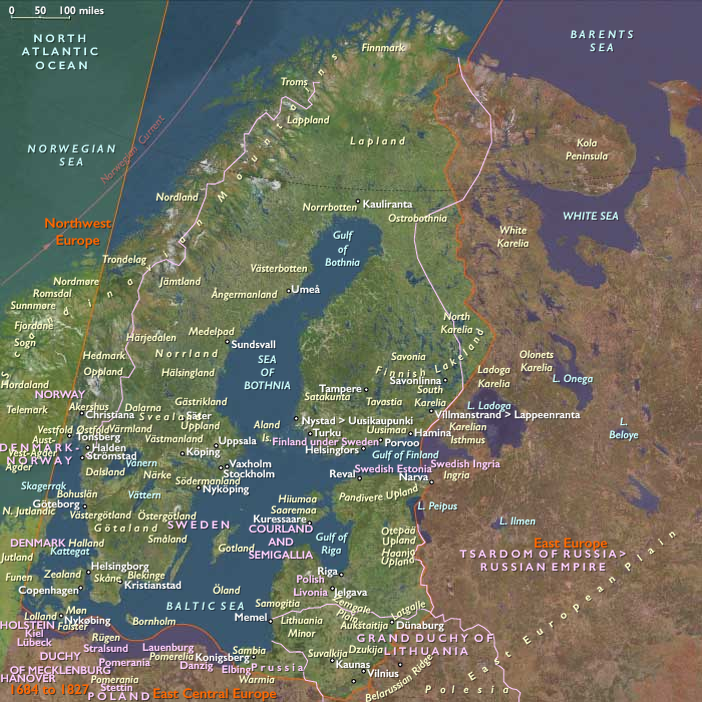
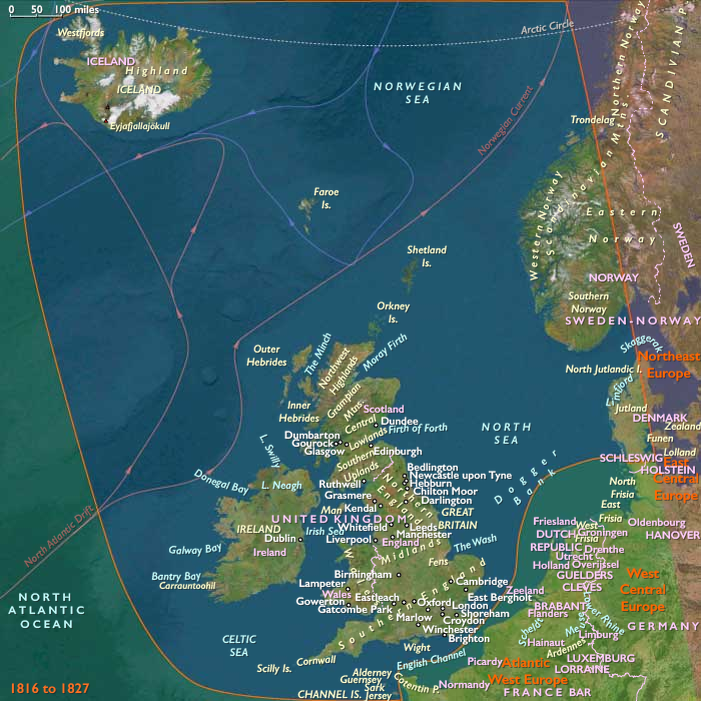
Years: 1684 - 1827
People
Groups
- Danes (North Germanic tribe)
- Icelanders (Scandinavians)
- Greenland, Norwegian Crown Colony of
- Norwegians (Scandinavians)
- Iceland (Danish dependency)
- Denmark-Norway, Kingdom of
- French First Republic
Topics
Commodoties
Subjects
Regions
Subregions