Differences of opinion regarding the enslavement of…
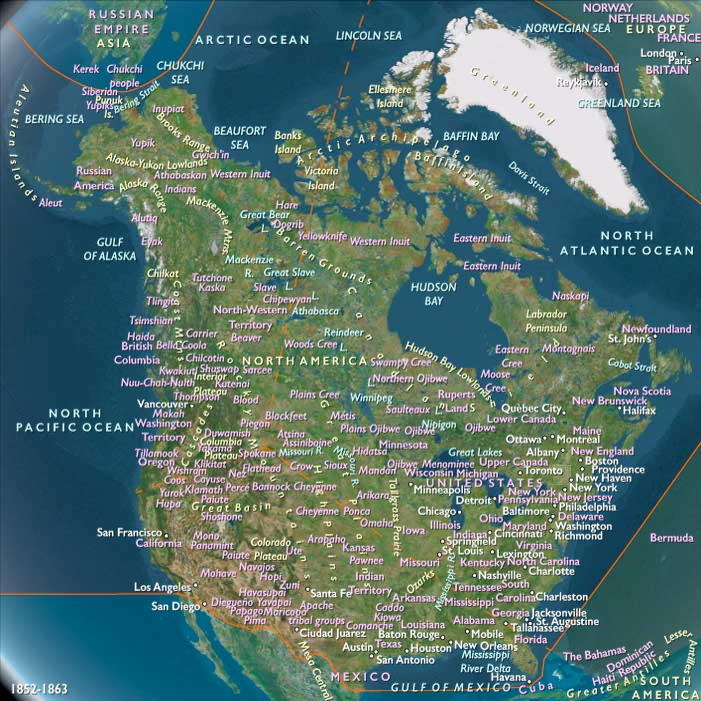
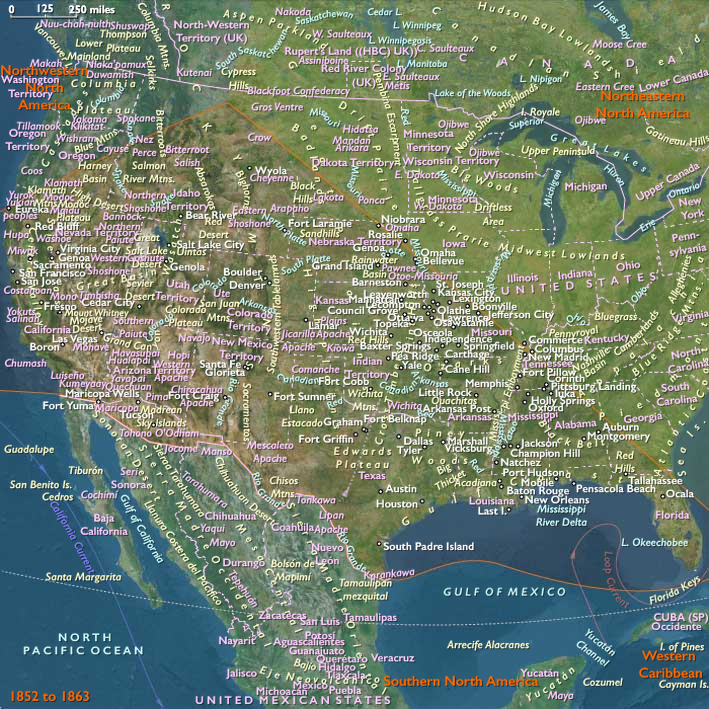
1852 CE to 1863 CE
Initially, states entering the Union had alternated between slave and free states, keeping a sectional balance in the Senate, while free states outstripped slave states in population and in the House of Representatives, but with additional western territory and more free-soil states, tensions between slave and free states mount with arguments over federalism and disposition of the territories, whether and how to expand or restrict slavery.
With the 1860 election of Abraham Lincoln, the first president from the largely anti-slavery Republican Party, conventions in thirteen slave states ultimately declare secession and form the Confederate States of America (the "South"), while the federal government (the "Union") maintains that secession is illegal.
In order to bring about this secession, military action is initiated by the secessionists, and the Union responds in kind.
The ensuing war will become the deadliest military conflict in American history, resulting in the deaths of approximately six hundred and eighteen thousand soldiers as well as many civilians.
People
Groups
Commodities
Subjects
Regions