
William Lloyd Garrison begins publishing The Liberator,…
January 1831 CE
Religious rather than political, it appeals to the moral conscience of its readers, urging them to demand immediate freeing of the slaves.
It also promotes women’s rights.
Garrison had joined the anti-slavery movement at the age of twenty-five, later crediting the 1826 book of Presbyterian clergyman John Rankin, Letters on Slavery, for attracting him to the cause.
For a brief time he became associated with the American Colonization Society, an organization that promoted the resettlement of free blacks to a territory (now known as Liberia) on the west coast of Africa.
Although some members of the society encourage granting freedom to slaves, others consider relocation a means to reduce the number of already free blacks in the United States.
Southern members think reducing the threat of free blacks in society will help preserve the institution of slavery.
Garrison had begun writing for and became co-editor with Benjamin Lundy of the Quaker newspaper Genius of Universal Emancipation in Baltimore, Maryland.
With his experience as a printer and newspaper editor, Garrison changed the layout of the paper and handled other operation issues.
Lundy was freed to spend more time touring as an anti-slavery speaker.
Garrison initially shared Lundy's gradualist views, but while working for the Genius, he had become convinced of the need to demand immediate and complete emancipation.
Lundy and Garrison had continued to work together on the paper in spite of their differing views.
Each signed his own editorials.
Garrison introduced "The Black List," a column devoted to printing short reports of "the barbarities of slavery—kidnappings, whippings, murders."
For instance, Garrison reported that Francis Todd, a shipper from Garrison's home town of Newburyport, Massachusetts, was involved in the domestic slave trade, and that he had recently had slaves shipped from Baltimore to New Orleans in the coastwise trade on his ship the Francis. (This was thoroughly legal, although the US had in 1807 prohibited the international slave trade from Africa.)
Todd had filed a suit for libel in Maryland against both Garrison and Lundy; he thought to gain support from pro-slavery courts.
The state of Maryland also brought criminal charges against Garrison, quickly finding him guilty and ordering him to pay a fine of fifty dollars and court costs. (Charges against Lundy were dropped on the grounds that he had been traveling when the story was printed.)
Garrison had refused to pay the fine and was sentenced to a jail term of six months.
He was released after seven weeks when the anti-slavery philanthropist Arthur Tappan donated the money for the fine.
Garrison decided to leave Baltimore, and he and Lundy amicably agreed to part ways.
In 1831, Garrison returns to New England, where he co-founds The Liberator with his friend Isaac Knapp.
Groups
Commodities
Regions
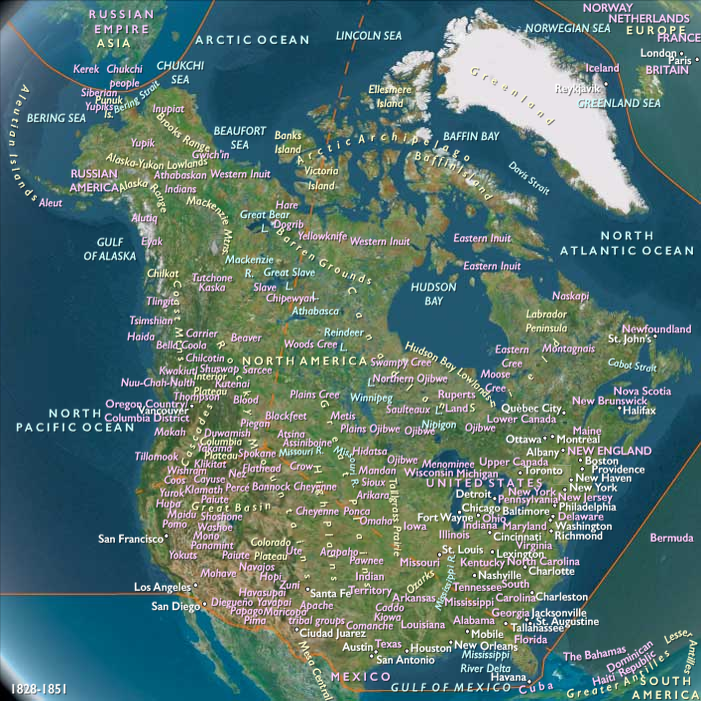
Northern North America
View →Subregions
