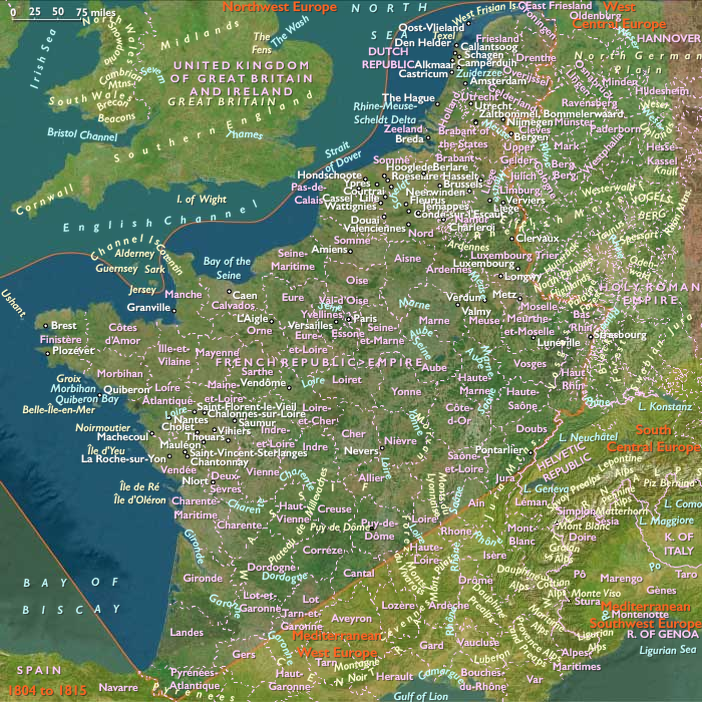
Napoleon has purchased a large part of…
July 1807 CE
The Antinous Mondragone is a unique colossal 0.95 meter-high marble example of the iconographic type of the deified Antinous, of circa 130 CE.
It can be identified as him from the striated eyebrows, full lips, sombre expression and the head's twist down and to the right (reminiscent of that of the Lemnian Athena), while its smooth skin and elaborate, center-parted hair mirror those of Hellenistic images of Dionysus and Apollo.
It formed part of a colossal acrolithic cult statue for the worship of Antinous as a god.
Thirty-one 3 holes in three different sizes have been drilled for the attachment of a head-dress (possibly a lotus flower or uraeus) in metal; the sculpture has also lost eyes in metal, ivory or colored stone.
It is said to have been found at Frascati between 1713 and 1729—it was certainly displayed as part of the Borghese collection at their Villa Mondragone there.
Sometime since 1807 a brown layer of wax will be added to give an opaque finish, along with plaster round the base of the neck to make the statue look more complete—these were both removed in recent cleaning.
It is now held at the Louvre Museum, though it toured to the Henry Moore Institute, Leeds in 2006 for the exhibition "Antinous: The Face of the Antique", and returned to the United Kingdom for the British Museum's exhibition "Hadrian: Empire and Conflict" in 2008.
Images

Antinous Mondragone: Colossal portrait of Antinous, circa 130 CE. The eyes and the attribute on the top of the head (uraeus or lotus flower?) were added on later. The bust was inserted into a body of a different material. Louvre Museum
Locations
People
Regions

West Europe
View →Subregions