
Nighttime temperatures in all summer months from …
Years: 1603 - 1603
October
Nighttime temperatures in all summer months from 1601 to 1603 have often been below freezing, wrecking crops and resulting in extremely poor harvests.
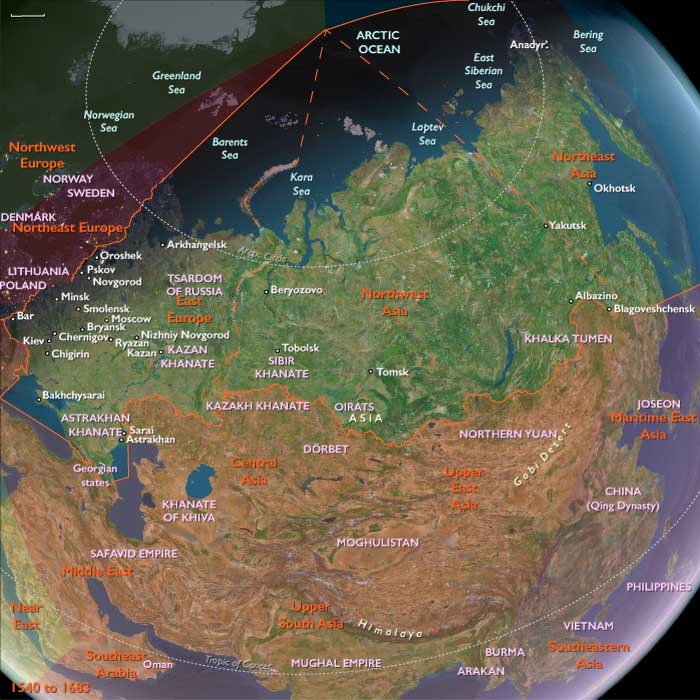
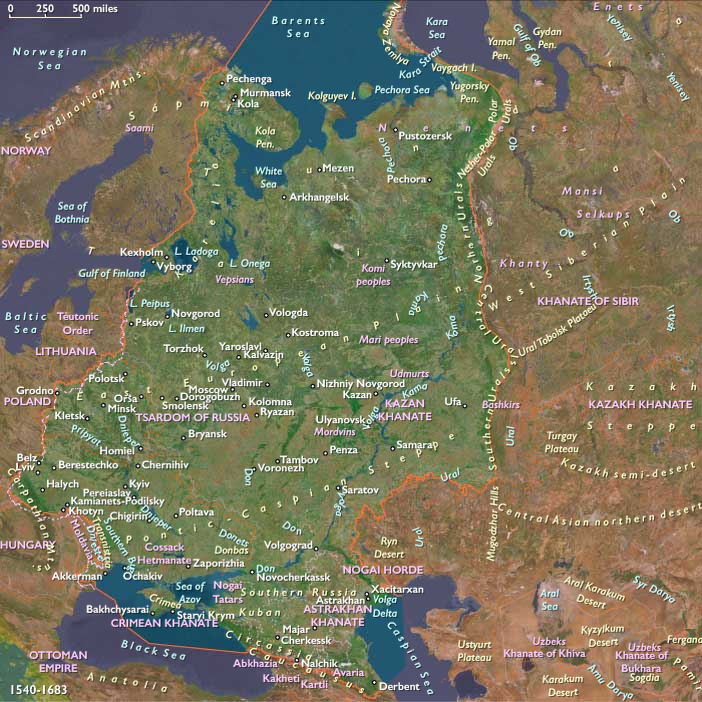
The consequent Russian famine of 1601–1603 is Russia's worst, killing perhaps a third of Russians during what will become known in Russian history the Time of Troubles.
It is probably tied to the eruption of the Huaynaputina volcano in Peru, which has ejected from sixteen million to thirty-two million metric tons of particulates into the atmosphere, notably sulfur dioxide, forming sulfuric acid, thus preventing sunlight from reaching the Earth's surface, causing massive famine and bitterly cold winters.
One hundred and twenty-seven thousand bodies have been buried in mass graves in Moscow alone during this two and half year period.
Widespread hunger has led to mass starvation and the deaths of two million Russians; the government has distributed money and foodstuffs for poor people in Moscow, but that has only led to refugees flocking to the capital and increasing the economic disorganization.
The oligarchical faction, headed by the Romanovs, consider it a disgrace to obey a mere boyar; conspiracies are frequent; the rural districts are desolated by famine and plague; great bands of armed brigands roam the country committing all manner of atrocities; the Don Cossacks on the frontier are restless; and the government shows itself incapable of maintaining order.
Under the influence of the great nobles who had unsuccessfully opposed the election of Godunov, the general discontent takes the form of hostility to him as an usurper, and rumors are heard that the late tsar's younger brother Dmitry, supposed to be dead, is still alive and in hiding.
Locations
People
Groups
Topics
- Counter-Reformation (also Catholic Reformation or Catholic Revival)
- “Time of Troubles,” Russian
- Russian Famine of 1601-03
Commodoties
Subjects
Regions
Subregions
Related Events
Showing 10 events out of 33830 total
Years: 1603 - 1603
October
Locations
People
Groups
Topics
- Counter-Reformation (also Catholic Reformation or Catholic Revival)
- “Time of Troubles,” Russian
- Russian Famine of 1601-03
Commodoties
Subjects
Regions
Subregions