Three different types of states emerge in…
1396 CE to 1539 CE
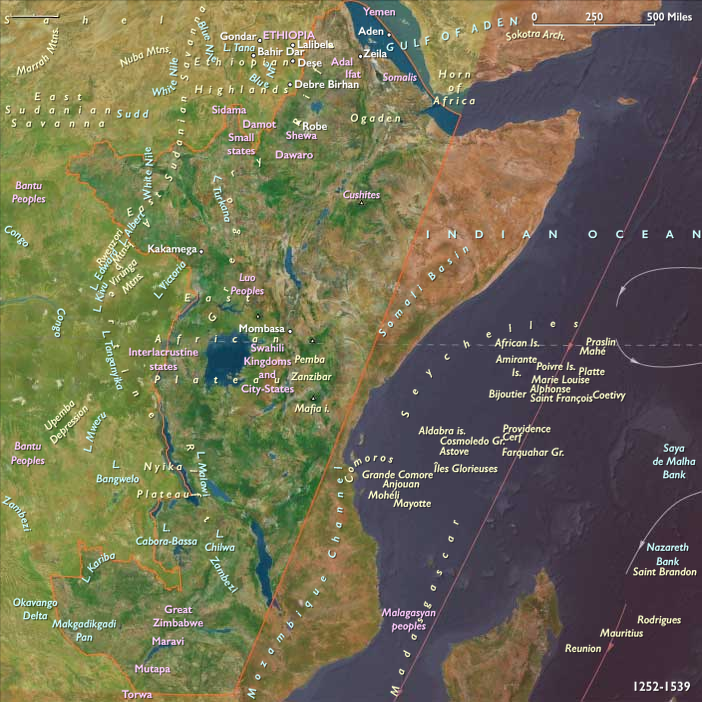
Three different types of states emerge in the Great Lakes region from this process of cultural contact and state formation.
The Hima type is later to be seen in Rwanda and Burundi.
It preserves a caste system whereby the rulers and their pastoral relatives attempt to maintain strict separation from the agricultural subjects, called Hutu.
The Hima rulers lose their Nilotic language and become Bantu-speakers, but they preserve an ideology of superiority in political and social life and attempt to monopolize high status and wealth.
In the twentieth century, the Hutu revolt after independence leads to the expulsion from Rwanda of the Hima elite, who become refugees in Uganda.
A counterrevolution in Burundi secures power for the Hima through periodic massacres of the Hutu majority.
Subjects
Regions
East Africa
View →Subregions