
North Africa (760–771 CE) Rise of …
Years: 760 - 771
North Africa (760–771 CE)
Rise of the Rustamids, Arrival of the Muhallabids, and Regional Fragmentation
Between 760 and 771 CE, North Africa witnesses significant political shifts, characterized by the solidification of indigenous Berber dynasties, notably the Rustamids, alongside the emergence of the Arab Muhallabid dynasty as influential governors in Ifriqiya, reshaping regional power dynamics within the context of Abbasid governance.
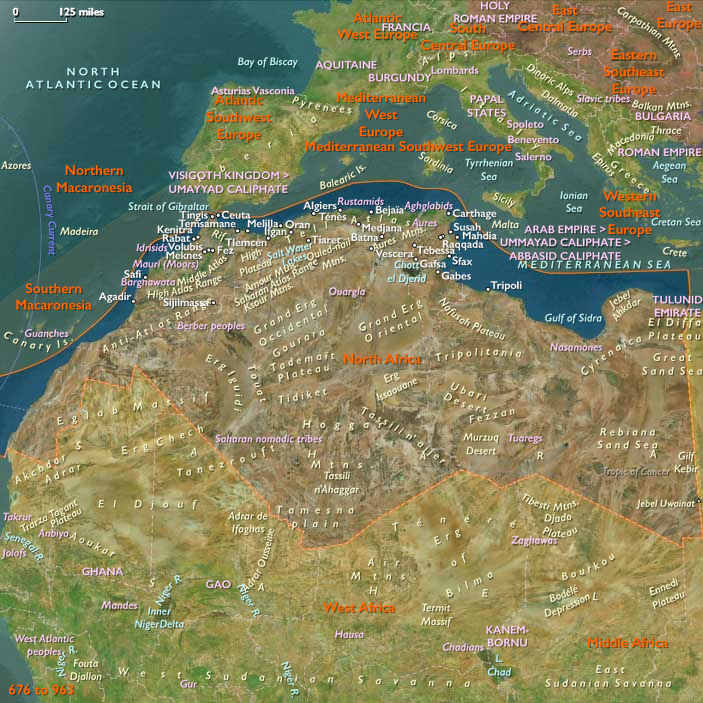
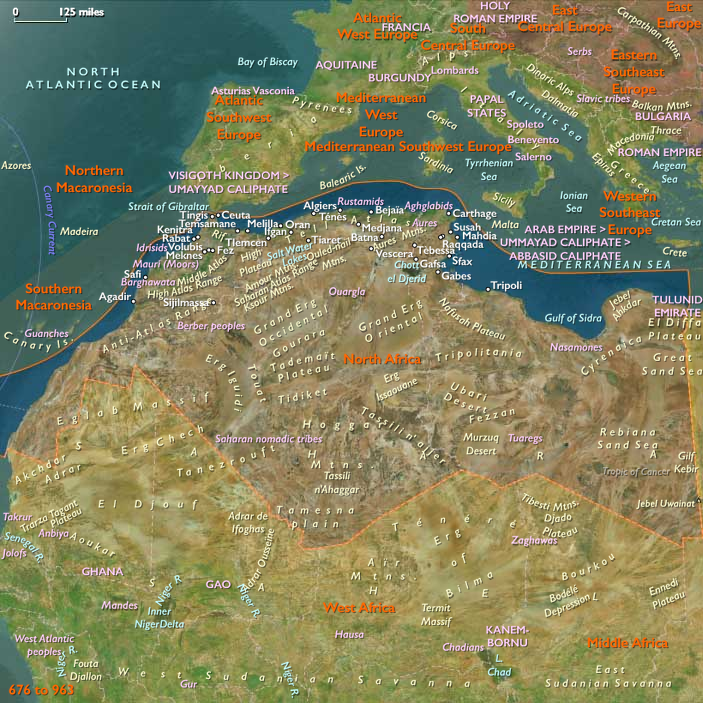
In 761 CE, the Berber leader Abd ar-Rahman ibn Rustam, renowned for his Ibadi Kharijite convictions, firmly establishes the Rustamid Dynasty in the newly founded city of Tahert (modern-day Tiaret, Algeria). Rustamid governance emphasizes piety, justice, and scholarly achievement, earning respect across the Maghreb. Its leaders are chosen through elective processes, reflecting Ibadi ideals of egalitarian governance and religious purity. The Rustamids become widely recognized as a scholarly and religious authority, rapidly attracting intellectuals and traders from throughout North Africa and beyond.
In the meantime, recognizing the complexity of managing distant territories, the Abbasid Caliphate, centered in Baghdad, entrusts administrative control of Ifriqiya to the prominent Arab Muhallabid family, originally influential in Basra and Khurasan. Starting from 768 CE, Muhallabid governors based in Kairouan (Al Qayrawan) implement extensive reforms, dramatically reinvigorating local agriculture through improved irrigation systems and infrastructure. Under their administration, Ifriqiya enjoys notable economic prosperity and relative internal stability despite ongoing Berber revolts and regional fragmentation.
However, the Muhallabids' governance is limited in scope, restricted primarily to the immediate region of Ifriqiya. They prove unable to prevent or reverse the growing autonomy of surrounding areas. Berber polities, particularly the Rustamids, expand significantly, becoming influential regional powers. Likewise, in Morocco, the independent Barghawata confederation consolidates its unique religious and cultural identity, further distancing itself from eastern caliphal control. Additionally, the important trading center of Sijilmasa, situated strategically on trans-Saharan routes managed by powerful Tuareg tribes, asserts significant economic autonomy, highlighting the broader trend of localized independence and economic prosperity.
By the conclusion of 771 CE, the political landscape of North Africa clearly reflects substantial regional fragmentation, characterized by robust indigenous Berber states, effective but limited Abbasid Arab governance under the Muhallabids, and a growing mosaic of culturally and economically vibrant entities. This era firmly establishes the patterns of autonomy, diversity, and decentralized governance that will continue to shape North Africa's historical trajectory in subsequent periods.
People
Groups
- Arab people
- Berber people (also called Amazigh people or Imazighen, "free men", singular Amazigh)
- Tuaregs, or Touareg, people
- Islam
- Muslims, Sunni
- Muslims, Kharijite
- Muslims, Ibadi
- Barghawata Confederacy (Masmuda Berber tribal confederacy)
- Abbasid Caliphate (Kufa)
- Ifriqiya, Kharijite Berber
- Rustamid Dynasty of Algeria
- Abbasid Caliphate (Baghdad)
- Ifriqiya, Abassid
- Ifriqiya, Muhallabid Dynasty of
Topics
Subjects
Regions
Subregions
Years: 760 - 771
People
Groups
- Arab people
- Berber people (also called Amazigh people or Imazighen, "free men", singular Amazigh)
- Tuaregs, or Touareg, people
- Islam
- Muslims, Sunni
- Muslims, Kharijite
- Muslims, Ibadi
- Barghawata Confederacy (Masmuda Berber tribal confederacy)
- Abbasid Caliphate (Kufa)
- Ifriqiya, Kharijite Berber
- Rustamid Dynasty of Algeria
- Abbasid Caliphate (Baghdad)
- Ifriqiya, Abassid
- Ifriqiya, Muhallabid Dynasty of
Topics
Subjects
Regions
Subregions