
North Africa (856–867 CE) Aghlabid Peak, …
Years: 856 - 867
North Africa (856–867 CE)
Aghlabid Peak, Idrisid Challenges, and Sustained Autonomy
Between 856 and 867 CE, North Africa remains characterized by regional dynamism, economic vitality, and evolving political landscapes under powerful regional dynasties and independent entities.
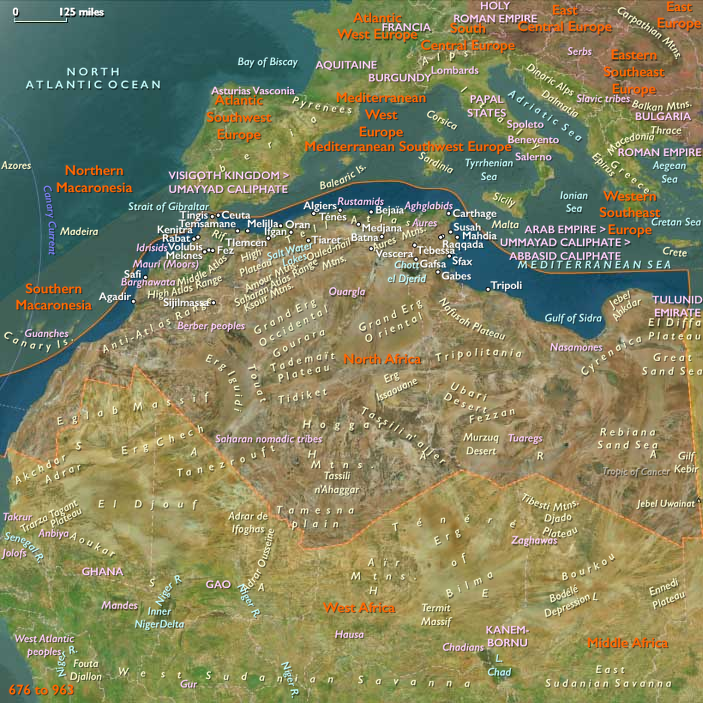
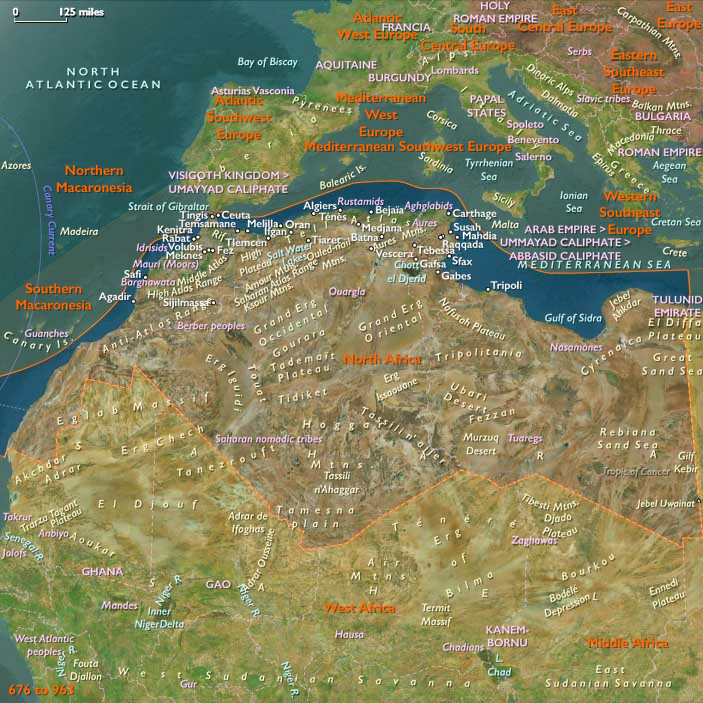
In Ifriqiya, the Aghlabid Dynasty reaches a new height of influence. Under Ahmad ibn Muhammad (856–863 CE), governance from the capital Kairouan (Al Qayrawan) continues to emphasize infrastructural investments, fostering enhanced agricultural productivity and expansive trade networks. Ahmad ibn Muhammad's reign notably sees further expansion of Aghlabid influence in Sicily, cementing the dynasty’s status as a formidable Mediterranean maritime power.
Meanwhile, in Morocco, the Idrisid Dynasty faces emerging internal challenges and external pressures, which begin to gradually erode its previously robust authority. Despite this, Fez remains a significant cultural, commercial, and intellectual hub, preserving its reputation as one of the Maghreb's preeminent urban centers. The Idrisid rulers sustain an atmosphere of learning and commerce, even as their political control begins to experience fragmentation.
The Ibadi Rustamid Dynasty, headquartered in Tahert (modern Tiaret), continues its prominent role as a center for religious scholarship, intellectual freedom, and regional trade. The Rustamids' emphasis on tolerance and stability attracts merchants, artisans, and scholars, sustaining the economic and cultural importance of the dynasty.
Autonomous states also flourish during this period. The Emirate of Nekor maintains its prosperous position in northern Morocco, benefiting from Mediterranean trade routes linking the region to Umayyad al-Andalus. Simultaneously, the Barghawata confederation along Morocco's Atlantic coast continues to reinforce its unique religious and cultural identity, thriving independently of centralized control.
Additionally, Sijilmasa, centrally located in the Saharan region and managed by powerful Tuareg tribes, further solidifies its role as a crucial trans-Saharan trading center, connecting sub-Saharan Africa with Mediterranean commerce through the exchange of gold, salt, slaves, and goods.
By the conclusion of 867 CE, North Africa’s complex landscape remains vibrant and diverse, marked by continued Aghlabid strength, challenges within the Idrisid state, and enduring independent Berber polities, setting the stage for subsequent political and cultural shifts.
People
Groups
- Arab people
- Berber people (also called Amazigh people or Imazighen, "free men", singular Amazigh)
- Tuaregs, or Touareg, people
- Islam
- Muslims, Sunni
- Muslims, Kharijite
- Sicily (theme)
- Muslims, Ibadi
- Sijilmassa, Berber state of
- Barghawata Confederacy (Masmuda Berber tribal confederacy)
- Córdoba, Umayyad Emirate of
- Rustamid Dynasty of Algeria
- Abbasid Caliphate (Baghdad)
- Idrisid dynasty (independent)
- Ifriqiya, Aghlabid Emirate of
- Nekor, Kingdom of
- Sicily, Emirate of
Commodoties
Subjects
Regions
Subregions
Related Events
Showing 10 events out of 54107 total
Years: 856 - 867
People
Groups
- Arab people
- Berber people (also called Amazigh people or Imazighen, "free men", singular Amazigh)
- Tuaregs, or Touareg, people
- Islam
- Muslims, Sunni
- Muslims, Kharijite
- Sicily (theme)
- Muslims, Ibadi
- Sijilmassa, Berber state of
- Barghawata Confederacy (Masmuda Berber tribal confederacy)
- Córdoba, Umayyad Emirate of
- Rustamid Dynasty of Algeria
- Abbasid Caliphate (Baghdad)
- Idrisid dynasty (independent)
- Ifriqiya, Aghlabid Emirate of
- Nekor, Kingdom of
- Sicily, Emirate of
Commodoties
Subjects
Regions
Subregions