Northwest Europe (49,293 – 28,578 BCE): Atlantic…
49293 BCE to 28578 BCE
Northwest Europe (49,293 – 28,578 BCE): Atlantic Coasts, Periglacial Lowlands, and Ice-Marginal Uplands
Geographic and Environmental Context
-
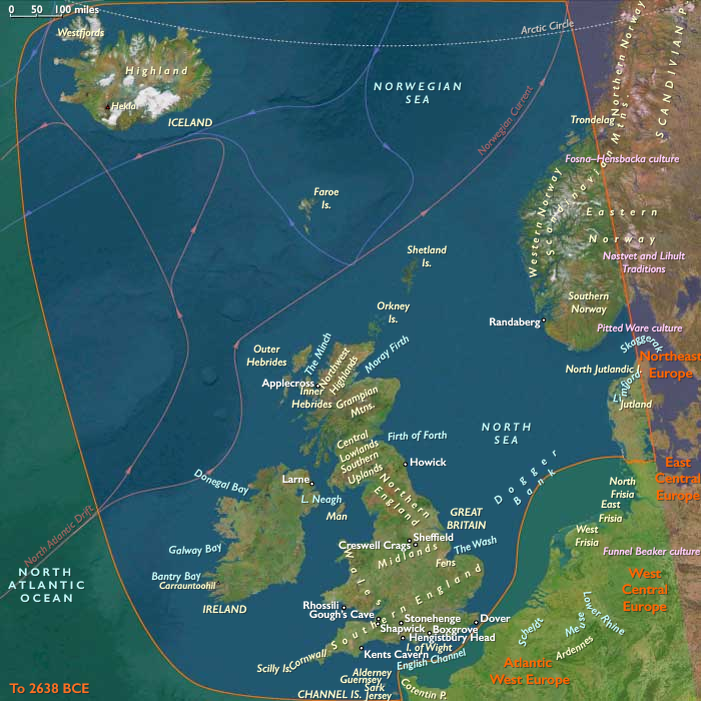
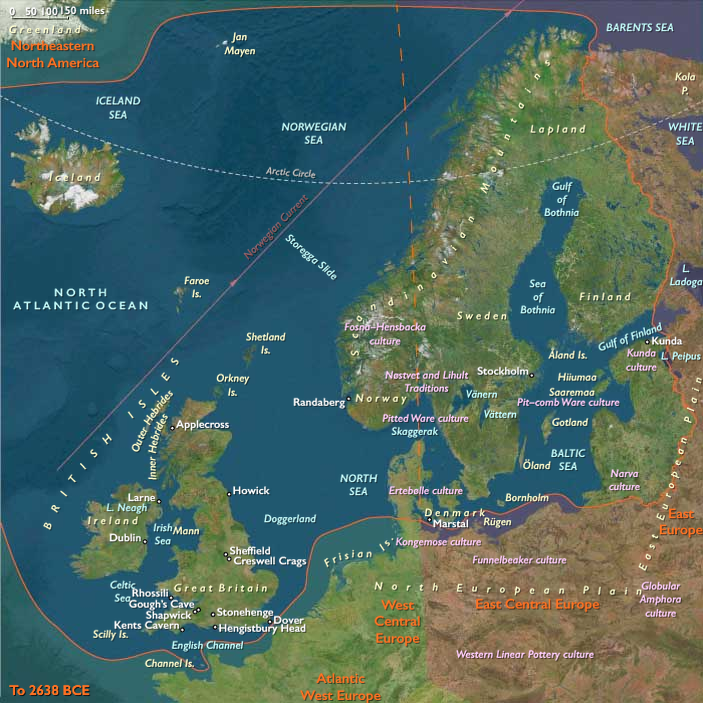
This subregion includes ice-free areas of western Norway, western Denmark, the British Isles, and Iceland (the latter likely uninhabited).
-
The North Sea basin was largely exposed due to sea levels ~60–90 m lower, creating the Doggerland plains that linked Britain to mainland Europe.
-
Western Norway’s fjords were partly glaciated, with ice lobes advancing and retreating in sync with climatic oscillations.
Climate and Environmental Shifts
-
Dansgaard–Oeschger interstadials brought milder summers, some woodland in sheltered valleys, and retreat of ice margins in Norway and Scotland.
-
Heinrich stadials were cold and dry; tundra–steppe dominated lowlands, ice caps expanded, and permafrost deepened across exposed plains.
-
Winters were long and severe, though the Atlantic influence moderated extremes in coastal zones.
Subsistence and Settlement
-
Doggerland plains and surrounding coasts supported reindeer, horse, bison, and red deer during interstadials.
-
River and estuary systems on the exposed North Sea floor provided fish, waterfowl, and wetland plant foods in warmer phases.
-
Western Norway’s ice-free coastal strips offered marine mammals, fish, and seabirds; inland valleys hosted elk and red deer when conditions allowed.
-
Seasonal mobility tracked game migrations between lowlands and uplands.
Technology and Material Culture
-
Upper Paleolithic blade industries dominated, with burins, endscrapers, and backed points; microblade elements appeared toward the close of MIS 3.
-
High-quality flint from southern North Sea sources was widely used, along with local cherts and quartzites.
-
Bone and antler tools—points, harpoons, needles—enabled effective hunting and cold-weather clothing manufacture.
-
Ochre use and ornament production with animal teeth and shell indicated symbolic traditions.
Movement and Interaction Corridors
-
Doggerland lowlands linked Britain directly to the European mainland, facilitating exchange with West Central and Atlantic West Europe.
-
Coastal navigation along Norway’s fjords and Scotland’s western seaboard may have allowed seasonal exploitation of rich marine zones.
-
River valleys and ice-free passes provided inland routes during warmer intervals.
Cultural and Symbolic Expressions
-
Ornamentation and ochre in habitation sites suggest social identity markers and possible aggregation events in resource-rich locales.
-
Structured base camps in sheltered lowlands point to organized seasonal hunting systems.
Environmental Adaptation and Resilience
-
Dual coastal–inland subsistence buffered against seasonal shortages.
-
Mastery of clothing, shelters, and fire management allowed survival in periglacial climates.
-
Flexible territorial ranges enabled rapid adjustment to ice advance or retreat.
Toward the Last Glacial Maximum
By 28,578 BCE, Northwest European foragers exploited a highly seasonal, ice-marginal world, moving fluidly between exposed continental shelves, river valleys, and coastal refugia, maintaining ties with populations to the south and east as glacial conditions tightened.
Images

Northwest Europe in the Upper Paleolithic
Commodities
Subjects
Regions
North Europe
View →Subregions