
Northeastern North America (1660 to 1671 …
Years: 1660 - 1671
Northeastern North America
(1660 to 1671 CE): Haudenosaunee Dominance, Indigenous Displacement, and Shifting Alliances
From 1660 to 1671 CE, Northeastern North America experienced extensive Haudenosaunee territorial expansion, severe displacement of indigenous groups such as the Shawnee and Erie, and significant shifts in indigenous-European alliances. During this era, the Beaver Wars reached their height, with the Haudenosaunee (Iroquois Confederacy) solidifying their dominance over a vast region, reshaping demographic patterns, and profoundly influencing future cultural and geopolitical landscapes.
Haudenosaunee Territorial Expansion and Dominance
Conquest of the Ohio Country and Erie Nation
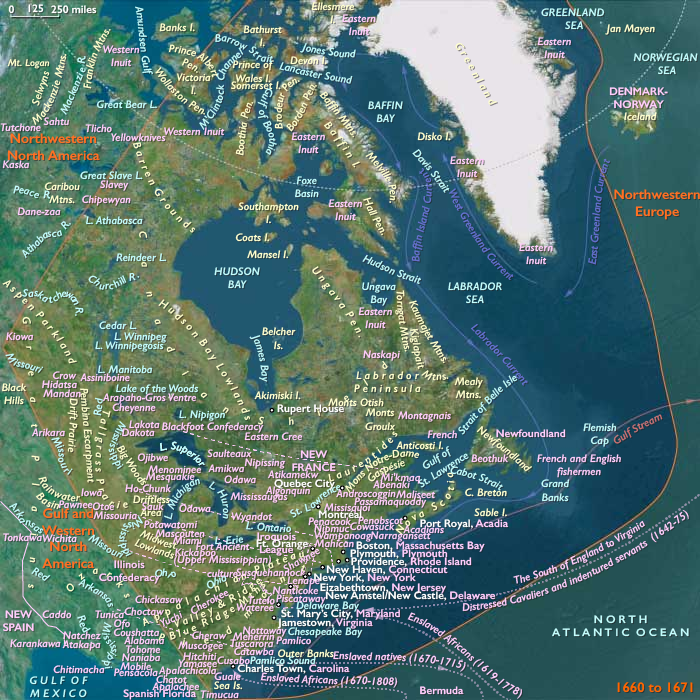
Around 1660, the Haudenosaunee Confederacy decisively seized control of the Ohio Country north of the Ohio River, displacing the Algonquian-speaking Shawnee who had occupied this region throughout the early seventeenth century. The conquest followed the brutal destruction and absorption of the Erie, an Iroquoian-speaking tribe, earlier in 1656. These events marked key victories in the Beaver Wars, recognized as one of the bloodiest series of conflicts in North American history.
Establishment of Iroquois Settlements in Toronto (1660s)
During the 1660s, the Haudenosaunee established two significant villages within the modern boundaries of Toronto: Ganatsekwyagon along the Rouge River and Teiaiagon on the Humber River. These villages represented strategic military and trade positions in newly acquired territory from which the Haudenosaunee had displaced the Wyandot (Huron) people, traditional occupants for centuries.
The name "Toronto" likely originates from the Iroquoian word tkaronto, meaning "place where trees stand in the water," referencing a Huron fishing technique involving tree saplings planted in Lake Simcoe to corral fish. The term "Toronto" also appeared in a 1632 French lexicon of the Huron language, meaning "plenty," and on French maps designating various nearby locations, including Georgian Bay and Lake Simcoe. Its widespread use was reinforced by the strategic Toronto Carrying-Place Trail, a crucial indigenous portage route connecting Lake Ontario to Lake Huron.
By 1701, after the conclusion of the Beaver Wars, the Haudenosaunee would abandon the Toronto area, leaving it to the Mississauga, and most returning to their homelands in present-day New York.
Impacts on Indigenous Communities and Migration Patterns
Shawnee Displacement and Migration
The Shawnee, driven out of the Ohio Valley by Haudenosaunee aggression, dispersed widely, migrating westward and southward into territories along the Mississippi and southern Appalachians. This displacement significantly altered indigenous demographics, setting the stage for later intertribal and colonial conflicts in regions beyond their original homelands.
Wyandot (Huron) and Iroquoian Diaspora
Surviving Wyandot (Huron), Neutral, Erie, and other Iroquoian-speaking groups scattered after their defeat by the Haudenosaunee. Many sought refuge among Algonquin nations and French settlements in the western Great Lakes, creating a culturally diverse diaspora. This migration reshaped regional cultural identities and influenced later diplomatic and economic networks.
French Colonial Adjustments and Algonquin Alliances
Shift of Fur Trade Alliances to Ottawa
The collapse of the Huron Confederacy compelled the French to forge stronger alliances with Algonquin-speaking nations, especially the Ottawa, who rapidly filled the vacuum in the western fur trade. Ottawa traders connected distant indigenous groups, such as the Ojibway and Cree, to French trading posts, reinforcing the economic vitality of French colonial settlements along the St. Lawrence.
Jesuit Missions Re-established Among Indigenous Refugees
Despite earlier setbacks and martyrdoms such as those of Jesuits Jean Brébeuf and Gabriel Lallemant in 1649, the Jesuits continued missionary activities, primarily among dispersed indigenous communities near Quebec and Montreal. These missions served diplomatic as well as religious purposes, strengthening French cultural influence within displaced indigenous groups.
English and Dutch Colonial Dynamics
English Territorial Expansion and Indigenous Relations
English settlements in New England steadily expanded inland, intensifying territorial disputes and resource competition with indigenous communities. The English capitalized economically and strategically on French difficulties caused by Haudenosaunee disruptions, fostering complex alliances with indigenous groups such as the Narragansett, Mohegan, and Wampanoag.
Dutch Support of Haudenosaunee Military Strength
The Dutch colony of New Netherland maintained critical trading relationships with the Haudenosaunee, particularly the Mohawk, supplying firearms and other trade goods essential to Iroquois military success. However, this dynamic changed after the English takeover of New Netherland in 1664, renamed New York, gradually shifting alliances and influencing future geopolitical dynamics.
Ongoing Demographic Impact of Epidemics
Continued Disease-related Population Decline
Epidemic diseases—smallpox, measles, influenza—continued devastating indigenous populations, exacerbating demographic collapse and destabilizing traditional social structures. Weakened by these losses, indigenous groups experienced increased vulnerability to warfare, displacement, and European colonization pressures.
Interior Indigenous Communities and Stability
Algonquian Adaptations in the Great Lakes
Algonquian-speaking nations, including the Potawatomi, Ojibway, Menominee, Sauk, and Fox, maintained stability through strategic adaptations. They deepened economic and diplomatic ties with French colonies, allowing them to withstand Haudenosaunee pressure and maintain control of vital trade routes in the western Great Lakes.
Cheyenne Historical Presence
The mid-seventeenth century saw the earliest recorded historical presence of the Cheyenne people, who lived in the region between the Mississippi River and Mille Lacs Lake (present-day Minnesota), relying economically on hunting bison on nearby prairies and gathering wild rice. The Cheyenne occasionally visited French outposts such as Fort Crèvecoeur, reflecting growing regional trade connections.
Siouan-speaking Peoples and Western Migration
Assiniboine and Sioux Differentiation
By this period, Jesuit accounts clearly distinguished the Assiniboine from the greater Sioux nation, recognizing distinct cultural and territorial identities. Assiniboine territories increasingly lay further westward, toward the northern Plains, distinct from eastern Sioux groups (Dakota, Lakota, Yankton-Yanktonai).
Stability of Dakota and Winnebago (Ho-Chunk)
The Dakota and Winnebago tribes maintained relative stability in the Upper Midwest, shielded from intense Haudenosaunee conflict and direct European colonization. They retained cultural continuity and controlled interior trade networks, strategically managing their geographic positions.
Newfoundland’s Beothuk: Increasing Isolation and Pressure
Ongoing Struggle for Survival
The indigenous Beothuk continued facing relentless pressure from expanding English settlements in Newfoundland. Their isolation grew as settlers encroached on traditional hunting territories, exacerbating resource competition and intensifying disease threats, severely reducing their population and cultural resilience.
Indigenous Cultural and Artistic Continuity
Persistence of Artistic Traditions
Despite severe disruptions, indigenous communities across Northeastern North America maintained vibrant artistic traditions—beadwork, pottery, shell gorgets, and ceremonial pipes—that reinforced cultural identity and cohesion amidst turmoil.
Strength of Ceremonial and Ritual Traditions
Haudenosaunee Longhouse ceremonies, Algonquin seasonal rituals, and Plains tribal gatherings persisted robustly. These cultural traditions served as vital sources of social resilience, community cohesion, and cultural continuity amid widespread upheaval.
Environmental Context and Indigenous Adaptations
Little Ice Age and Indigenous Subsistence Strategies
The Little Ice Age continued shaping indigenous subsistence practices. Communities adapted to climatic fluctuations through diversified resource use, increased seasonal mobility, and strategic reliance on expanded trade networks to offset ecological unpredictability.
Legacy of the Era (1660–1671 CE)
The period 1660–1671 CE solidified Haudenosaunee military and political supremacy, profoundly reshaping indigenous demographics and alliances in Northeastern North America. The violent displacement of Shawnee, Wyandot, Erie, and Neutral communities created lasting diasporas, altering regional cultures and identities. The emergence of strategic new alliances—particularly between the French and Algonquin-speaking Ottawa—reshaped economic and diplomatic networks, while continued epidemics devastated indigenous populations, accelerating colonial expansion. These transformative developments set enduring patterns of indigenous-colonial interactions and significantly influenced the subsequent cultural, economic, and geopolitical evolution of the region.
Groups
- Iroquois (Haudenosaunee, also known as the League of Peace and Power, Five Nations, or Six Nations)
- Portuguese people
- Algonquin, or Algonkin, people (Amerind tribe)
- Basque people
- Abenaki people (Amerind tribe)
- Maliseet, or Wolastoqiyik, people (Amerind tribe)
- Mi'kmaq people (Amerind tribe)
- Ho-Chunk (Amerind tribe)
- Beothuk people
- Thule people
- Penobscot people (Amerind tribe)
- English people
- Mohawk people (Amerind tribe)
- Osage Nation (Amerind tribe)
- Wyandot, or Wendat, or Huron people (Amerind tribe)
- England, (Tudor) Kingdom of
- Yankton Sioux Tribe
- Cree (Amerind tribe)
- Tuscarora (Amerind tribe)
- Kickapoo people (Amerind tribe)
- Potawatomi (Amerind tribe)
- Menominee (Amerind tribe)
- Iowa (Amerind tribe)
- Ponca (Amerind tribe)
- Nanticoke people (Amerind tribe)
- Powhatan (Amerind tribe)
- Yuchi (Amerind tribe)
- Kiowa people (Amerind tribe)
- Tsuu T'ina; also Sarcee, Sarsi, Tsu T'ina, Tsuut'ina (Amerind tribe)
- Plains Apache, or Kiowa Apache; also Kiowa-Apache, Naʼisha, Naisha (Amerind tribe)
- Mohegan people (Amerind tribe)
- Massachusett people (Amerind tribe)
- Mississaugas (Amerind tribe)
- Santee (Amerind tribe)
- Dakota, aka Santee Sioux (Amerind tribe)
- Cherokee, or Tsalagi (Amerind tribe)
- Sauk, or Sac, people (Amerind tribe)
- Meskwaki, or Fox tribe (Amerind tribe)
- Lenape or Lenni-Lenape (later named Delaware Indians by Europeans)
- Ojibwa, or Ojibwe, aka or Chippewa (Amerind tribe)
- Odawa, or Ottawa, people (Amerind tribe)
- Seneca (Amerind tribe)
- Cayuga people(Amerind tribe)
- Onondaga people (Amerind tribe)
- Oneida people (Amerind tribe)
- Erie; also Erielhonan, Eriez, Nation du Chat (Amerind tribe)
- Neutral Nation, or Attawandaron
- Lakota, aka Teton Sioux (Amerind tribe)
- Mahican (Amerind tribe)
- Innu (Montagnais, Naskapi) (Amerind tribe)
- Iroquoians, St. Lawrence
- Susquehannock (Amerind tribe)
- Narragansett people (Amerind tribe)
- Pequots (Amerind tribe)
- Petun (Amerind tribe)
- Wampanoag (Amerind tribe)
- Catawba people (Amerind tribe)
- Quapaw, or Arkansas (Amerind tribe)
- Omaha (Amerind tribe)
- Pawnee (Amerind tribe)
- Kaw, or Kanza, people (Amerind tribe)
- Caddo (Amerind tribe)
- Mandan (Amerind tribe)
- Hidatsa people (Amerind tribe)
- Shoshone, Shoshoni, or Snakes (Amerind tribe)
- Crow people, aka Absaroka or Apsáalooke (Amerind tribe)
- Cheyenne people (Amerind tribe)
- Arapaho people (Amerind tribe)
- Gros Ventre or “Atsina” people (Amerind tribe)
- Assiniboine people (Amerind tribe)
- Spaniards (Latins)
- Spain, Habsburg Kingdom of
- New France (French Colony)
- Jesuits, or Order of the Society of Jesus
- Spain, Habsburg Kingdom of
- Florida (Spanish Colony)
- Netherlands, United Provinces of the (Dutch Republic)
- France, (Bourbon) Kingdom of
- England, (Stuart) Kingdom of
- London Company, The (also called the Virginia Company of London)
- Plymouth Company, The (also called the Virginia Company of Plymouth)
- Virginia (English Colony)
- New Netherland (Dutch Colony)
- Plymouth Council for New England
- Dutch West India Company
- Massachusetts Bay Colony (sometimes called the Massachusetts Bay Company, for its founding institution)
- (Connecticut) River Colony (English)
- Rhode Island (English Colony)
Topics
- Middle Subatlantic Period
- Little Ice Age (LIA)
- Colonization of the Americas, Spanish
- Colonization of Asia, Dutch
- North American Fur Trade
- Colonization of the Americas, English
- Beaver Wars, or French and Iroquois Wars
Commodoties
- Fish and game
- Weapons
- Hides and feathers
- Gem materials
- Domestic animals
- Grains and produce
- Textiles
- Ceramics
- Strategic metals
- Salt
- Fuels, lubricants and sealants
- Manufactured goods
- Tobacco
Subjects
- Commerce
- Public health
- Decorative arts
- Conflict
- Exploration
- Faith
- Government
- Custom and Law
- Technology
- Catastrophe
- Human Migration
Regions
Subregions
Years: 1660 - 1671
Groups
- Iroquois (Haudenosaunee, also known as the League of Peace and Power, Five Nations, or Six Nations)
- Portuguese people
- Algonquin, or Algonkin, people (Amerind tribe)
- Basque people
- Abenaki people (Amerind tribe)
- Maliseet, or Wolastoqiyik, people (Amerind tribe)
- Mi'kmaq people (Amerind tribe)
- Ho-Chunk (Amerind tribe)
- Beothuk people
- Thule people
- Penobscot people (Amerind tribe)
- English people
- Mohawk people (Amerind tribe)
- Osage Nation (Amerind tribe)
- Wyandot, or Wendat, or Huron people (Amerind tribe)
- England, (Tudor) Kingdom of
- Yankton Sioux Tribe
- Cree (Amerind tribe)
- Tuscarora (Amerind tribe)
- Kickapoo people (Amerind tribe)
- Potawatomi (Amerind tribe)
- Menominee (Amerind tribe)
- Iowa (Amerind tribe)
- Ponca (Amerind tribe)
- Nanticoke people (Amerind tribe)
- Powhatan (Amerind tribe)
- Yuchi (Amerind tribe)
- Kiowa people (Amerind tribe)
- Tsuu T'ina; also Sarcee, Sarsi, Tsu T'ina, Tsuut'ina (Amerind tribe)
- Plains Apache, or Kiowa Apache; also Kiowa-Apache, Naʼisha, Naisha (Amerind tribe)
- Mohegan people (Amerind tribe)
- Massachusett people (Amerind tribe)
- Mississaugas (Amerind tribe)
- Santee (Amerind tribe)
- Dakota, aka Santee Sioux (Amerind tribe)
- Cherokee, or Tsalagi (Amerind tribe)
- Sauk, or Sac, people (Amerind tribe)
- Meskwaki, or Fox tribe (Amerind tribe)
- Lenape or Lenni-Lenape (later named Delaware Indians by Europeans)
- Ojibwa, or Ojibwe, aka or Chippewa (Amerind tribe)
- Odawa, or Ottawa, people (Amerind tribe)
- Seneca (Amerind tribe)
- Cayuga people(Amerind tribe)
- Onondaga people (Amerind tribe)
- Oneida people (Amerind tribe)
- Erie; also Erielhonan, Eriez, Nation du Chat (Amerind tribe)
- Neutral Nation, or Attawandaron
- Lakota, aka Teton Sioux (Amerind tribe)
- Mahican (Amerind tribe)
- Innu (Montagnais, Naskapi) (Amerind tribe)
- Iroquoians, St. Lawrence
- Susquehannock (Amerind tribe)
- Narragansett people (Amerind tribe)
- Pequots (Amerind tribe)
- Petun (Amerind tribe)
- Wampanoag (Amerind tribe)
- Catawba people (Amerind tribe)
- Quapaw, or Arkansas (Amerind tribe)
- Omaha (Amerind tribe)
- Pawnee (Amerind tribe)
- Kaw, or Kanza, people (Amerind tribe)
- Caddo (Amerind tribe)
- Mandan (Amerind tribe)
- Hidatsa people (Amerind tribe)
- Shoshone, Shoshoni, or Snakes (Amerind tribe)
- Crow people, aka Absaroka or Apsáalooke (Amerind tribe)
- Cheyenne people (Amerind tribe)
- Arapaho people (Amerind tribe)
- Gros Ventre or “Atsina” people (Amerind tribe)
- Assiniboine people (Amerind tribe)
- Spaniards (Latins)
- Spain, Habsburg Kingdom of
- New France (French Colony)
- Jesuits, or Order of the Society of Jesus
- Spain, Habsburg Kingdom of
- Florida (Spanish Colony)
- Netherlands, United Provinces of the (Dutch Republic)
- France, (Bourbon) Kingdom of
- England, (Stuart) Kingdom of
- London Company, The (also called the Virginia Company of London)
- Plymouth Company, The (also called the Virginia Company of Plymouth)
- Virginia (English Colony)
- New Netherland (Dutch Colony)
- Plymouth Council for New England
- Dutch West India Company
- Massachusetts Bay Colony (sometimes called the Massachusetts Bay Company, for its founding institution)
- (Connecticut) River Colony (English)
- Rhode Island (English Colony)
Topics
- Middle Subatlantic Period
- Little Ice Age (LIA)
- Colonization of the Americas, Spanish
- Colonization of Asia, Dutch
- North American Fur Trade
- Colonization of the Americas, English
- Beaver Wars, or French and Iroquois Wars
Commodoties
- Fish and game
- Weapons
- Hides and feathers
- Gem materials
- Domestic animals
- Grains and produce
- Textiles
- Ceramics
- Strategic metals
- Salt
- Fuels, lubricants and sealants
- Manufactured goods
- Tobacco
Subjects
- Commerce
- Public health
- Decorative arts
- Conflict
- Exploration
- Faith
- Government
- Custom and Law
- Technology
- Catastrophe
- Human Migration
Regions
Subregions