
Upper South Asia (388–531 CE): Gupta Golden …
Years: 388 - 531
Upper South Asia (388–531 CE): Gupta Golden Age, Hun Invasions, and Cultural Resilience
Rise and Flourishing of the Gupta Empire
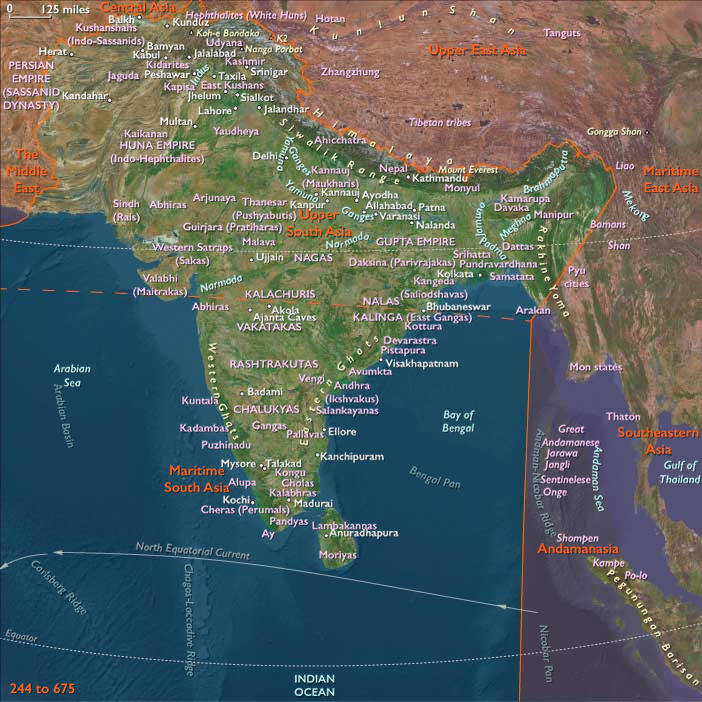
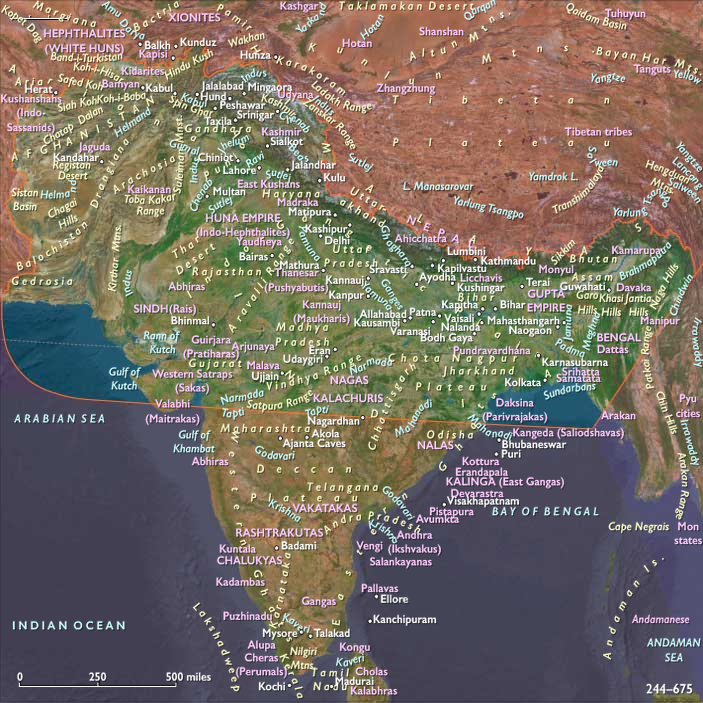
From 388 to 531 CE, Upper South Asia witnessed the height of the Gupta Empire, under rulers such as Chandragupta II (380–415 CE) and Kumaragupta I (415–455 CE). The Gupta period is often termed the "Golden Age" of ancient India, characterized by remarkable developments in arts, sciences, literature, and philosophy. The empire encompassed vast territories including present-day Uttar Pradesh, Bihar, Madhya Pradesh, and significant parts of Gujarat and Punjab.
Artistic and Cultural Zenith
Gupta patronage fostered a renaissance of classical Indian art, particularly visible in the elaborate temples and sculptures of this period. Iconic examples include the cave temples at Ajanta and Ellora, where exquisite murals depict intricate narratives from Hindu, Buddhist, and Jain traditions. Gupta artists refined classical Indian aesthetics, establishing artistic standards that influenced subsequent regional styles.
Literary and Scholarly Advancements
This age marked significant literary and scholarly achievements. Renowned scholar Kalidasa composed timeless literary works such as "Shakuntala" and "Meghaduta" during the Gupta period. Additionally, astronomer-mathematician Aryabhata I (476–550 CE) made groundbreaking contributions in mathematics and astronomy, including early concepts of zero and an accurate calculation of pi. Aryabhata's works profoundly influenced mathematics and astronomy across Asia and beyond.
Religious Developments and Hindu Renaissance
Hinduism experienced a revival under Gupta patronage, witnessing the codification and systematization of religious and philosophical traditions. This period saw the composition of influential texts such as the Puranas, which contributed to the formalization of Hindu beliefs and practices. Simultaneously, Buddhism and Jainism continued to receive royal patronage, ensuring their coexistence and mutual enrichment alongside the dominant Brahmanical traditions.
Hun Invasions and Decline
The later years of the Gupta Empire were marked by external invasions, notably from the Central Asian Hunas (Hephthalites). These invasions severely disrupted trade, administration, and cultural patronage. Repeated Hun incursions eroded the political cohesion of the Gupta Empire, leading to its gradual fragmentation into smaller states by the early sixth century.
Regional Powers and Kingdoms
The fragmentation of the Gupta Empire gave rise to several regional powers, including the Maukharis in Uttar Pradesh and Bihar, the Later Guptas, and smaller kingdoms in Gujarat and Punjab. These regional entities maintained continuity in administration and culture despite political upheaval, setting the stage for later regional dynasties.
Himalayan Territories and Indigenous Cultures
In the Himalayan territories, including present-day Nepal, Bhutan, Himachal Pradesh, Uttarakhand, and Sikkim, indigenous communities and small principalities continued to flourish. These regions maintained their cultural distinctiveness and political autonomy, periodically interacting with and occasionally influenced by lowland powers such as the Gupta Empire.
Trade and Economic Conditions
Though affected by Hun invasions, trade networks continued to function, linking Northern South Asia with Central Asia, Persia, and the Mediterranean through the Silk Road. Cities like Mathura, Ujjain, and Pataliputra remained significant trade and cultural hubs, sustaining economic resilience even amidst political disruptions.
Legacy of the Age
The age from 388 to 531 CE profoundly shaped the cultural and intellectual landscape of Upper South Asia. Despite political decline due to invasions, the era's artistic, literary, scientific, and religious achievements laid foundations that endured through subsequent centuries, preserving and disseminating a rich heritage that influenced diverse traditions across Asia.
People
Groups
- Tajik people
- Kirat people
- Iranian peoples
- Hinduism
- Kashi, Kingdom of
- Pashtun people (Pushtuns, Pakhtuns, or Pathans)
- Scythians, or Sakas
- Jainism
- Maukharis of Kannauj
- Buddhism
- Khas peoples
- India, Classical
- Indo-Scythians
- Western Satraps
- Buddhism, Mahayana
- Tokharistan (Kushan Bactria)
- Gandhāra
- Huns
- Persian Empire, Sassanid, or Sasanid
- Kushano-Sasanid Kingdom
- Samatata, Kingdom of
- Gupta Empire
- Nepal, Licchavi Kingdom of
- Hephthalite Empire
Topics
Commodoties
Subjects
- Commerce
- Writing
- Architecture
- Sculpture
- Painting and Drawing
- Decorative arts
- Conflict
- Mayhem
- Faith
- Government
- Custom and Law
- Medicine
- Mathematics
- Astronomy
- Philosophy and logic
Regions
Subregions
Related Events
Showing 10 events out of 59517 total
Years: 388 - 531
People
Groups
- Tajik people
- Kirat people
- Iranian peoples
- Hinduism
- Kashi, Kingdom of
- Pashtun people (Pushtuns, Pakhtuns, or Pathans)
- Scythians, or Sakas
- Jainism
- Maukharis of Kannauj
- Buddhism
- Khas peoples
- India, Classical
- Indo-Scythians
- Western Satraps
- Buddhism, Mahayana
- Tokharistan (Kushan Bactria)
- Gandhāra
- Huns
- Persian Empire, Sassanid, or Sasanid
- Kushano-Sasanid Kingdom
- Samatata, Kingdom of
- Gupta Empire
- Nepal, Licchavi Kingdom of
- Hephthalite Empire
Topics
Commodoties
Subjects
- Commerce
- Writing
- Architecture
- Sculpture
- Painting and Drawing
- Decorative arts
- Conflict
- Mayhem
- Faith
- Government
- Custom and Law
- Medicine
- Mathematics
- Astronomy
- Philosophy and logic
Regions
Subregions