
Upper South Asia (333–190 BCE): Imperial Expansion …
Years: 333BCE - 190BCE
Upper South Asia (333–190 BCE): Imperial Expansion and Cultural Flourishing
Rise and Dominance of the Mauryan Empire
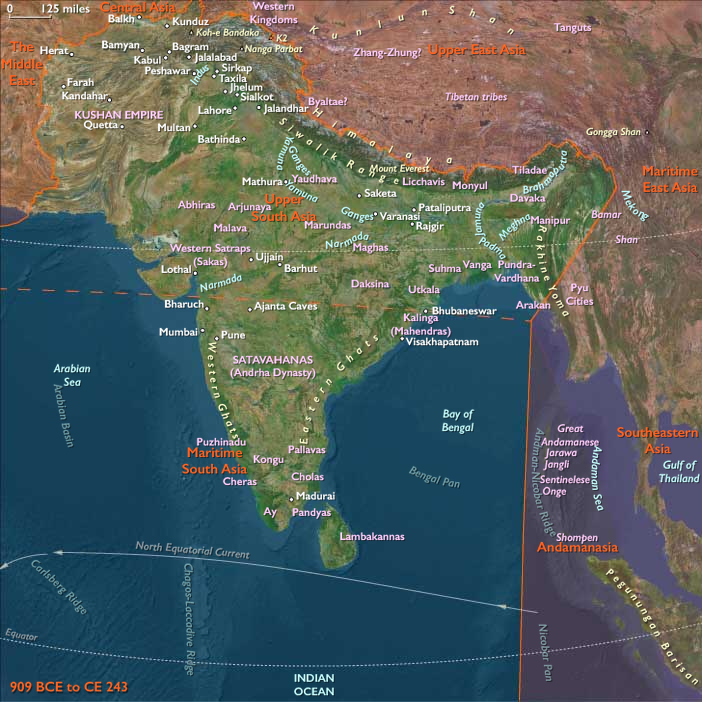
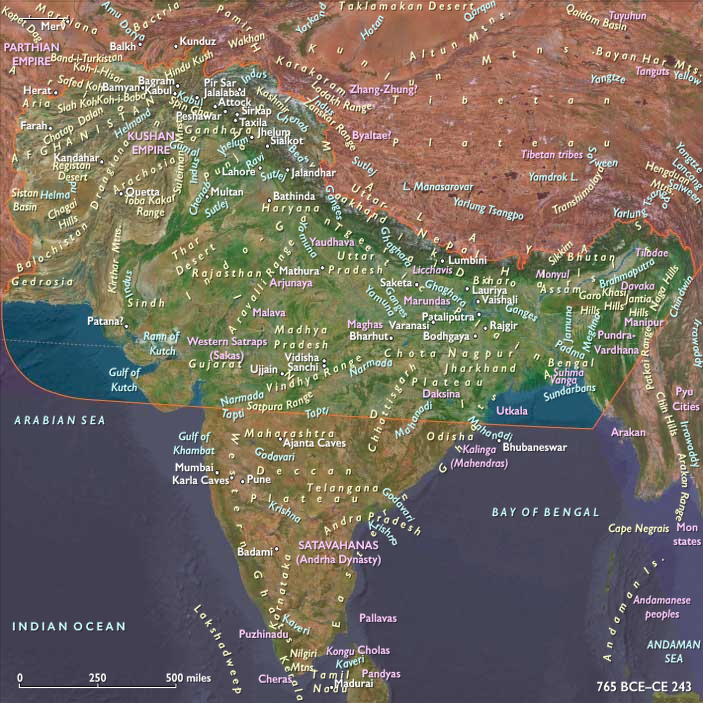
Between 333 and 190 BCE, Upper South Asia witnessed the rise and consolidation of the Mauryan Empire, founded by Chandragupta Maurya around 321 BCE. The empire rapidly expanded under Chandragupta, successfully incorporating vast territories including Magadha, Gandhara, and much of present-day Afghanistan, Balochistan, and northern India. The Mauryan Empire, centered at Pataliputra (modern-day Patna, Bihar), became the first pan-Indian empire, renowned for its centralized administrative system, strong military, and extensive road networks.
Persian and Hellenistic Interactions
Following the decline of the Achaemenid Empire due to Alexander the Great's conquest in 330 BCE, the region experienced significant Greek influence, especially in the northwest. Alexander's brief control of territories including Gandhara and the Indus region introduced Hellenistic cultural elements, which later blended with local traditions, creating a unique Indo-Greek synthesis notably seen in Gandharan art.
Reign and Influence of Emperor Ashoka
The Mauryan Empire reached its zenith under Emperor Ashoka (r. ca. 268–232 BCE), who expanded Mauryan control further into southern regions and parts of present-day Afghanistan. Ashoka's transformative embrace of Buddhism after the bloody Kalinga War had profound implications. Buddhism flourished under Ashoka’s patronage, spreading significantly throughout the region and beyond. Ashoka’s edicts—inscribed on rocks and pillars at strategic locations, such as Laghman (Afghanistan), Mahastan (Bangladesh), and Brahmagiri (Karnataka)—became critical historical sources and symbols of early governance.
Urbanization and Cultural Advancements
This era saw substantial urban growth and cultural advancement, exemplified by cities such as Taxila and Pataliputra, which became renowned centers of education and trade. Economic prosperity facilitated developments in crafts and metallurgy, notably reflected in intricate pottery and widespread use of Northern Black Polished Ware (NBPW).
Integration of Diverse Cultures
The Mauryan administration effectively integrated diverse cultural groups including the Pashtuns and Tajiks in the northwest and indigenous populations across the subcontinent. The continuing eastward movement of Indo-Aryan-speaking peoples and interactions with indigenous Kirāta peoples further diversified cultural practices in the Himalayan foothills, particularly in present-day Nepal, Bhutan, and Sikkim.
Regional Kingdoms and Tribal Confederations
Smaller kingdoms and tribal confederations in the Tarai region (southern Nepal), including the influential Shakya clan of Kapilvastu, continued to thrive economically and culturally, benefiting from interactions with the Mauryan Empire. The Tarai became an important cultural and commercial nexus, integrating local traditions with broader pan-Indian cultural currents.
Philosophical and Religious Developments
Besides Buddhism, Jainism also expanded its philosophical and religious influence, while Zoroastrianism maintained significance, particularly in regions previously influenced by Persian administration. These religious and philosophical currents facilitated broader cultural exchanges, contributing significantly to the region's diversity.
Administrative Innovations
The Mauryan Empire implemented pioneering administrative structures as detailed in the Arthashastra by Kautilya (Chanakya), an influential treatise on governance and economics. The empire established a hierarchical administrative system with provinces and districts managed by centrally appointed officials, enhancing efficiency and control.
Artistic and Architectural Legacy
Artistic expressions reached new heights, marked by the construction of numerous Buddhist stupas, monasteries, and intricate sculptures that combined Hellenistic and indigenous styles. Notable examples include the stupas at Sanchi and artistic relics from Taxila, symbolizing the fusion of diverse cultural influences.
Scientific and Medical Advancements
Advancements in medicine and science flourished during this period. The compilation of significant medical texts like the Charaka Samhita, associated with physician Charaka, provided detailed insights into early Ayurvedic medicine, including concepts of metabolism, digestion, and immunity.
Legacy of the Age
The period from 333 to 190 BCE marked a transformative epoch in Upper South Asia, defined by imperial consolidation, cultural synthesis, and remarkable advancements in governance, arts, and sciences. The Mauryan Empire's expansive influence, Ashoka’s profound religious and ethical reforms, and the integration of diverse cultural traditions laid enduring foundations that significantly shaped subsequent historical trajectories and cultural identities in the region.
People
Groups
- Kirat people
- Iranian peoples
- Hinduism
- Vedic period
- Gandhāra
- India, Iron Age
- Kuru Kingdom
- Panchalas, Kingdom of the
- Kashi, Kingdom of
- Pashtun people (Pushtuns, Pakhtuns, or Pathans)
- Scythians, or Sakas
- Mahajanapadas
- Macedon, Argead Kingdom of
- Zoroastrians
- Shakya
- Kosala, Kingdom
- Buddhism
- Khas peoples
- Kalinga
- Maurya Empire
- Greeks, Hellenistic
Topics
Commodoties
Subjects
Regions
Subregions
Related Events
Showing 10 events out of 78 total
Years: 333BCE - 190BCE
People
Groups
- Kirat people
- Iranian peoples
- Hinduism
- Vedic period
- Gandhāra
- India, Iron Age
- Kuru Kingdom
- Panchalas, Kingdom of the
- Kashi, Kingdom of
- Pashtun people (Pushtuns, Pakhtuns, or Pathans)
- Scythians, or Sakas
- Mahajanapadas
- Macedon, Argead Kingdom of
- Zoroastrians
- Shakya
- Kosala, Kingdom
- Buddhism
- Khas peoples
- Kalinga
- Maurya Empire
- Greeks, Hellenistic
Topics
Commodoties
Subjects
Regions
Subregions