
Northwest Europe (1264–1275 CE): Baronial Conflicts and …
Years: 1264 - 1275
Northwest Europe (1264–1275 CE): Baronial Conflicts and Monarchical Consolidation
England: Baronial Revolt and Royal Restoration
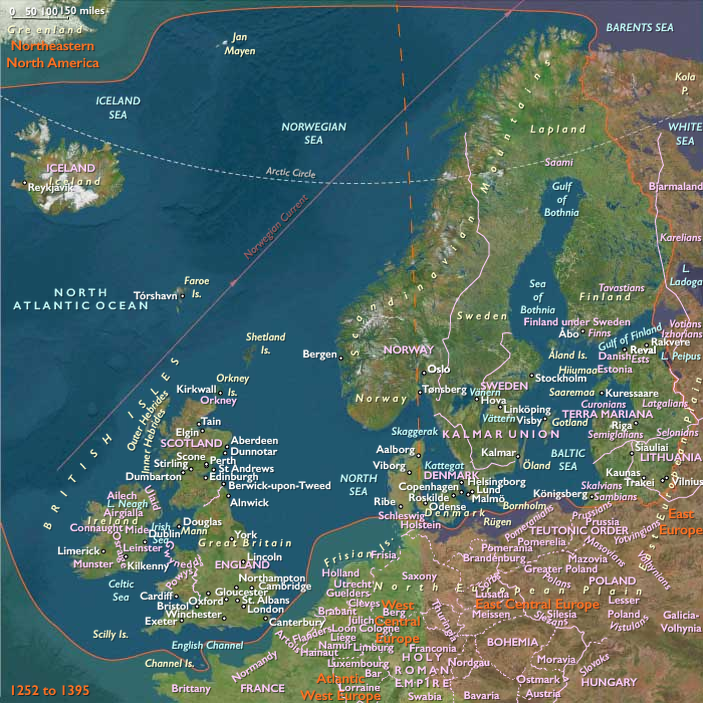
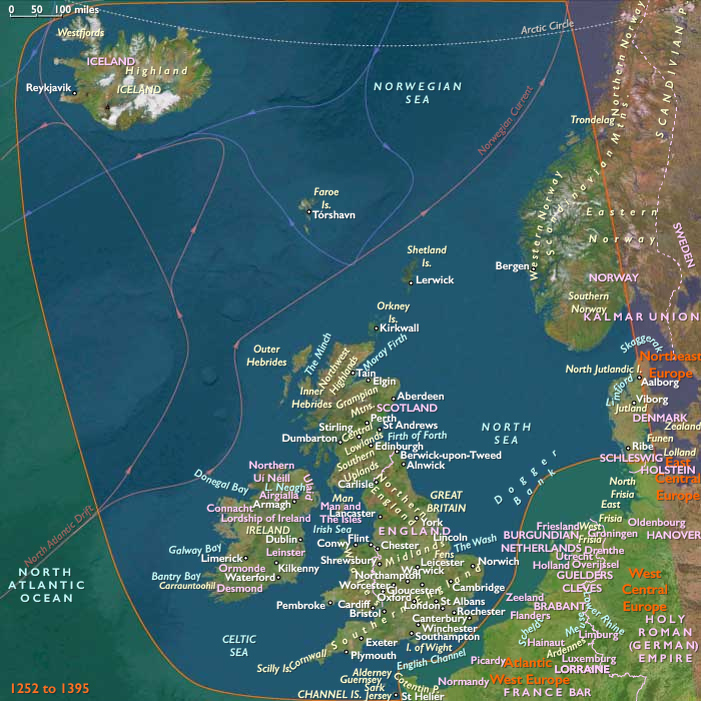
The political instability initiated by the Provisions of Oxford escalated into open rebellion. Simon de Montfort secured a major victory at the Battle of Lewes in 1264, capturing King Henry III and taking effective control of England. Montfort's brief rule significantly expanded parliamentary involvement, notably convening the first parliament in 1265 that included representatives of commoners. However, his triumph was short-lived; Prince Edward decisively defeated Montfort at the Battle of Evesham in 1265, killing him and restoring royal supremacy. Henry III regained authority, though Edward assumed increasing prominence in governance, gradually restoring stability.
Scotland: Territorial Integration and Stability
Under Alexander III, Scotland experienced relative peace and territorial expansion. Alexander successfully negotiated the return of the Hebrides and Isle of Man from Norway in the Treaty of Perth (1266), consolidating Scottish sovereignty over these strategically significant territories. His marriage alliances and diplomatic initiatives helped ensure domestic stability and facilitated Scotland’s economic prosperity and integration.
Ireland: Norman Authority and Gaelic Resistance
Ireland continued experiencing tension between Norman settlers and Gaelic clans. While Normans held significant territories, notably around Dublin, Cork, and Waterford, powerful Gaelic families in regions like Connacht and Ulster maintained staunch resistance. Frequent skirmishes highlighted persistent fragmentation, with neither side gaining decisive advantage.
Denmark: Stabilization under Eric V
Following prolonged internal strife, Eric V Klipping (r. 1259–1286) gradually stabilized Denmark, asserting stronger royal authority despite ongoing tensions with nobility and ecclesiastical figures. His reign marked a partial recovery from preceding civil discord, though tensions with the church remained pronounced.
Norway: Treaty of Perth and Maritime Consolidation
Norway's territorial ambitions in the western Scottish Isles ended with Håkon IV’s death in 1263, shortly after a costly campaign culminating in the indecisive Battle of Largs. His successor, Magnus VI Lagabøte (r. 1263–1280), concluded the Treaty of Perth (1266) with Scotland, ceding the Hebrides and Isle of Man to the Scottish crown. Magnus focused inward, modernizing Norwegian legal codes and solidifying central governance.
Iceland: Cultural Resilience and Literary Production
Icelandic literary culture thrived despite Norway’s increasing influence. The Althing persisted as a core institution, providing governance continuity. Icelandic sagas continued to flourish, documenting historic and legendary narratives that shaped Iceland’s unique cultural heritage and intellectual life.
Economic Networks and Urban Expansion
Trade networks continued expanding significantly, boosting urban centers such as London, Bruges, Bergen, and Dublin. Robust commerce in wool, fish, timber, and luxury items like spices fueled regional economic growth, enhancing both infrastructure and cultural exchange across Northwest Europe.
Religious and Scholarly Developments
The influence of the Dominican and Franciscan orders continued to grow, with their friars deeply engaged in preaching, education, and intellectual endeavors throughout Northwest Europe. Scholasticism, enriched by figures like Roger Bacon, flourished, promoting philosophical inquiry and fostering significant educational reforms across the region.
Legacy of the Era
By 1275 CE, Northwest Europe had witnessed substantial political and territorial reconfigurations, laying foundations for stronger central monarchies and enhanced governance structures. The restoration of royal power in England, territorial consolidation in Scotland, Norway’s strategic realignment, ongoing Gaelic-Norman tensions in Ireland, Denmark’s stabilization, and Iceland’s cultural resilience collectively underscored the transformative momentum shaping the region’s future.
People
- Alexander III of Scotland
- Christopher I of Denmark
- Edward I of England
- Eric IV of Denmark
- Eric V of Denmark
- Haakon IV of Norway
- Henry III of England
- Magnus VI of Norway
- Roger Bacon
- Simon de Montfort
- Valdemar II of Denmark
Groups
- Gaels
- Irish people
- Denmark, Kingdom of
- Ireland, medieval
- Flanders, County of
- Alba (Scotland), Scots Kingdom of
- England, (Anglo-Saxon) Kingdom of
- Icelandic Commonwealth, or Icelandic Free State
- Norway, independent Kingdom of
- Christians, Roman Catholic
- Franciscans, or Order of St. Francis
- Dominicans, or Order of St. Dominic
Topics
- Middle Subatlantic Period
- Subatlantic Period
- Scottish–Norwegian War
- Barons' War, Second
- Lewes, Battle of
- Evesham, Battle of
Commodoties
Subjects
Regions
Subregions
Related Events
Showing 1 events out of 1 total
Years: 1264 - 1275
People
- Alexander III of Scotland
- Christopher I of Denmark
- Edward I of England
- Eric IV of Denmark
- Eric V of Denmark
- Haakon IV of Norway
- Henry III of England
- Magnus VI of Norway
- Roger Bacon
- Simon de Montfort
- Valdemar II of Denmark
Groups
- Gaels
- Irish people
- Denmark, Kingdom of
- Ireland, medieval
- Flanders, County of
- Alba (Scotland), Scots Kingdom of
- England, (Anglo-Saxon) Kingdom of
- Icelandic Commonwealth, or Icelandic Free State
- Norway, independent Kingdom of
- Christians, Roman Catholic
- Franciscans, or Order of St. Francis
- Dominicans, or Order of St. Dominic
Topics
- Middle Subatlantic Period
- Subatlantic Period
- Scottish–Norwegian War
- Barons' War, Second
- Lewes, Battle of
- Evesham, Battle of
Commodoties
Subjects
Regions
Subregions