
Northwest Europe (1360–1371 CE): Recovery, Conflict, and …
Years: 1360 - 1371
Northwest Europe (1360–1371 CE): Recovery, Conflict, and Cultural Flourishing
England and France: Treaty and Respite
The period opened with the Treaty of Brétigny in 1360, temporarily concluding hostilities in the prolonged Hundred Years' War between England and France. Under the treaty's terms, England secured substantial territorial gains in southwestern France. However, this respite proved unstable, characterized by continued mistrust and intermittent military skirmishes that strained peace and foreshadowed renewed conflicts.
Scotland: Renewed Stability and National Confidence
In Scotland, the era was marked by relative stability under the reign of David II, who returned from English captivity following the Treaty of Berwick in 1357. David’s rule saw increased internal stabilization and diplomatic engagement with both England and continental powers, significantly strengthening Scotland's national identity and political coherence.
Ireland: Gaelic Revival and Norman Retreat
Ireland continued to witness an accelerated Gaelic revival, as indigenous Gaelic lords expanded their control over previously Norman-held lands. The Norman influence receded further into isolated coastal areas around the Pale, with major Gaelic dynasties such as the O'Neills and O'Connors consolidating their regional dominance, significantly reshaping Ireland's political landscape.
Denmark: Gradual Restoration and Monarchical Consolidation
Denmark experienced gradual recovery from earlier political fragmentation, marked by the reestablishment of stronger monarchical authority under Valdemar IV Atterdag. His reign was characterized by ambitious reforms and territorial reconquests, revitalizing Denmark’s international stature and internal coherence, despite lingering economic difficulties.
Norway and Sweden: Declining Influence and Tensions
The united reign of Magnus IV over Norway and Sweden faced increased internal tensions and declining authority. Opposition from regional nobles and succession disputes undermined centralized power, culminating in civil unrest and challenges to Magnus’s authority, signaling the beginning of significant political fragmentation in the union.
Iceland: Continued Literary and Cultural Productivity
In Iceland, literary and cultural production continued robustly despite the island's political incorporation into the Norwegian kingdom. Sagas such as Njal's Saga, composed between about 1230 and 1290, both glorified and repudiated Iceland’s Saga Age (870–1050). The legendary Völsunga Saga, completed in the late thirteenth century, retold mythological tales featuring Odin and supernatural motifs, maintaining Iceland's vibrant intellectual and literary landscape.
Economic and Social Impact of the Black Death
The aftermath of the catastrophic Black Death profoundly reshaped Northwest Europe's economic and social structures. Population decline resulted in labor shortages, shifting economic power towards surviving peasants and artisans who gained improved wages and conditions. This profound social shift generated tensions between the aristocracy and the lower classes, triggering widespread socio-economic transformations.
Religious Movements and Social Unrest
Dominican and Franciscan religious orders continued active roles in societal reform and intellectual discourse, addressing the spiritual crises precipitated by the plague. Religious fervor increased, sometimes manifesting in movements critical of established ecclesiastical authority, reflecting broader social dissatisfaction and foreshadowing later religious reforms.
Artistic and Architectural Continuity
Architectural projects continued to reflect the era's cultural ambition despite ongoing challenges. Construction in the Perpendicular Gothic style flourished, exemplified by continued developments at York Minster, where ambitious architectural plans progressed steadily. Artistic patronage remained robust, illustrating societal resilience amid broader disruptions.
Geoffrey Chaucer and Literary Innovations
The emerging literary figure Geoffrey Chaucer began his influential career during this period. Having studied law and philosophy, Chaucer wrote “The Book of the Duchess” around 1369–1370, an elegiac poem marking the death of Blanche, duchess of Lancaster. His works significantly contributed to English literature, incorporating French poetic forms and fostering the development of vernacular literature.
Legacy of the Era
By 1371 CE, Northwest Europe stood significantly altered by recent challenges. While political recovery, cultural vitality, and economic transformation provided new pathways forward, underlying social tensions hinted at future upheavals, setting the stage for subsequent eras of profound political, religious, and social change.
People
Groups
- Gaels
- Irish people
- Denmark, Kingdom of
- Ireland, medieval
- England, (Anglo-Saxon) Kingdom of
- Icelandic Commonwealth, or Icelandic Free State
- Sweden, Kingdom of
- Norway, independent Kingdom of
- Christians, Roman Catholic
- Franciscans, or Order of St. Francis
- Dominicans, or Order of St. Dominic
- Scotland, Kingdom of
Topics
- Middle Subatlantic Period
- Subatlantic Period
- Scottish Independence, Second War of
- Hundred Years' War: Beginning of the War
- Hundred Years' War: First Peace
- Hundred Years' War: Caroline phase
Subjects
Regions
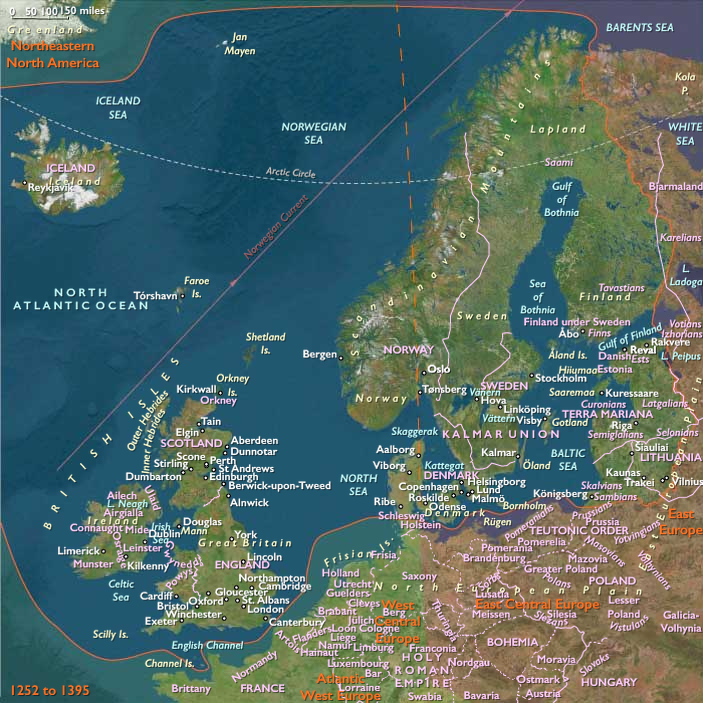
Subregions
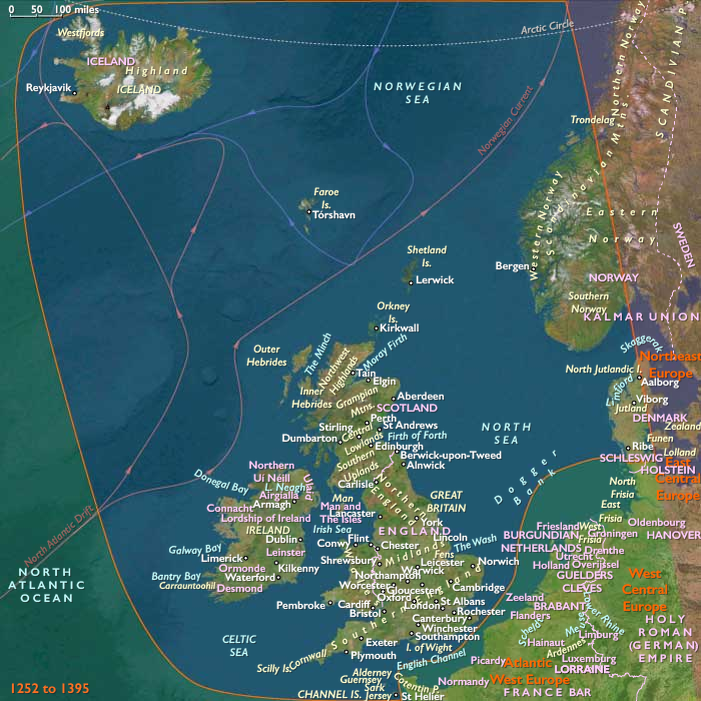
Related Events
Showing 10 events out of 44045 total
Years: 1360 - 1371
People
Groups
- Gaels
- Irish people
- Denmark, Kingdom of
- Ireland, medieval
- England, (Anglo-Saxon) Kingdom of
- Icelandic Commonwealth, or Icelandic Free State
- Sweden, Kingdom of
- Norway, independent Kingdom of
- Christians, Roman Catholic
- Franciscans, or Order of St. Francis
- Dominicans, or Order of St. Dominic
- Scotland, Kingdom of
Topics
- Middle Subatlantic Period
- Subatlantic Period
- Scottish Independence, Second War of
- Hundred Years' War: Beginning of the War
- Hundred Years' War: First Peace
- Hundred Years' War: Caroline phase
Subjects
Regions
Subregions