West Central Europe (49,293 – 28,578 BCE):…
49293 BCE to 28578 BCE
West Central Europe (49,293 – 28,578 BCE): Upper Paleolithic Hunters of the Rhine and Jura
Geographic and Environmental Context
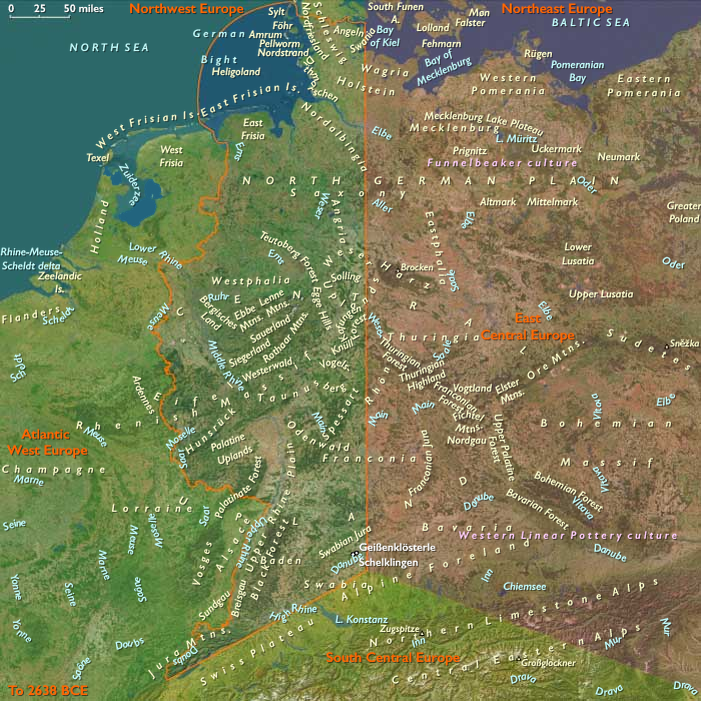
West Central Europe includes modern Germany west of 10°E and the Rhine-adjacent far northwest of Switzerland, including Basel and the eastern Jura Mountains.
-
The Rhine Valley served as a corridor between northern plains and Mediterranean basins.
-
The Jura uplands provided caves and rock shelters, many later yielding rich archaeological deposits.
-
Ice Age conditions shaped the landscape: open steppe-tundra with scattered forests.
Climate and Environmental Shifts
-
This period coincided with the late Pleistocene, within the Last Glacial period.
-
Cold, dry climates alternated with slightly warmer interstadials.
-
Megafauna such as mammoths, woolly rhinoceros, reindeer, bison, and horses thrived in the open steppes.
Societies and Political Developments
-
Populations consisted of small, mobile hunter-gatherer bands.
-
Groups likely numbered 20–40, organized around kinship and cooperative hunting.
-
Seasonal aggregation occurred along river valleys and in cave-shelter hubs of the Jura.
Economy and Trade
-
Hunting: large herd animals on plains; smaller deer, boar, and ibex in uplands.
-
Gathering: roots, nuts, berries in warmer intervals.
-
Exchange: exotic flints, shells, and ochre moved across bands.
Subsistence and Technology
-
Stone tools: blade industries (Aurignacian, Gravettian) with burins, scrapers, backed blades.
-
Bone and antler tools: awls, projectile points.
-
Personal ornaments: perforated teeth, beads, ochre use.
-
Rock art and carved figurines suggest symbolic sophistication.
Movement and Interaction Corridors
-
The Rhine River provided a migration and exchange artery.
-
Jura caves (e.g., Vogelherd, Hohlenstein-Stadel, although slightly east, show broader Upper Paleolithic traditions) illustrate shared symbolic cultures.
Belief and Symbolism
-
Venus figurines and painted caves in the region reflect fertility and spiritual symbolism.
-
Shamans and ritual specialists likely guided hunting magic and group cohesion.
Adaptation and Resilience
-
Seasonal mobility reduced resource risk.
-
Shared symbolic traditions reinforced inter-band alliances.
-
Flexible foraging sustained resilience in harsh climates.
Long-Term Significance
By 28,578 BCE, the Upper Rhine and Jura were home to highly adaptive Upper Paleolithic foragers, whose symbolic traditions and exchange networks foreshadowed the deep cultural continuity of European hunter-gatherers.
Images

West Central Europe in the Upper Paleolithic
Commodities
Subjects
Regions
Central Europe
View →Subregions