
Northwestern North America (4,365 – 2,638 BCE) …
Years: 4365BCE - 2638BCE
Northwestern North America (4,365 – 2,638 BCE) Late Holocene — Maritime Specialization, Estate Tenure, and Longhouse Emergence
Geographic and Environmental Context
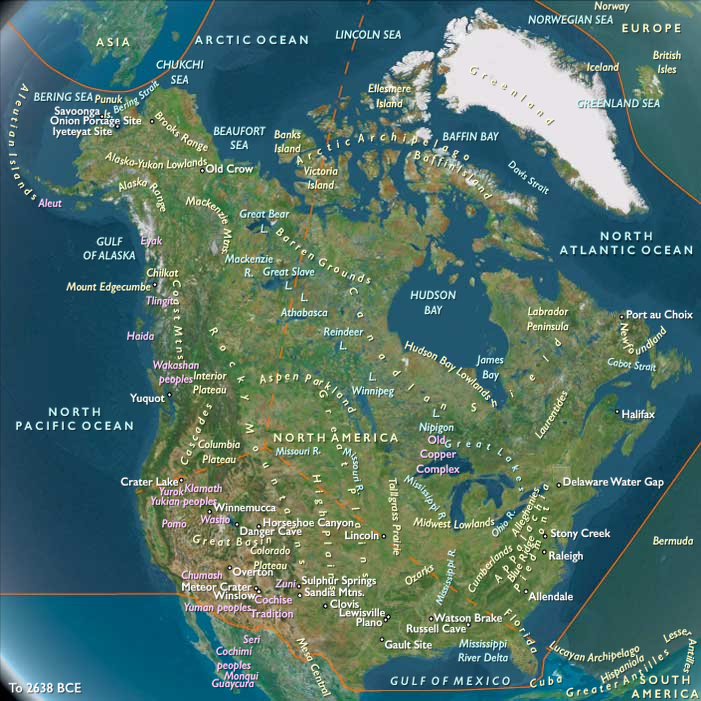
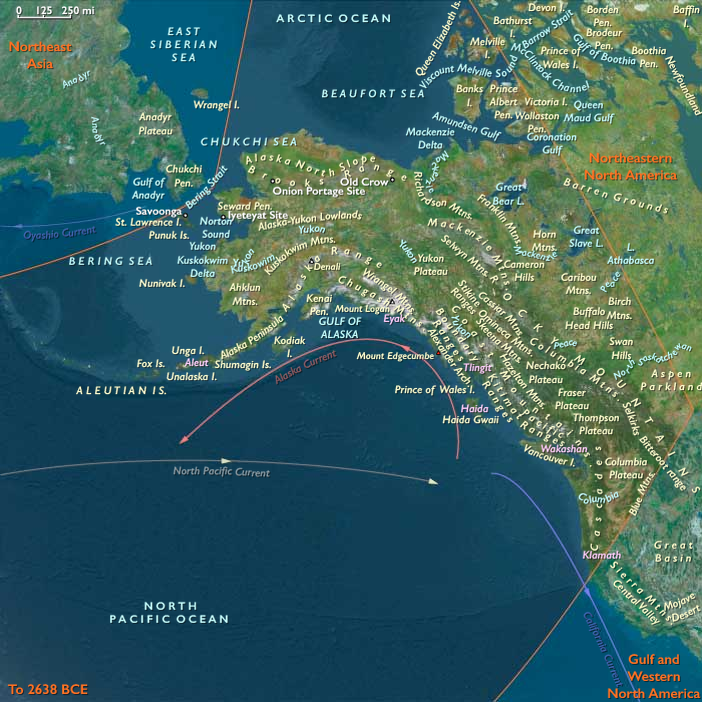
Northwestern North America includes Alaska, western Canada (Alberta, British Columbia, Yukon and Northwest territory and Nunavut west of 110°W) Alaska, Washington State, northern Idaho, and the northwestern portions of Montana, Oregon, and California.
-
Anchors: Outer Gulf of Alaska (Kodiak, Kenai), Haida Gwaii and Central Coast, Puget Sound inlets, Lower Columbia estuary.
Climate & Environmental Shifts
-
Shorelines neared modern positions; stable estuaries and eelgrass meadows supported clams, herring, and salmon.
Subsistence & Settlement
-
Shell-midden towns mark persistent occupation; weir estates and seal/sea-lion rookeries came under lineage control.
-
Interior villages maintained pit-house traditions; cross-ecotone ties enhanced security.
Technology & Material Culture
-
Plank-built canoes (mortise–tenon lashings, adze-finished strakes); robust net technologies; lamp–oil systems for winter light.
-
Fine bone/antler harpoon heads, dentalium and shell beadwork as wealth items.
Movement & Interaction Corridors
-
Inside Passage canoe highways; Fraser–Columbia trunk linked plateau lithics and furs to coastal oils and shell currency.
Cultural & Symbolic Expressions
-
Lineage-ranking visible in burial goods and house platform size; ritual treatment of first salmon and sea mammals institutionalized.
Environmental Adaptation & Resilience
-
Estate-based tenure and allied exchange networks buffered local failures; seasonal scheduling and storage maintained surpluses.
Transition
By 2,638 BCE, maritime societies with lineage estates and longhouse architecture were well established along many coasts.
Groups
- Paleo-Indians, or Paleoamericans
- Paleo-Arctic Tradition
- Athabaskans, or Dene, peoples
- Klamath (Amerind tribe)
Topics
- Neolithic Revolution
- Archaic Stage (Americas)
- Neolithic Subpluvial, or Holocene climatic optimum, or Holocene Wet Phase
- Atlantic Period during the Neolithic Subpluvial
- 8.2 kiloyear event during the Neolithic Subpluvial
- Chalcolithic Epoch, or Copper Ages
- Older Peron Transgression during the Neolithic Subpluvial
Commodoties
Subjects
Regions
Subregions
Related Events
Showing 6 events out of 6 total
Years: 4365BCE - 2638BCE
Groups
- Paleo-Indians, or Paleoamericans
- Paleo-Arctic Tradition
- Athabaskans, or Dene, peoples
- Klamath (Amerind tribe)
Topics
- Neolithic Revolution
- Archaic Stage (Americas)
- Neolithic Subpluvial, or Holocene climatic optimum, or Holocene Wet Phase
- Atlantic Period during the Neolithic Subpluvial
- 8.2 kiloyear event during the Neolithic Subpluvial
- Chalcolithic Epoch, or Copper Ages
- Older Peron Transgression during the Neolithic Subpluvial
Commodoties
Subjects
Regions
Subregions