
Omurtag, the ruler of Bulgaria from 815, …
Years: 821 - 821
February
Omurtag, the ruler of Bulgaria from 815, known as “the Builder,” had at the beginning of his reign concluded a thirty-year peace treaty with Emperor Leo V, which is inscribed on a surviving column.
The two rulers had sworn to uphold the conditions of the treaty by each other's rites, which had scandalized the imperial court.
The treaty had determined the trajectory of the border between Constantinople and Bulgaria, the status of the Slavic tribes, and the conditions for the exchange of prisoners.
Upon the seizure of the imperial throne by Michael II in 820, the peace treaty is renewed.
The long peace has been a favorable time for an active internal policy for the further consolidation of the forming Bulgarian nation; removal of many internal threats for the stability and intensive building.
After the unsuccessful attempts of several Slavic chiefs to secede from Bulgaria, Omurtag has conclusively eliminated the autonomy of the Slavic tribes in the vast country.
He makes an administrative reform and divides the state into large provinces called comitati (singular comitat) whose governors are directly appointed by the Kanasubigi.
The comitati are further divided into smaller regions called zhupi (singular zhupa).
The area around the capital has a special status.
The Army has been integrated and becomes unified; it no longer relies on separate Slav infantry and Bulgarian cavalry.
At home, Omurtag has undertaken large scale construction, intended to both restore his capital Pliska, which had been destroyed by the imperial forces in 811, and to foster the development of a number of regional centers, palaces, and fortifications.
Omurtag pursues a policy of repression against Christians, in particular against the former prisoners of war settled by his father Krum in Bulgaria (mostly north of the Danube).
This policy may have been motivated in part by the invasion of 811 or with the beginning of Christian proselytizing by members of the substantial captive population.
In connection with these policies, Omurtag has disinherited his eldest son Enravota (Voin), who has shown himself sympathetic to Christianity.
Locations
People
Groups
- Polytheism (“paganism”)
- Slavs, South
- Christianity, Chalcedonian
- Greeks, Medieval (Byzantines)
- Bulgarian Empire (First)
- Bulgarians (South Slavs)
- Roman Empire, Eastern: Non-dynastic
- Roman Empire, Eastern: Phrygian or Armorian dynasty
Topics
Commodoties
Subjects
Regions
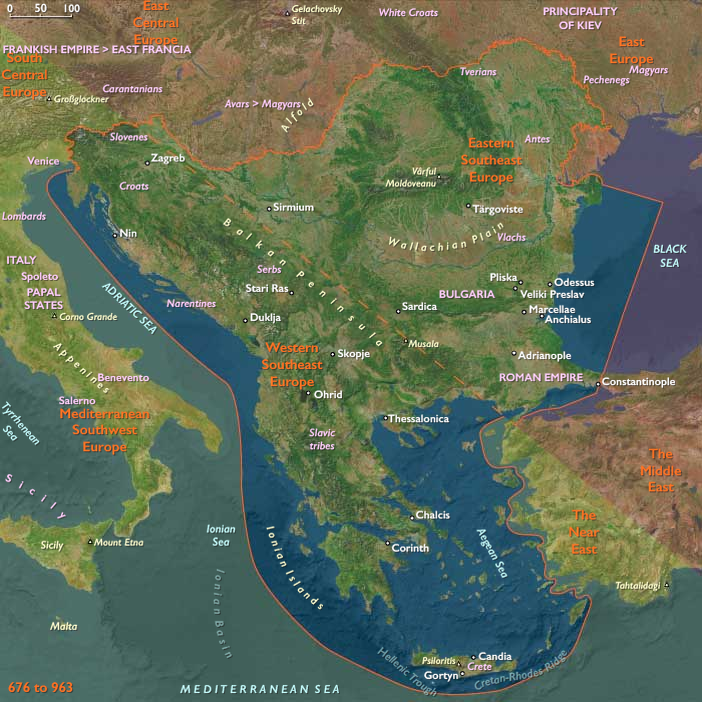
Subregions
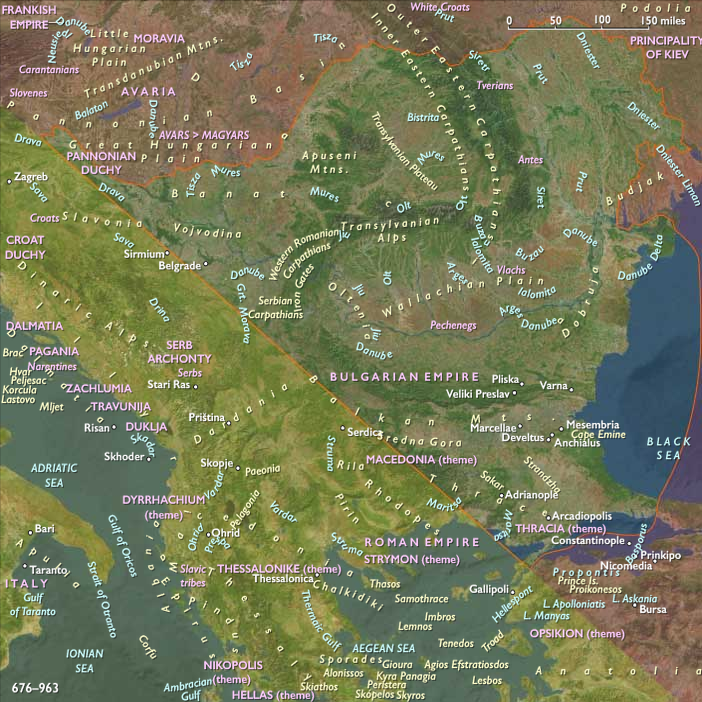
Related Events
Showing 10 events out of 54433 total
Years: 821 - 821
February
Locations
People
Groups
- Polytheism (“paganism”)
- Slavs, South
- Christianity, Chalcedonian
- Greeks, Medieval (Byzantines)
- Bulgarian Empire (First)
- Bulgarians (South Slavs)
- Roman Empire, Eastern: Non-dynastic
- Roman Empire, Eastern: Phrygian or Armorian dynasty
Topics
Commodoties
Subjects
Regions
Subregions