Two Islamic Jihad bombers are killed in…
November 1998 CE
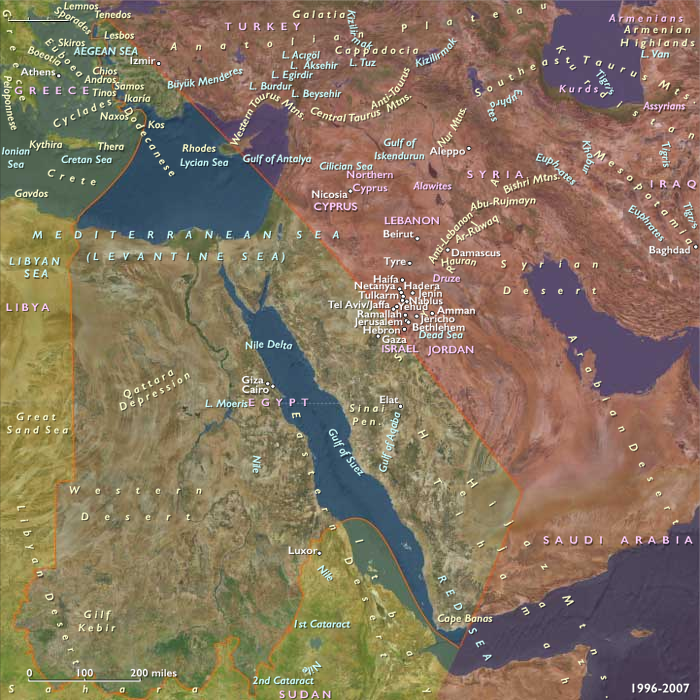
Two Islamic Jihad bombers are killed in an abortive car bombing outside Jerusalem's Mahane Yehuda market that wounds twenty-one on November 6, 1998.
Netanyahu takes this and the previous week's Gaza incident as evidence of Arafat's unwillingness to crack down on terrorism.
The atmosphere is further soured by angry exchanges as to how the Palestinian Covenant is to be annulled.
Because it entails putting the Palestinians in control of as much as forty percent of the West Bank, the Wye Memorandum brings Netanyahu into conflict with right-wing groups in Israel.
The Israeli Cabinet approves the Wye memorandum on November 11, declaring, "The Government will continue to pursue its policy of strengthening and developing the communities in Judea, Samaria and the Gaza district, on the basis of a multi-annual plan,: including "security roads for Jews throughout the territories and preservation of Israel's "national interests": "security areas, the areas around Jerusalem, the areas of Jewish settlement, infrastructure interests, water sources, military and security locations, the areas around north-south and west-east transportation arteries, and historic sites of the Jewish people."
Ironically, approval of the memorandum in the Knesset (parliament) on November 17 by an overwhelming seventy-five votes to nineteen with nine abstentions is due to blanket support by the opposition parties.
As for the governing coalition, two National Religious Party Cabinet ministers vote against the memorandum, and seven other ministers abstain.
Leading figures in Netanyahu's Likud Party advise him to form a national unity government with the main opposition Labor Party or to call early elections.
When Netanyahu's efforts to achieve a unity government fail, he joins with a majority of the legislators and votes to dissolve his government.
Elections are scheduled for May 17, 1999.
In the meantime, further enactments of the provisions of the Wye accord seem uncertain at best.
Groups
Topics
Commodities
Regions
The Near and Middle East
View →Subregions