One chief had asked Lewis and Clark…
April 1805 CE
As tensions increased, Lewis and Clark had prepared to fight, but the two sides had fallen back in the end.
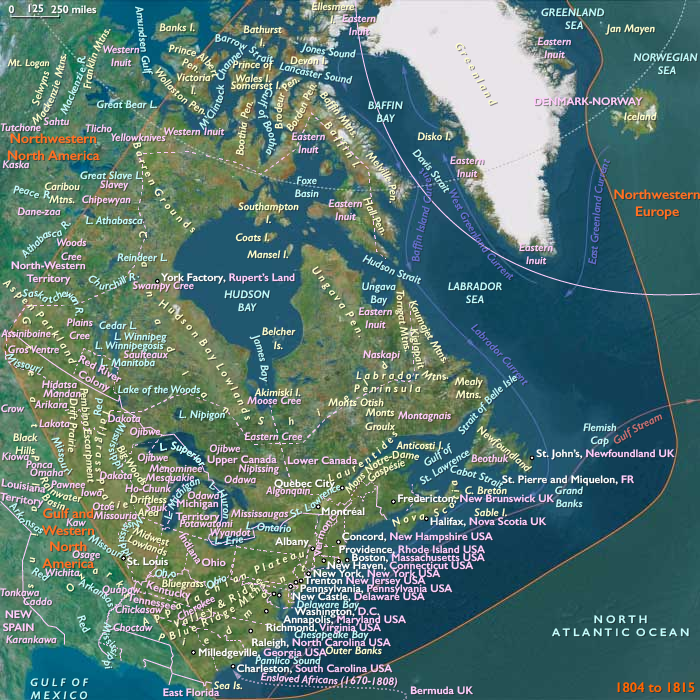
The Americans had quickly continued westward (upriver), and camped for the winter in the Mandan nation's territory.
The Lewis and Clark party had built Fort Mandan, near present-day Washburn, North Dakota, in the winter of 1804–05.
After the expedition set up camp, nearby natives had come to visit in fair numbers, some staying all night.
For several days, Lewis and Clark met in council with Mandan chiefs.
Here they met a French-Canadian fur trapper named Toussaint Charbonneau, and his young Shoshone wife Sacagawea.
Charbonneau at this time begins to serve as the expedition's translator.
Peace is established between the expedition and the Mandan chiefs with the sharing of a Mandan ceremonial pipe.
Just before departing on April 7, 1805, the expedition sends the keelboat back to St. Louis with a sample of specimens, some never seen before east of the Mississippi.
Groups
Regions
Northern North America
View →Subregions