The 1889 Constitution of the Empire of…
1888 CE to 1899 CE
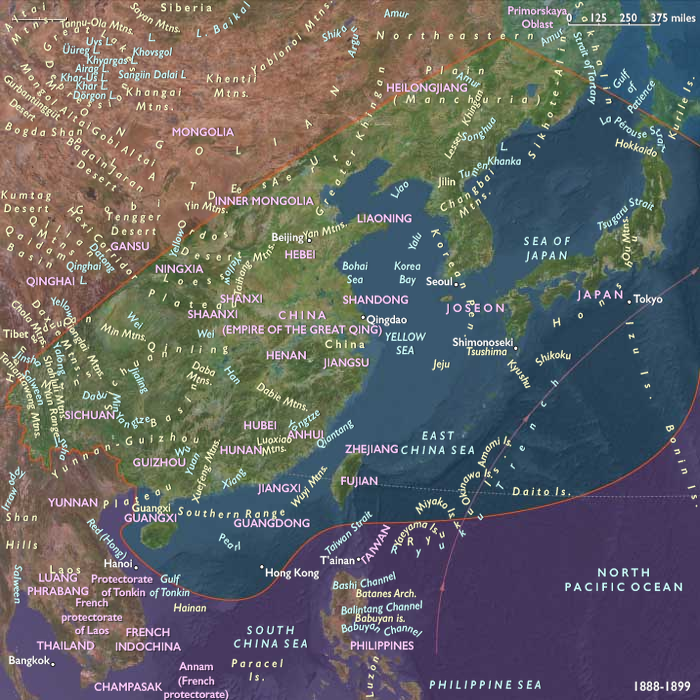
The 1889 Constitution of the Empire of Japan (the Meiji Constitution), when finally granted by the emperor as a sign of his sharing his authority and giving rights and liberties to his subjects, provides for the Imperial Diet (Teikoku Gikai), composed of a popularly elected House of Representatives with a very limited franchise of male citizens who pay fifteen yen in national taxes, about one percent of the population; the House of Peers, composed of nobility and imperial appointees; and a cabinet responsible to the emperor and independent of the legislature.
The Diet can approve government legislation and initiate laws, make representations to the government, and submit petitions to the emperor.
Nevertheless, in spite of these institutional changes, sovereignty still resides in the emperor on the basis of his divine ancestry.
The new constitution specifies a form of government that is still authoritarian in character, with the emperor holding the ultimate power and only minimal concessions made to popular rights and parliamentary mechanisms.
Party participation is recognized as part of the political process.
The Meiji Constitution will last as the fundamental law until 1947.
Locations
People
Topics
Subjects
Regions
East Asia
View →Subregions