
Otto of Worms, a scion of the…
October 1002 CE
Otto of Worms, a scion of the Salian dynasty from Rhenish Franconia, is the only son of Count Conrad the Red, Duke of Lotharingia from 944, and Liutgarde, daughter of Emperor Otto I and Edith.
He is first documented as a count in the Nahegau about 956, he also holds the Speyergau and Wormsgau, as well as several other counties in the area.
Emperor Otto II had appointed Count Otto Carinthian duke in 978, after his Luitpolding predecessor Henry I of Carinthia had unsuccessfully rebelled against the Imperial authority during the War of the Three Henries and was deposed.
In 985 however, Emperor Otto's widow Theophanu, in order to gain support for the succession of her minor son Otto III, had restored Carinthia to the Luitpoldings, and Otto had again lost his duchy.
Able, at least, to retain the ducal title as "Duke of Worms", he had received the Kaiserpfalz of Lautern and had seized large estates of Wissembourg (Weißenburg) Abbey in compensation, his original territory expanded so as not to diminish his rank.
Sometime between 965 and 970 Otto of Worms' oldest son, Henry of Speyer, was born.
Little is known of his life as he died the age of twenty between 985 and 990.
Conrad II was born out of Henry's marriage to Adelaide of Alsace, an area of Upper Lorraine.
After Henry's death, Adelaide had married a Frankish nobleman.
After her remarriage, Adelaide demonstrated no close relationship with her son.
Upon the death of Duke Henry II of Bavaria in 995, Otto had at first received the March of Verona back, while Carinthia had passed to Henry's son Duke Henry IV of Bavaria In 996, Otto III had appointed Otto of Worms's son Bruno as Pope Gregory V.
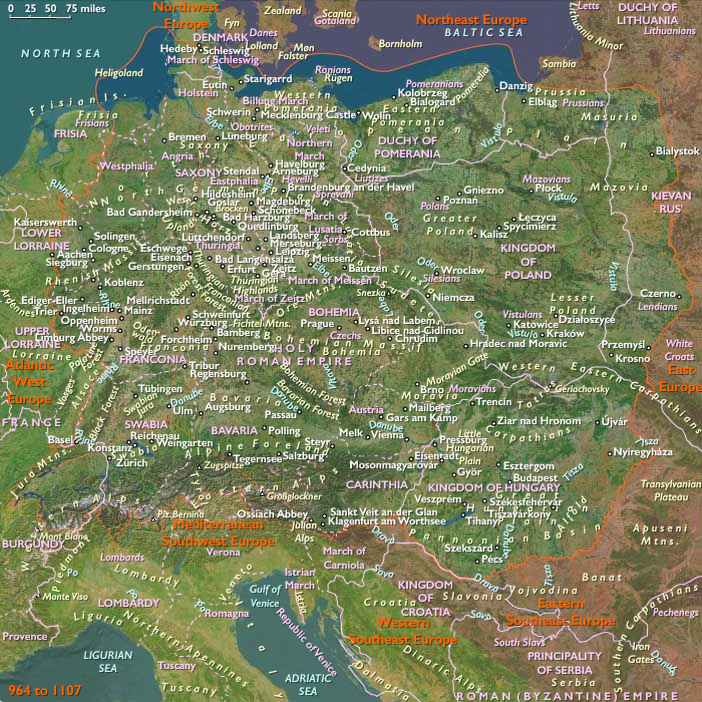
When Emperor Otto III dies in 1002, and Otto of Worms and Henry IV of Bavaria are candidates for the election as King of the Romans, Otto withdraws, together with his son Conrad, and receives the Duchy of Carinthia from the newly elected king Henry (now Henry II of Germany) in return.
He is forced nevertheless to cede his Rhenish possessions to his longtime rival, Bishop Burchard of Worms.
Burchard has overseen the rebuilding of the walls of Worms, the creation of many monasteries and churches, and takes part in the destruction of the fortifications of Duke Otto, who had been believed to be housing criminals.
According to Burchard's biographer, "many limbs were hacked off and many murders occurred on both sides" of the conflict.
Burchard had adopted a child from the enemy household, Conrad II, providing his education and upbringing by 1000: he will grow up to become the founding emperor of the Salian dynasty.
After gaining the aid of King Henry II and engaging in negotiations, Duke Otto's castle is dismantled and rebuilt to become a monastery in honor of St. Paul.
Locations
People
Groups
Commodities
Subjects
Regions
Central Europe
View →Subregions
