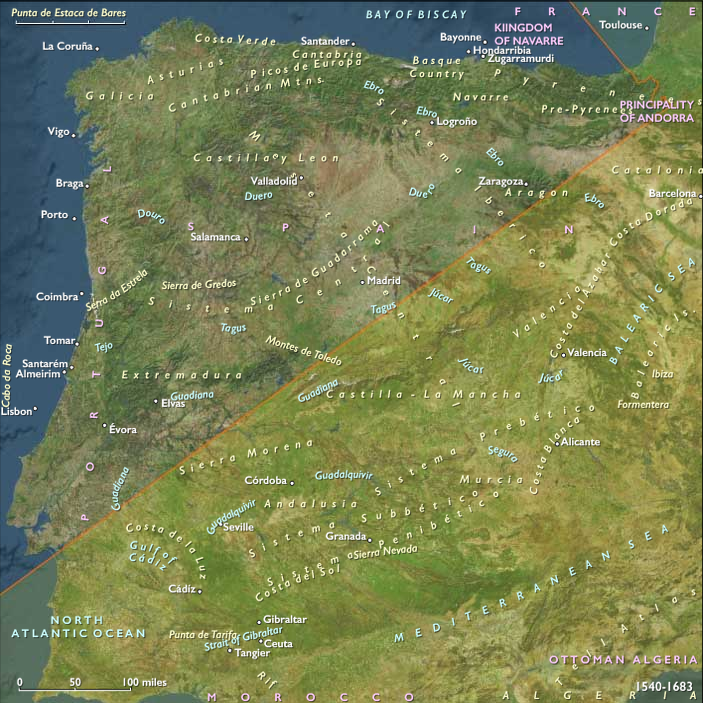
Philip II’s Strategy and Dom António’s Brief Reign (1580)
As part of his campaign to claim the Portuguese throne, Philip II of Spain used gold from the Americas to bribe Portugal’s aristocracy, securing the support of key nobles and high clergy. For much of the Portuguese elite, a personal union with Spain seemed economically advantageous, especially as Portugal’s finances were suffering after the disastrous Battle of Alcácer Quibir (1578).
Meanwhile, Dom António, Prior of Crato, attempted to rally resistance, proclaiming himself King of Portugal in Santarém on July 24, 1580, and receiving popular acclamations in multiple regions. However, his lack of noble support and the superiority of Philip II’s military forces would ultimately doom his claim to the throne.
Philip II’s Use of Bribery to Win the Aristocracy
- Philip II recognized that many Portuguese nobles were reluctant to fight for Dom António, especially given Portugal’s military and financial exhaustion.
- He bribed influential aristocrats and high-ranking clergy with gold from the Americas, promising them:
- Retained privileges and autonomy under Spanish rule.
- Greater access to Spain’s empire and trade networks.
- Financial stability at a time when Portugal was in economic crisis.
These bribes divided Portugal’s ruling class, weakening the anti-Spanish resistance.
Dom António’s Declaration as King (July 24, 1580)
- Despite the noble defection to Philip II, Dom António proclaimed himself King of Portugal in Santarém on July 24, 1580.
- He was popularly acclaimed in several locations, as many Portuguese feared foreign rule under Spain.
- However, his lack of an organized army and noble backing severely weakened his chances of retaining power.
The Road to Spanish Domination
- While Dom António rallied the lower classes, Philip II had already mobilized his forces.
- In August 1580, Philip’s Duke of Alba invaded Portugal with a formidable army, culminating in the decisive Battle of Alcântara on August 25, 1580.
- Dom António’s forces were quickly defeated, marking the end of his short-lived reign and paving the way for Spain’s rule over Portugal (1580–1640) under the Iberian Union.
Conclusion: The Fall of Portuguese Independence
While Dom António had strong popular support, his failure to gain the nobility’s backing—combined with Philip II’s strategic bribes and superior military force—ensured Spain’s victory. The Portuguese succession crisis of 1580 ended with Spain absorbing Portugal into a personal union, leading to sixty years of Spanish rule before Portugal regained independence in 1640.