
Philip IV of Spain is to become …
Years: 1624 - 1624
Philip IV of Spain is to become famous for his patronage of his court painter Diego Velázquez.
Velázquez originates from Seville and mutual contacts had caused him to become known in 1623 to Gaspar de Guzmán, Count Duke of Olivares, Philip’s principal minister, who comes from the same region; he is summoned to Madrid by the king in 1624.
Despite some jealously from the existing court painters, Velázquez rapidly becomes a success with Philip, being retained for the rest of his career until his death, painting a celebration of the Treaty of the Pyrenees for Philip.
The king and Velázquez share common interests in horses, dogs and art, and in private are to form an easy, relaxed relationship over the years.
Velázquez is to paint at least three portraits of Olivares, his friend and original patron, producing the baroque equestrian portrait along with the standing portraits now at the Hermitage and São Paulo.
Like many contemporaries, Olivares is 'haunted' by Spain's potential decline, and sees part of the solution at least in a reform of the Spanish state.
Olivares sees Catalonia and the other provinces as paying less to the crown than they should, and does not really understand why the inhabitants should object to a fairer distribution of taxes.
He is confident in the intellectual argument for a better defended, better ordered Spain, and never seems to have shown serious doubt that his plans would succeed, or understood the growing hatred against his rule.
These plans take form first in Olivares' Unión de Armas, or 'Union of Arms' concept, put forward in 1624.
This would have involved the different elements of Philip's territories raising fixed quotas of soldiers in line with their size and population.
Despite being portrayed by Olivares as a purely military plan, it reflects Olivares' desire for a more closely unified Spain—although not, it is generally argued, a completely unified kingdom.
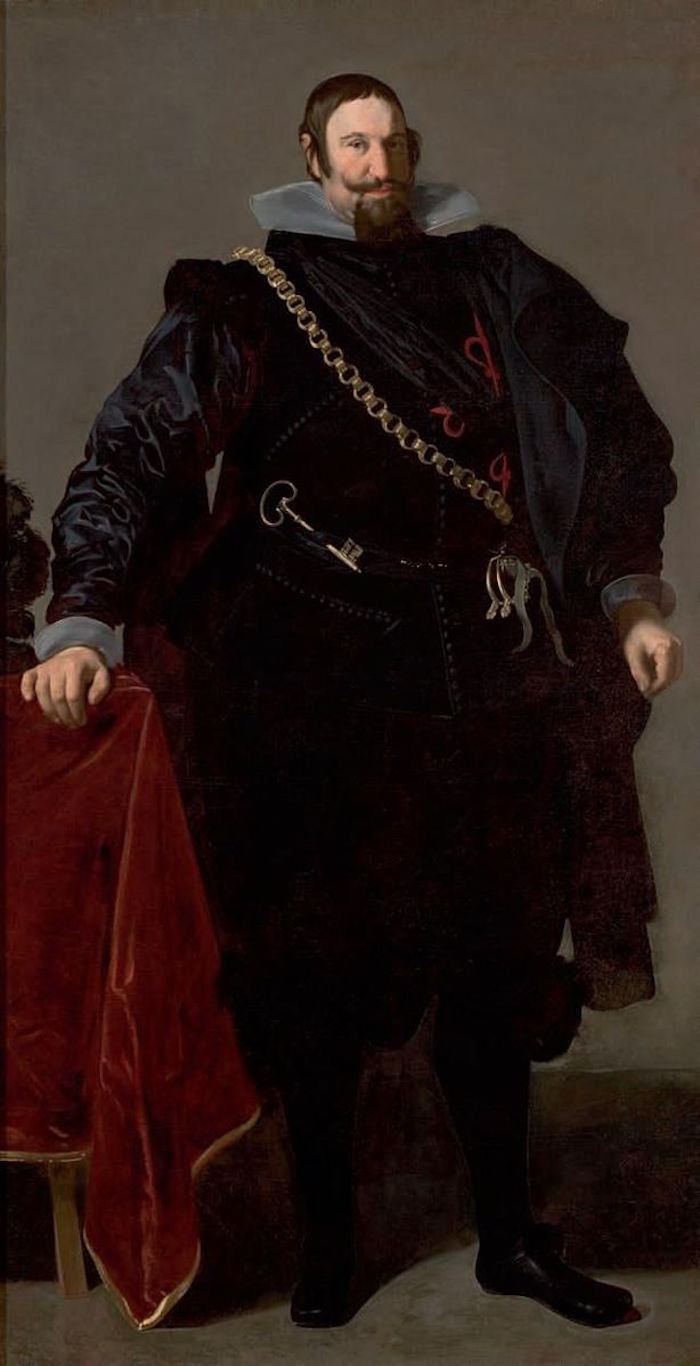
A relatively youthful Olivares in 1624, three years into his time in power, by Diego Velázquez.
Locations
People
Groups
- Mantua, Duchy of
- Spain, Habsburg Kingdom of
- Netherlands, Southern (Spanish)
- Netherlands, United Provinces of the (Dutch Republic)
- France, (Bourbon) Kingdom of
Topics
- Protestant Reformation
- Counter-Reformation (also Catholic Reformation or Catholic Revival)
- Portraits, Baroque
- Eighty Years War (Netherlands, or Dutch, War of Independence)
- Thirty Years' War
- Western Art: 1624 to 1636
- Mantuan Succesion, War of the
Commodoties
Subjects
- Commerce
- Painting and Drawing
- Labor and Service
- Fashion
- Conflict
- Faith
- Government
- Technology
- Movements
Regions
Subregions
Related Events
Showing 10 events out of 32911 total
Years: 1624 - 1624
A relatively youthful Olivares in 1624, three years into his time in power, by Diego Velázquez.
Locations
People
Groups
- Mantua, Duchy of
- Spain, Habsburg Kingdom of
- Netherlands, Southern (Spanish)
- Netherlands, United Provinces of the (Dutch Republic)
- France, (Bourbon) Kingdom of
Topics
- Protestant Reformation
- Counter-Reformation (also Catholic Reformation or Catholic Revival)
- Portraits, Baroque
- Eighty Years War (Netherlands, or Dutch, War of Independence)
- Thirty Years' War
- Western Art: 1624 to 1636
- Mantuan Succesion, War of the
Commodoties
Subjects
- Commerce
- Painting and Drawing
- Labor and Service
- Fashion
- Conflict
- Faith
- Government
- Technology
- Movements
Regions
Subregions