
North Africa (909–766 BCE) The Libyan …
Years: 909BCE - 766BCE
North Africa (909–766 BCE)
The Libyan Dynasties and Phoenician Expansion
The Rise of the Libyan Pharaohs
Beginning around 909 BCE, Berber influence in Egypt reaches a historic zenith with the emergence of the so-called Libyan dynasties. Originating from influential Berber tribes such as the Libu and Meshwesh, these groups, initially depicted by Egyptian chronicles as troublesome invaders, steadily integrate into Egyptian society. By approximately 945 BCE, a prominent Berber military leader, Sheshonk I, seizes control of Egypt, inaugurating the Twenty-second Dynasty, known as the Libyan Dynasty (945–730 BCE). Sheshonk I consolidates his authority, successfully extending Egyptian influence into Palestine and Syria, a notable achievement documented in biblical and Egyptian sources.
Sheshonk’s successors maintain varying degrees of power and authority over Egypt, relying heavily on Berber military elites. These Berber Pharaohs significantly impact Egypt’s political structure and contribute substantially to interconnected cultural exchanges across North Africa and the eastern Mediterranean.
Phoenician Consolidation and the Founding of Carthage
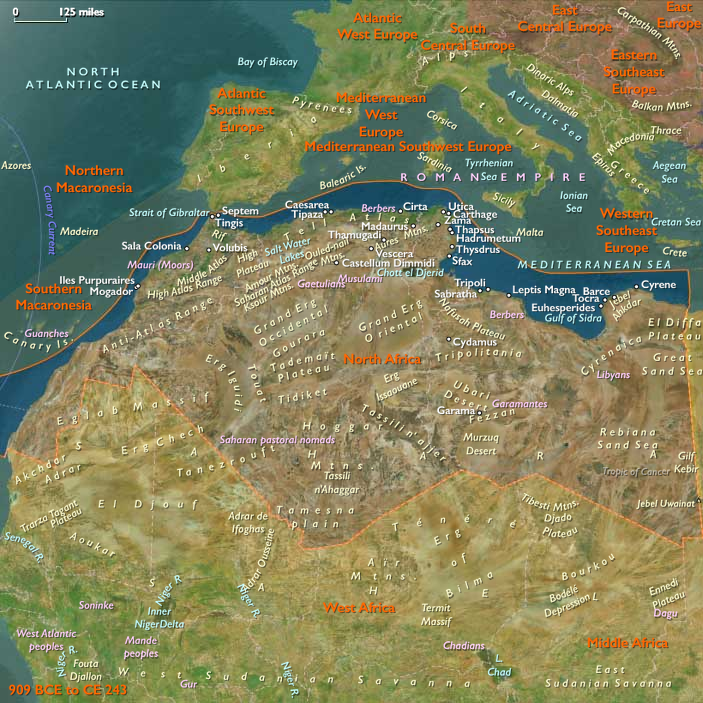
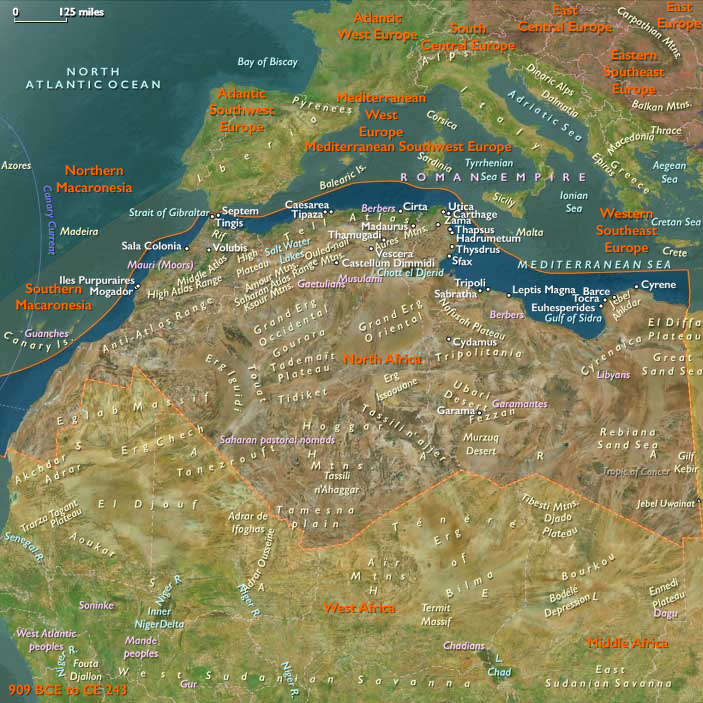
Concurrent with the Libyan dynastic presence in Egypt, Phoenician influence along the North African coast intensifies considerably. According to Roman sources, Phoenician colonists from the Levant establish Carthage around 814 BCE near modern-day Tunis in Tunisia. However, archaeological evidence indicates settlement activity beginning no earlier than approximately 740 BCE, suggesting uncertainty around the city's precise founding date. Ancient historians offer varying timelines for Carthage's establishment, ranging from 1215 BCE to coinciding with the end of the Trojan War. Despite these discrepancies, the most credible estimates place the founding between 846 and 813 BCE.
Legend attributes Carthage’s establishment to Queen Dido (Elissa or Alissar), an exiled princess from Tyre. According to various sources, including the historian Timaeus of Tauromenium, Elissa fled Tyre following her husband’s assassination by her brother, King Pygmalion. She subsequently founded Carthage, laying the foundations for what would become a powerful mercantile and naval state. Roman poet Virgil dramatizes this legend in the Aeneid, significantly embellishing the story to reflect Roman attitudes toward Carthage.
Phoenician settlers introduce significant innovations to North Africa, including advanced shipbuilding techniques, improved agricultural practices, and notably, the worship of their city-god Melqart. The Phoenician phonetic alphabet becomes the basis for future writing systems in the region, adopted and adapted by local Berber communities. Although Carthaginian primary historical sources largely vanish following the city’s destruction by Rome during the Third Punic War, Greek and Roman historical texts provide the principal surviving accounts, often colored by rivalry and hostility.
Berber Cultural Continuity and Societal Development
During this period, Berber societies continue to flourish independently in interior regions, particularly around the Atlas Mountains and Saharan oases. Tribal structures, based primarily on clan and family affiliations, remain central, underscoring resilient cultural identity amid external influences. Despite lacking centralized political institutions, Berber communities maintain robust internal coherence through shared linguistic and cultural traditions.
Interactions with Phoenician coastal settlements like Carthage promote economic prosperity and cultural exchange, but they also reinforce clear distinctions between coastal mercantile communities and autonomous interior Berber tribes, distinctions that will significantly influence North Africa’s subsequent historical trajectory.
Legacy of Integration and Cultural Exchange
By 766 BCE, North Africa stands at the intersection of indigenous Berber resilience and burgeoning Phoenician commercial power. The Berber-led Libyan dynasties in Egypt underscore North Africa’s role in broader Mediterranean geopolitics, while Phoenician-founded Carthage emerges as a potent regional force, eventually known as the "shining city" controlling hundreds of settlements around the western Mediterranean. Together, these dynamics establish foundations profoundly shaping the region’s historical evolution in the centuries to come.
Groups
- Phoenicians
- Libu
- Meshwesh
- Tyre, Kingdom of (Phoenicia)
- Egypt (Ancient), Third Intermediate Period of
- Berber people (also called Amazigh people or Imazighen, "free men", singular Amazigh)
- Carthage, Kingdom of
Topics
- Younger Subboreal Period
- Greek Dark Ages
- Phoenician colonization
- Iron Age, Near and Middle East
- Iron Age Cold Epoch
Subjects
Regions
Subregions
Years: 909BCE - 766BCE
Groups
- Phoenicians
- Libu
- Meshwesh
- Tyre, Kingdom of (Phoenicia)
- Egypt (Ancient), Third Intermediate Period of
- Berber people (also called Amazigh people or Imazighen, "free men", singular Amazigh)
- Carthage, Kingdom of
Topics
- Younger Subboreal Period
- Greek Dark Ages
- Phoenician colonization
- Iron Age, Near and Middle East
- Iron Age Cold Epoch
Subjects
Regions
Subregions