
The secret Löwenwolde's Treaty promoting the candidacy …
Years: 1732 - 1732
The secret Löwenwolde's Treaty promoting the candidacy of Infante Manuel of Portugal for the Polish throne, signed by Empress Anna of Russia, Holy Roman Emperor Charles VI, and King Frederick William I of Prussia in 1732, reflect their their unwillingness to allow former Polish Stanisław Leszczyński to become king despite their irritation with Augustus II of Saxony.
Stanisław is supported in his bid to regain the throne by his son-in-law, King Louis XV of France, who hopes to renew France's traditional alliance with Poland as a way to balance Russian and Austrian power in northern and eastern Europe.
France's prime minister, Cardinal Fleury, sees the Polish struggle as a chance to strike at Austrian power in the west without seeming to be the aggressor.
While he cares little for who should become King of Poland, the cause of protecting the King's father-in-law is a sympathetic one, and he hopes to use the war as a means of humbling the Austrians, and perhaps securing the long-desired Duchy of Lorraine from its duke, Francis Stephen, who is expected to marry Emperor Charles's daughter Maria Theresa, which will bring Austrian power dangerously close to the French border.
Fleury's diplomatic moves will bring additional powers into the coming war that have no interest in Polish affairs, most notably Spain and Charles Emmanuel, the King of Sardinia, who is also the Duke of Savoy.
Polish kings have been elected by Polish nobility since the death of Sigismund II Augustus in 1572.
The process gives the nobility a great deal of power over the king, but the sejms (meetings of delegates) to elect kings and conduct other business have in latter years been paralyzed by the institution of the Liberum Veto, which gives any individual in the sejm the power to negate its decisions.
As a result, Poland's powerful neighbors have been able to exert significant influence on the decision-making process, and by the early eighteenth century the system had gone into decline.
Stanisław hopes to be elected king once again upon the death of his old adversary, Augustus, who has failed in his attempts to make the Polish crown hereditary within his family.
Stanisław had been installed as king of Poland thirty years earlier by King Charles XII of Sweden during his period of dominance in the early part of the Great Northern War, and had been ousted following the Battle of Poltava by the victorious Russians.
People
- André-Hercule de Fleury
- Anna of Russia
- Augustus II the Strong
- Augustus III of Poland
- Charles Emmanuel III of Sardinia
- Charles VI, Holy Roman Emperor, King of the Romans (King of Germany)
- Francis I, Holy Roman Emperor
- Frederick William I of Prussia
- Louis XV of France
- Maria Theresa
- Stanisław Leszczyński
Groups
- Austria, Archduchy of
- Lorraine, (second) Duchy of
- Saxony, Electorate of
- Polish-Lithuanian Commonwealth (Commonwealth of the Two Nations)
- France, (Bourbon) Kingdom of
- Habsburg Monarchy, or Empire
- Portugal, Bragança Kingdom of
- Spain, Bourbon Kingdom of
- Prussia, Kingdom of
- Sardinia, Kingdom of (Savoy)
- Russian Empire
Topics
Subjects
Regions
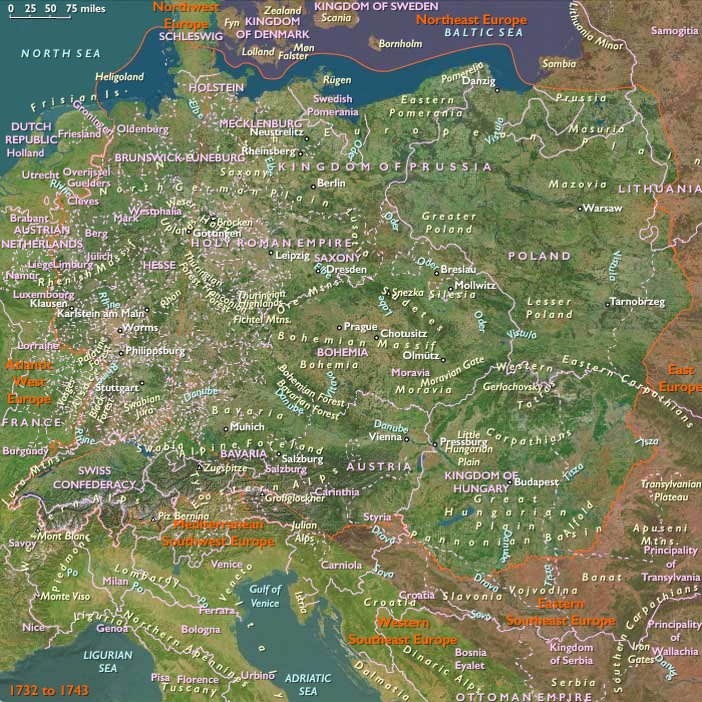
Subregions
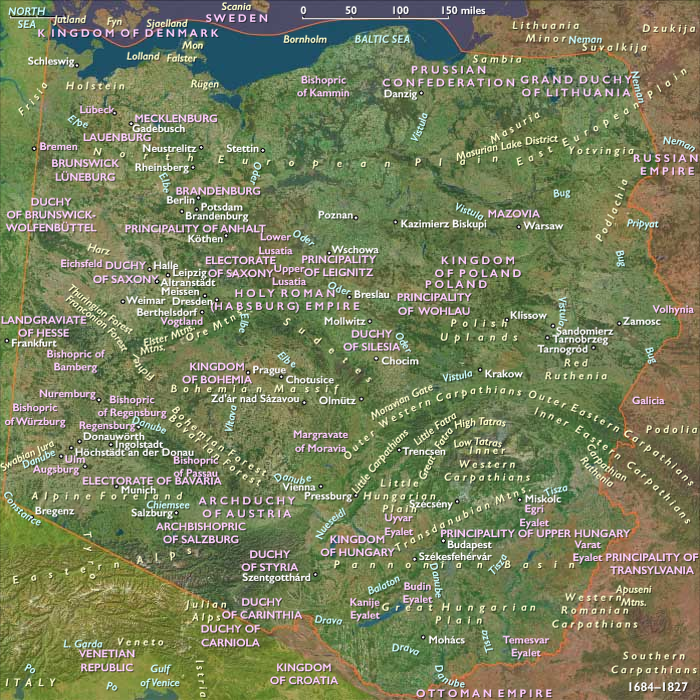
Years: 1732 - 1732
People
- André-Hercule de Fleury
- Anna of Russia
- Augustus II the Strong
- Augustus III of Poland
- Charles Emmanuel III of Sardinia
- Charles VI, Holy Roman Emperor, King of the Romans (King of Germany)
- Francis I, Holy Roman Emperor
- Frederick William I of Prussia
- Louis XV of France
- Maria Theresa
- Stanisław Leszczyński
Groups
- Austria, Archduchy of
- Lorraine, (second) Duchy of
- Saxony, Electorate of
- Polish-Lithuanian Commonwealth (Commonwealth of the Two Nations)
- France, (Bourbon) Kingdom of
- Habsburg Monarchy, or Empire
- Portugal, Bragança Kingdom of
- Spain, Bourbon Kingdom of
- Prussia, Kingdom of
- Sardinia, Kingdom of (Savoy)
- Russian Empire
Topics
Subjects
Regions
Subregions