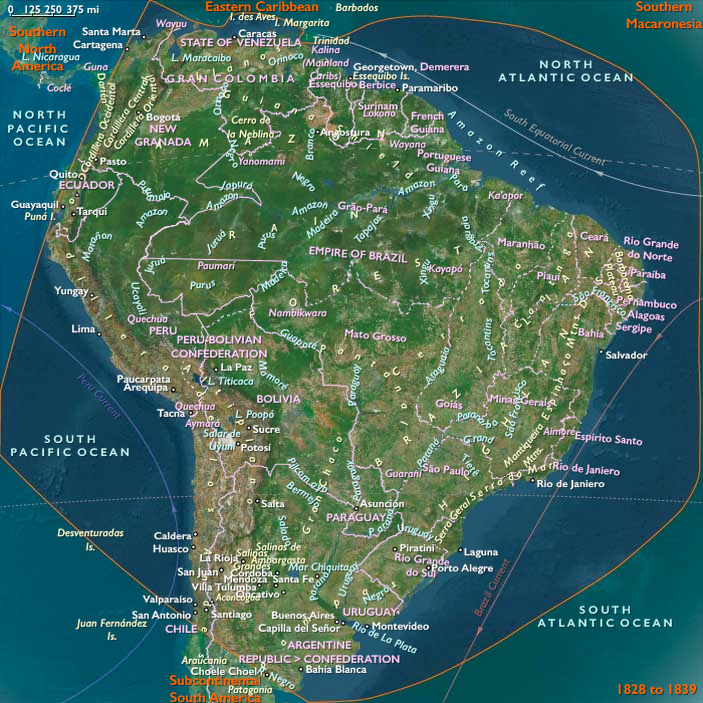
Political, economic, and social life in British…
1828 CE to 1839 CE
Political, economic, and social life in British Guiana in the 1800s is dominated by a European planter class.
Although the smallest group in terms of numbers, members of the plantocracy have links to British commercial interests in London and often enjoy close ties to the governor, who is appointed by the monarch.
The plantocracy also controls exports and the working conditions of the majority of the population.
The next social stratum consists of a small number of freed slaves, many of mixed African and European heritage, in addition to some Portuguese merchants.
At the lowest level of society is the majority, the African slaves who live and work in the countryside, where the plantations are located.
Unconnected to colonial life, small groups of Amerindians live in the hinterland.
Commodities
Regions
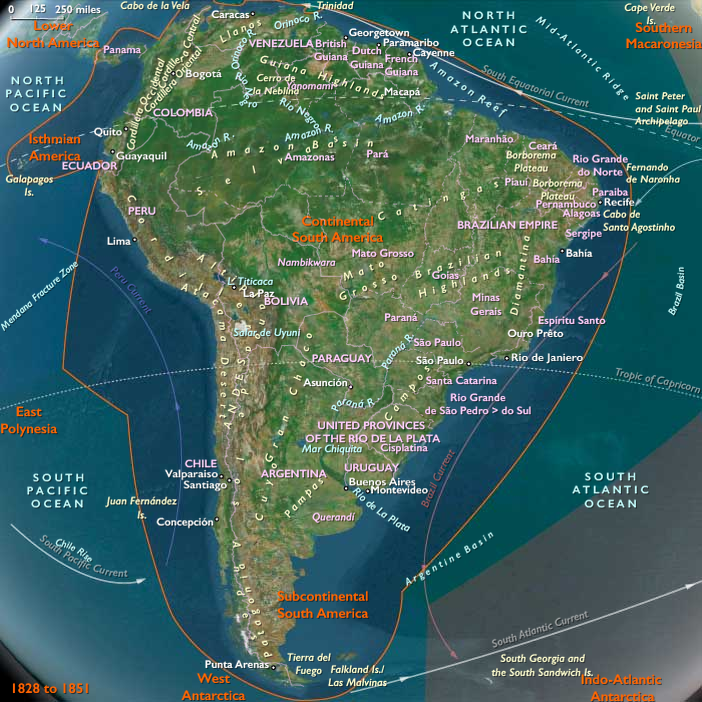
South America
View →Subregions