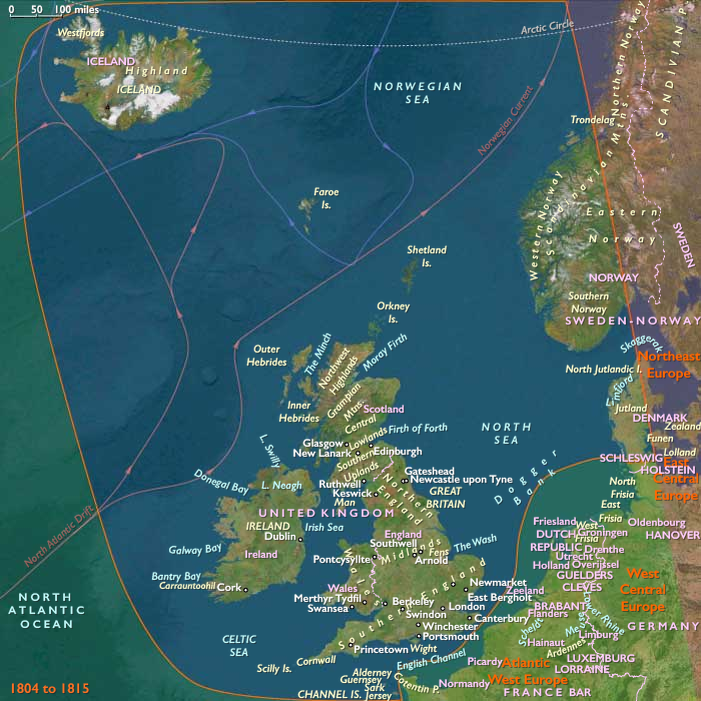
Robert Southey becomes Poet Laureate of the…
September 1813 CE
Born in Wine Street, Bristol, to Robert Southey and Margaret Hill, educated at Westminster School, London, (where he was expelled for writing an article in The Flagellant condemning flogging) and Balliol College, Oxford, Southey later said of Oxford, "All I learnt was a little swimming ... and a little boating."
Experimenting with a writing partnership with Samuel Taylor Coleridge, most notably in their joint composition of The Fall of Robespierre, Southey published his first collection of poems in 1794.
The same year, Southey, Coleridge, Robert Lovell and several others discussed creating an idealistic community ("pantisocracy") on the banks of the Susquehanna River in America:
Southey was the first to reject the idea as unworkable, suggesting that they move the intended location to Wales, but when they failed to agree the plan was abandoned.
In 1799 Southey and Coleridge were involved with early experiments with nitrous oxide (laughing gas), conducted by the Cornish scientist Humphry Davy.
Southey married Edith Fricker at St. Mary Redcliffe, Bristol, on November 14, 1795.
She is a sister of Sara Fricker, Coleridge's wife.
The Southeys made their home at Greta Hall, Keswick, in the Lake District, living on his tiny income.
Also living at Greta Hall and supported by him were Sara Coleridge and her three children, after Coleridge abandoned them, as well as the widow of poet Robert Lovell and her son.
In 1808 Southey met Walter Savage Landor, whose work he admired, and they became close friends.
That same year he wrote Letters from England under the pseudonym Don Manuel Alvarez Espriella, an account of a tour supposedly from a foreigner's viewpoint.
Through the mouth of his pseudonym, Southey is critical of the disparity between the haves and have-nots in English society, arguing that a change in taxation policy will be needed to foster a greater degree of equity.
From 1809 Southey contributes to the Quarterly Review.
He has become so well known by 1813 that he is appointed Poet Laureate after Walter Scott refuses the post.
Southey is also a prolific letter writer, literary scholar, essay writer, historian and biographer.
His biographies include the life and works of John Bunyan, John Wesley, William Cowper, Oliver Cromwell and Horatio Nelson.
The last will rarely be out of print since its publication in 1813 and will be adapted for the screen in the 1926 British film, Nelson.
Locations
Subjects
Regions
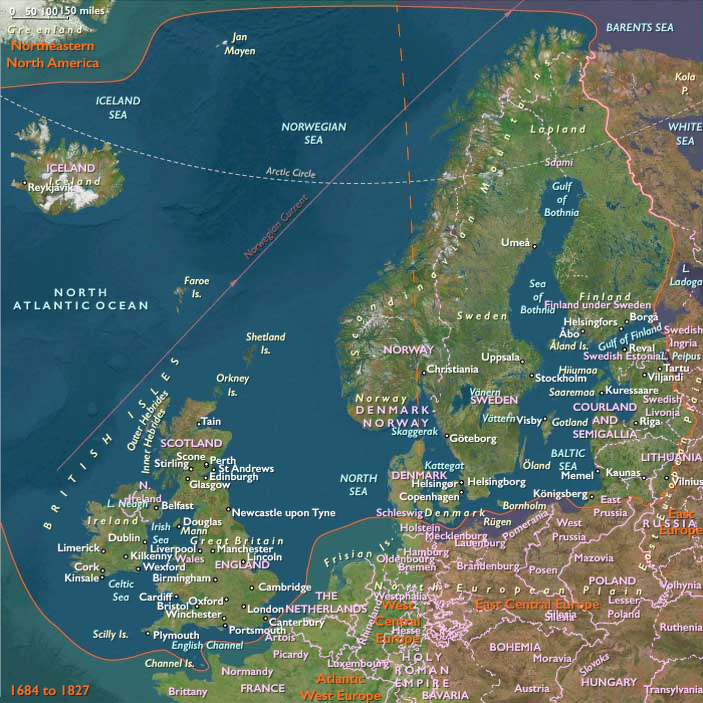
North Europe
View →Subregions