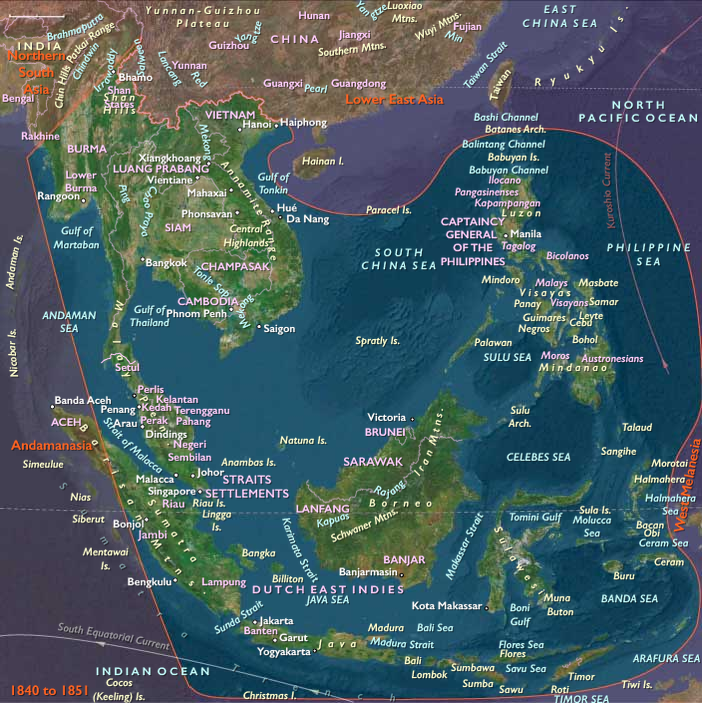
Expansionism by Siam's ruling Chakkri dynasty has…
1840 CE to 1851 CE
Expansionism by Siam's ruling Chakkri dynasty has been halted in all directions by the end of the reign of Nang Klao (Rama III, 1824-51) as tributary provinces have begun to slip away from Bangkok's control and Western influence has grown.
In 1850 Nang Klao spurns British and American requests for more generous trading privileges similar to those that Western powers had exacted by force from China.
Succeeding Thai monarchs, however, will be less successful in controlling Western economic influence in their country.
The first three Chakkri kings, by succeeding each other without bloodshed, had brought the kingdom a degree of political stability that had been lacking in the Ayutthaya period.
There is, however, no rule providing for automatic succession to the throne.
If there is no uparaja at the time of the king's death—and this had frequently been the case—the choice of a new monarch drawn from the royal family is left to the Senabodi, the council of senior officials, princes, and Buddhist prelates that assembles at the death of a king.
It is such a council that chooses Nang Klao's successor.
Groups
Regions
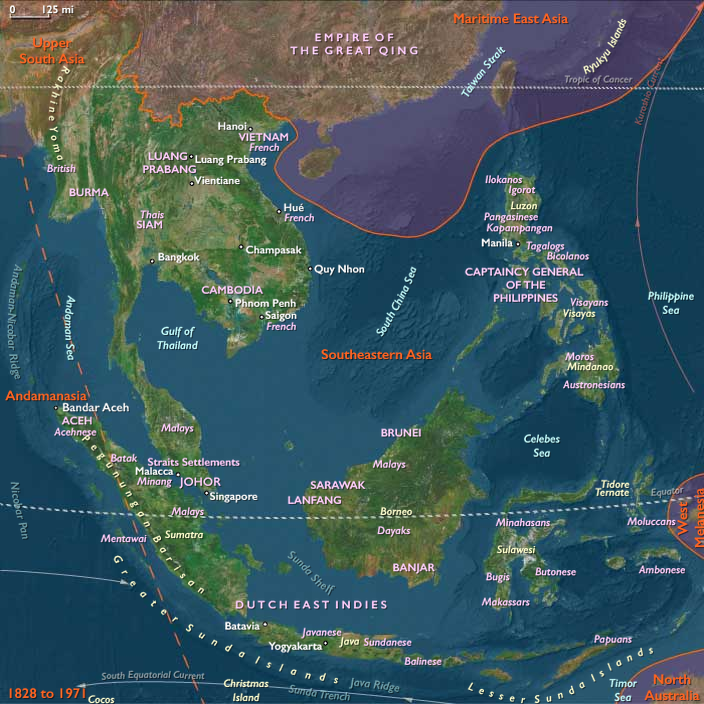
Southeast Asia
View →Subregions