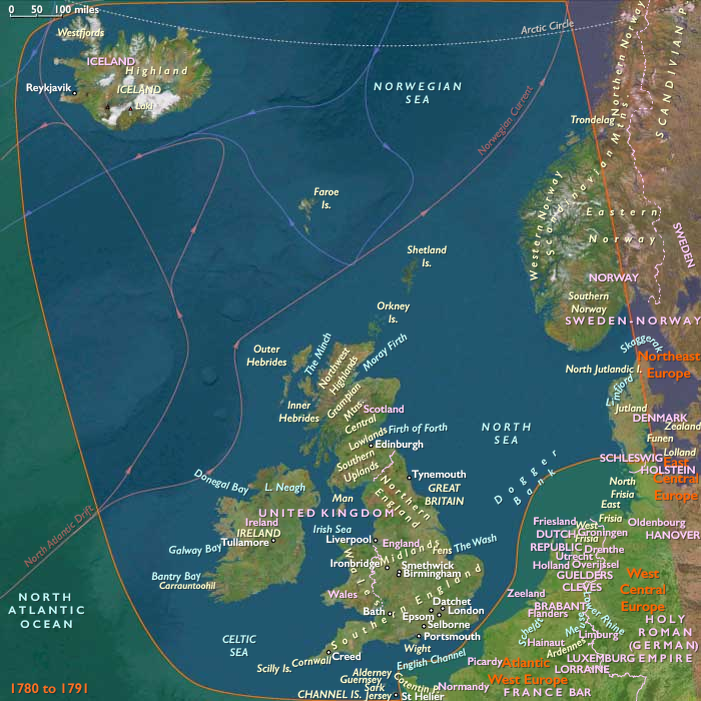
The new commercial treaty with France is…
March 1787 CE
British industrialists and merchants of Britain believe that it will create a new age of mutually-advantageous trading between themselves and their French counterparts.
Although the treaty is met cordially by the newer, larger-scale industries, the older, guild-like industries vehemently oppose the treaty.
Sometimes, within an industry there are disputed interests regarding the treaty.
For instance, the iron industry is divided into two sects: one in support of the treaty, and the other opposed to it.
Pig and bar iron manufacturers favor it because it offers them an opportunity to expand into the French markets.
Hardware manufacturers, conversely, fear the treaty will put their expert craftsmanship in jeopardy of being replaced by cheaper, more industrial French goods.
Charles James Fox, the joint leader of the Fox-North Coalition that governs the House of Commons, attacks the treaty during the ratification proceedings.
He argued against allying with the French, a traditional enemy that, at this time, continues to strengthen their navy in the Channel.
Fox passionately opposes the treaty insinuating that, as long as France is the most powerful country in Europe, Britain must challenge the French in order to maintain balance; and, based on this notion, in no way is strengthening the French economy beneficial for British merchants.
Despite Fox’s impassioned opposition, the treaty is ratified in both Houses largely due to William Pitt’s support for it.
Pitt denounces the belief that Britain and France are bound to "eternal enmity" and argues that the treaty will alleviate the tensions that had precipitated between the two countries throughout history.
The treaty is submitted to the King with a recommendation for approval on March 8. 1787.
Groups
Regions
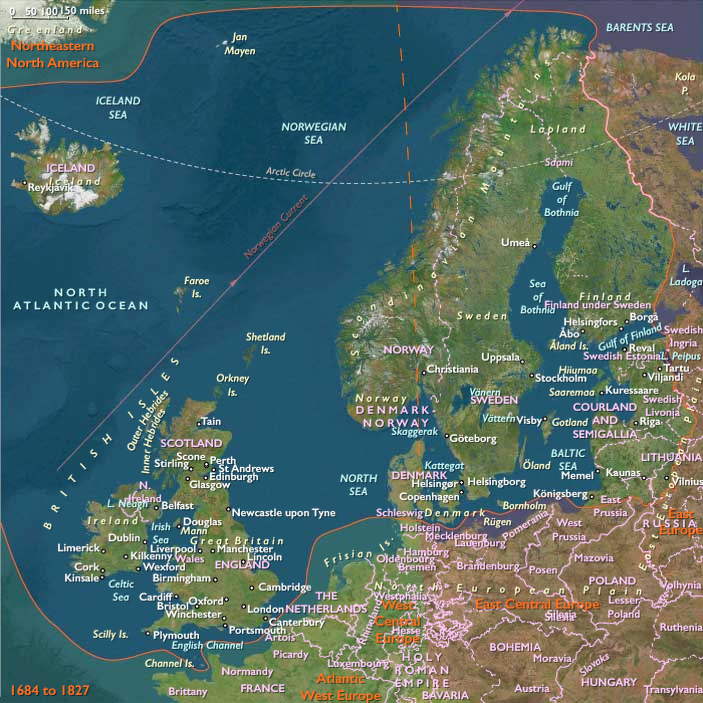
North Europe
View →Subregions