
Rayonnant Gothic: The Height of French Architectural …
Years: 1262 - 1262
Rayonnant Gothic: The Height of French Architectural Elegance (c. 1240–1350)
The Rayonnant period (c. 1240–1350) represents the pinnacle of refinement in French Gothic architecture, following the High Gothic phase. Buildings in this style take the principles of French Gothic—height, luminosity, and structural innovation—to their most extreme and accomplished level.
Defining Features of Rayonnant Gothic
- Emphasis on Lightness and Transparency – Rayonnant architecture reduces the solid mass of walls, replacing them with delicate tracery, expansive stained glass, and elaborate fenestration.
- Lace-Like Exteriors – Facades appear almost weightless, with intricate stone filigree that gives structures a skeletal elegance.
- Refined Structural Elements –
- Slimmer columns and piers, reducing visual heaviness.
- More elaborate rose windows, with intricate radial tracery.
- Flying buttresses that allow for expansive glazing and thinner walls.
This aesthetic reached its purest expression in Paris, most notably in Sainte-Chapelle (1248), built by Louis IX as a royal chapel with walls almost entirely composed of stained glass.
The Church of Saint-Urbain, Troyes (Begun 1262)
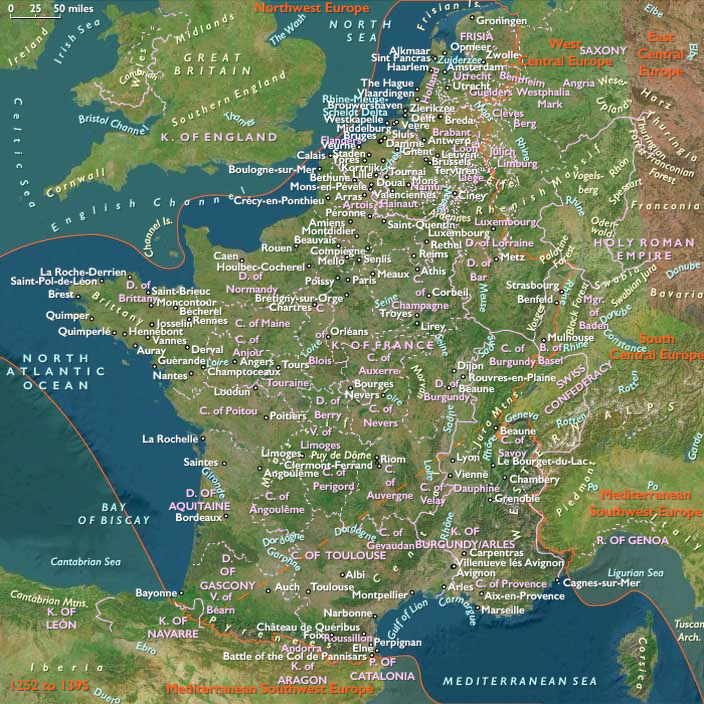
In 1262, construction began on the Church of Saint-Urbain in Troyes, a hallmark of Rayonnant design in the Champagne region.
- Founded by Pope Urban IV, a native of Troyes, the church exemplifies the extreme transparency and structural delicacy of Rayonnant architecture.
- Its interior is bathed in light, thanks to expansive windows, delicate stonework, and minimal wall space.
- The tracery and skeletal structure highlight the era’s obsession with light-filled, ethereal spaces, pushing Gothic aesthetics to new heights.
The Lasting Impact of Rayonnant Gothic
Rayonnant’s lace-like stonework and soaring stained glass compositions influenced cathedrals across Europe, including:
- Reims Cathedral (Rayonnant renovations)
- Amiens Cathedral (expanded Rayonnant windows)
- Cologne Cathedral (Germany, inspired by French Rayonnant design)
While later Flamboyant Gothic (c. 1350–1500) would push ornamentation further, Rayonnant remains the purest expression of Gothic lightness and elegance, defining the architectural style of late medieval France.
Locations
Groups
Topics
Subjects
Regions
Subregions

Related Events
Showing 10 events out of 45968 total
Years: 1262 - 1262
Locations
Groups
Topics
Subjects
Regions
Subregions