The magistrates, after five summonses to return…
1771 CE
Thirty-eight magistrates give an affirmative answer, but on the exile of their former colleagues by lettres de cachet, they retract and are also exiled.
Maupeou installs the council of state to administer justice pending the establishment of six superior courts in the provinces and of a new parlement in Paris, in which the magistrature will no longer be a hereditary prorogative but become salaried officials appointed by the Crown.
The cour des aides is next suppressed.
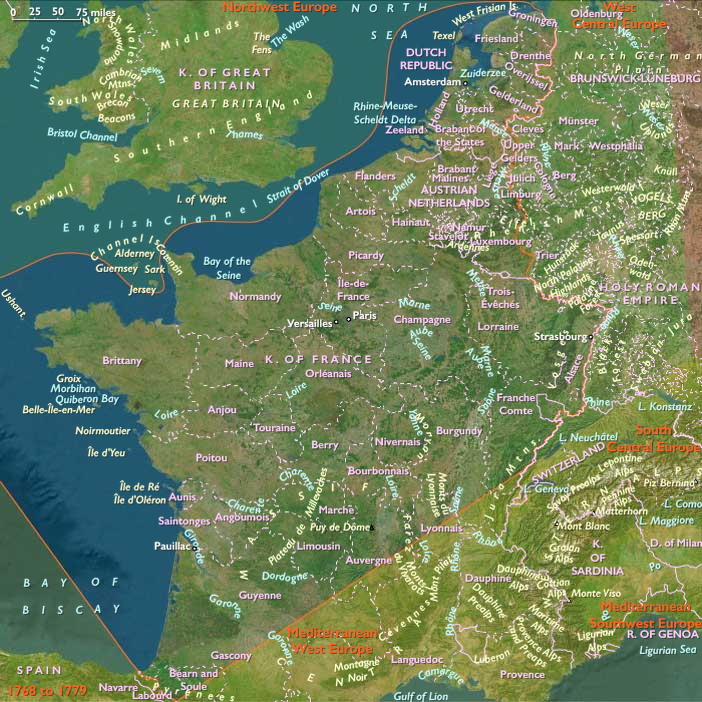
Maupeou proposes to make the judicial system more uniform throughout the country, which is a patchwork of local judicatures.
Voltaire praises this revolution, applauding the suppression of the old hereditary magistrature, but the aristocrats and the noblesse de robe regard Maupeou's policy as the triumph of tyranny.
The remonstrances of the princes, of the nobles, and of the minor courts, are met by exile and suppression, but by the end of 1771, the new system of the parlements de Maupeou is established, and the Bar, which had offered a passive resistance, recommences to plead.
Locations
People
Subjects
Regions
West Europe
View →Subregions