
Richard had already taken the cross in…
October 1189 CE
Richard had already taken the cross in 1187 as Count of Poitou.
His father and Philip II had done so at Gisors on January 21, 1188, after receiving news of the fall of Jerusalem to Saladin.
Having become king, Richard, together with Philip, agrees to go on the Third Crusade, since each fear that during his absence, the other might usurp his territories.
Richard swears an oath to renounce his past wickedness in order to show himself worthy to take the cross.
He starts to raise and equip a new crusader army.
He spends most of his father's treasury (filled with money raised by the Saladin tithe), raises taxes, and even agrees to free King William I of Scotland from his oath of subservience to Richard in exchange for ten thousand marks by the Quitclaim of Canterbury (the earliest surviving Scottish public record).
The transaction annuls the Anglo-Scottish Treaty of Falaise.
Richard will use the sum to help finance a crusading expedition to Palestine, leaving his mother Eleanor as regent.
To raise still more finances, he sells official positions, rights, and lands to those interested in them.
Those already appointed are forced to pay huge sums to retain their posts.
William Longchamp, Bishop of Ely and the King's Chancellor, makes a show of bidding three thousand pounds to remain as Chancellor.
He is apparently outbid by a certain Reginald the Italian, but that bid is refused.
Locations
People
Groups
Topics
Commodities
Subjects
Regions
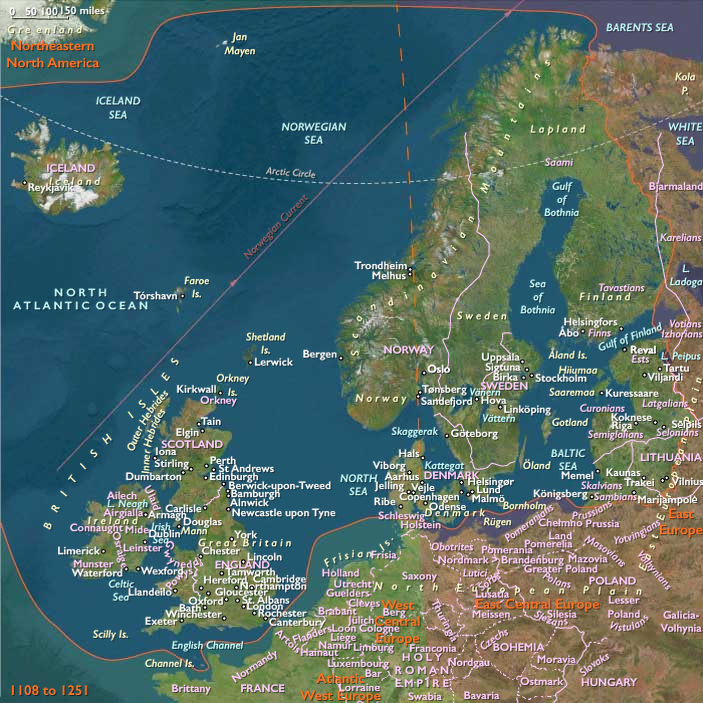
North Europe
View →Subregions
