Richard Wagner's romantic opera Lohengrin (including the…
August 1850 CE
The story of the eponymous character is taken from medieval German romance, notably the Parzival of Wolfram von Eschenbach and its sequel, Lohengrin, written by a different author, itself inspired by the epic of Garin le Loherain. It is part of the Knight of the Swan tradition.
The opera has inspired other works of art.
King Ludwig II of Bavaria names his fairy-tale castle Neuschwanstein (New Swan Castle), after the Swan Knight.
It is King Ludwig's patronage that will later give Wagner the means and opportunity to compose, build a theater for, and stage his epic cycle The Ring of the Nibelung.
The most popular and recognizable part of the opera is the Bridal Chorus, better known as "Here Comes the Bride", often played as a processional at weddings in the West.
The orchestral preludes to Acts I and III are also frequently performed separately as concert pieces.
Locations
Regions
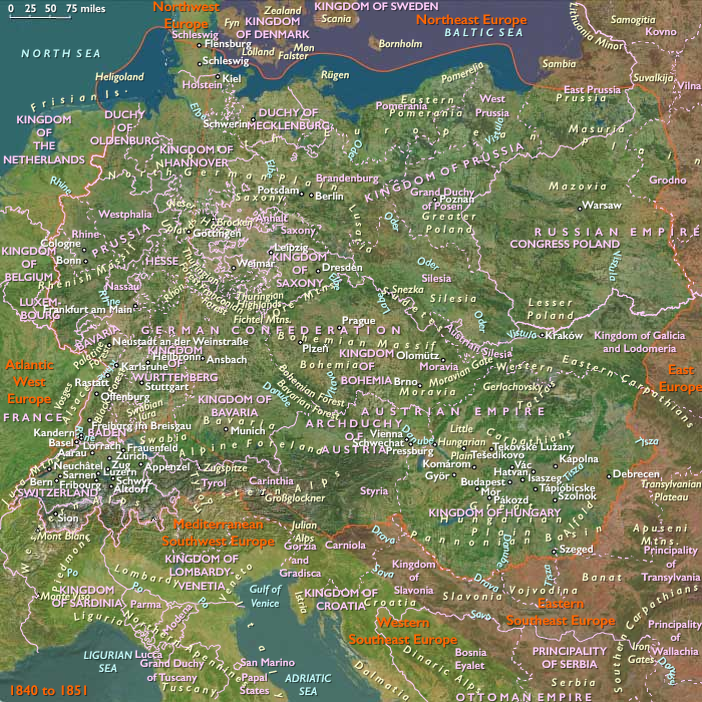
Central Europe
View →Subregions