Robert Campin’s Portraits of a Man and…
1435 CE
Robert Campin’s Portraits of a Man and a Woman (ca. 1435)
The portraits of A Man and A Woman by the Flemish painter Robert Campin, executed around 1435, form a complementary pair and were likely originally conceived as a diptych. The marbled backs of both panels suggest that these works were designed to be portable, intended for private contemplation rather than display against a wall.
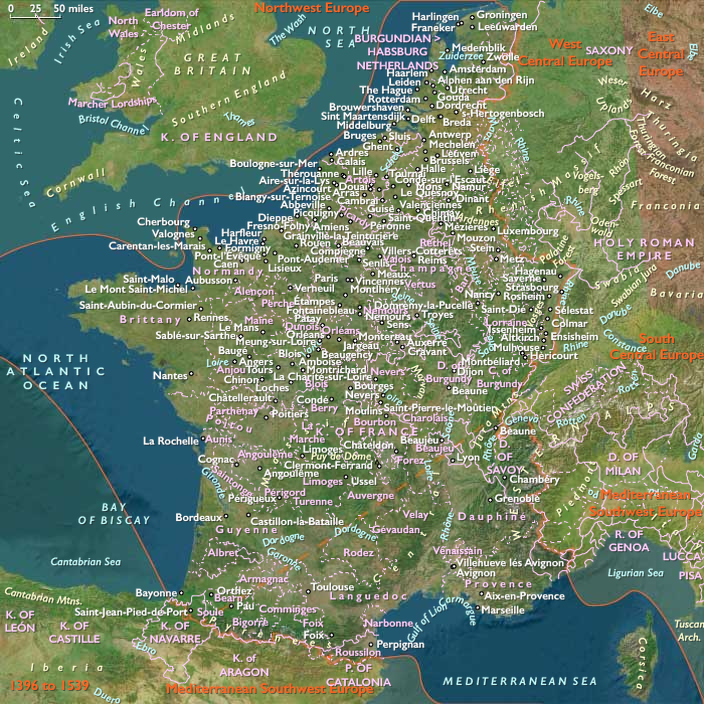
Given Campin’s active presence in the prosperous commercial city of Tournai, the sitters were probably affluent townspeople from the local merchant or professional classes. Their attire reflects their social status: both figures wear luxurious fur-lined gowns. The man is distinguished by his striking headdress, composed of a bold piece of red fabric wound intricately around his head, while the woman’s headgear is fashioned from multiple layers of white cloth skillfully secured by pins.
Characteristically, Campin places emphasis on the detailed representation of the sitters’ faces, which dominate almost the entire pictorial space. Both portraits exhibit his meticulous approach to realism, with even illumination ensuring clarity and visibility of every facial feature and texture. Notably, the meticulous rendering of subtle details, such as the sparkling eyes, the textures of the fabrics, and especially the woman's intricate headdress, underscore Campin’s keen observational precision and his dedication to realism.
Distinctively, Campin employs uniform, even lighting, illuminating each detail and ensuring clarity and precision throughout. The direct, uncompromising gaze of both subjects contributes to a compelling psychological intimacy, reflecting the Flemish tradition's emphasis on realism combined with careful observation of personal traits. The exceptional detail of these portraits provides insight into the daily life, social status, and fashions among the prosperous urban middle classes in the Low Countries during the mid-15th century, underscoring Campin’s significant influence on the development of northern European portraiture.
Images

Robert Campin: Portrait of a Woman (c. 1430-1435), Oil of wood, 40 × 27 cm, National Gallery, London
Locations
People
Regions
West Europe
View →Subregions