
Rome founds a colony at Aquileia, on …
Years: 180BCE - 180BCE
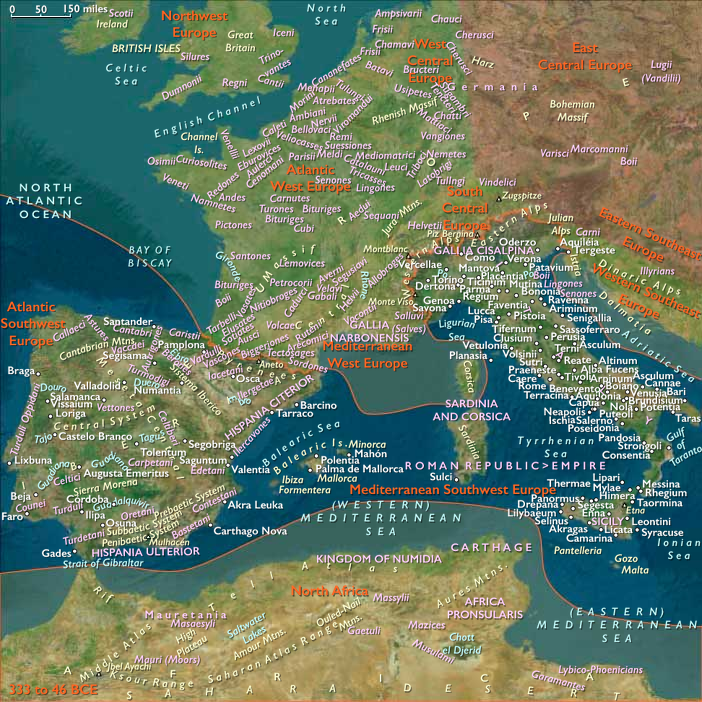
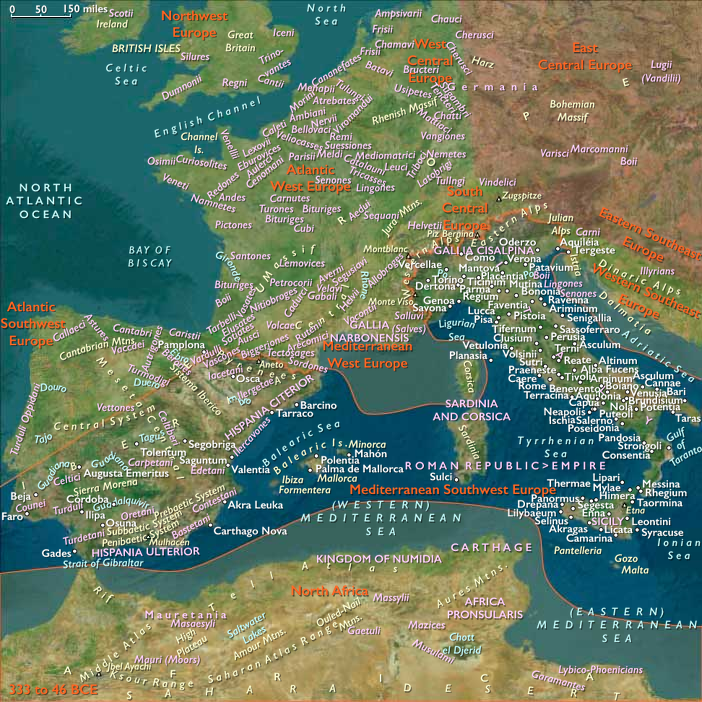
Rome founds a colony at Aquileia, on the narrow strip of land between the mountains and the lagoons, in 181/180 BCE as a frontier fortress in the northeast to check the advance of the warlike Illyrians, as well as the hostile tribes of Carni and Istri, not far from the site where in 183 BCE Gaulish invaders had attempted to settle.
It is likely that Aquileia had been a center of Venetia even before the coming of the Romans, and Aquileia's strategic military position also serves to promote the Venetic trade in amber imported from the Baltic.
The Latin colony is established by the triumvirate of Publius Scipio Nasica, Caius Flaminius, and Lucius Manlius Acidinus, two of whom are of consular and one of praetorian rank.
They lead three thousand pedites (infantry), mainly from Samnium, who with their families form the bulk of the settlers.
They will shortly be supplemented by native Veneti.
Aquileia will soon connected by road with Bononia (Bologna), probably in 173 BCE; and subsequently with Genua (Genova) in 148 BCE by the Via Postumia, which would run through Cremona, Bedriacum and Altinum, joining the first-mentioned road at Concordia, while the construction of the Via Popilia from Rimini to Ad Portum near Altinum in 132 BCE will improve the communications still further.
In 169 BCE, thirteen hundred more families will be settled in the town as a reinforcement to the garrison.
The discovery of the gold fields near the modern Klagenfurt in 130 BCE (Strabo iv.
208) will bring it into wide notice, and it will soon became a place of importance, not only owing to its strategic position, but as a center of trade, especially in agricultural products.
It also had, in later times at least, considerable brickfields.
The original Latin colony will become a municipium, probably in 90 BCE, its citizens ascribed to the Roman tribe Velina.
Locations
Groups
Topics
Commodoties
Subjects
Regions
Subregions
Related Events
Showing 10 events out of 63323 total
Years: 180BCE - 180BCE
Locations
Groups
Topics
Commodoties
Subjects
Regions
Subregions