
Rurik, according to the twelfth-century Russian Primary …
Years: 879 - 879
Rurik, according to the twelfth-century Russian Primary Chronicle, was one of the Rus, a Varangian tribe likened by the chronicler to Danes, Swedes, English and Gotlanders.
Twentieth century archaeologists will find that earthenware, household utensils, and types of buildings from the period of Rurik's foundation correspond to patterns then prevalent in Jutland.
There is a debate over how Rurik came to control Ladoga and Novgorod.
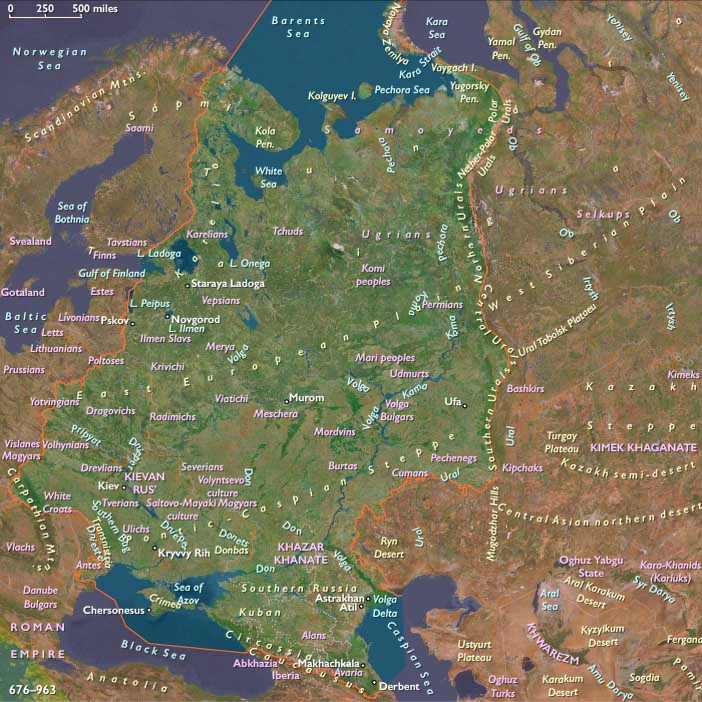
The only information about him is contained in the Primary Chronicle, which states that Chuds, Slavs, Merians, Vepses and Krivichs "…drove the Varangians back beyond the sea, refused to pay them tribute, and set out to govern themselves".
Afterwards the tribes started fighting each other and decided to invite Rurik to reestablish order.
The only Hrörek described in Western chronicles is Rorik of Dorestad, a konung from the royal Scylding house of Haithabu.
Since the nineteenth century, there have been attempts to identify him with the Viking prince Rurik of Russian chronicles.
Roerik of Dorestad was born about 810/820 to Ali Anulo, ninth King of Haithabu.
Frankish chroniclers mention that he received lands in Friesland from the Emperor Louis I.
This was not enough for him, and he started to plunder neighboring lands: he took Dorestad in 850, captured Haithabu in 857 and looted Bremen in 859.
The Emperor was enraged and stripped him of all his possessions in 860.
After that Roerik disappears from the Western sources for a considerable period of time.
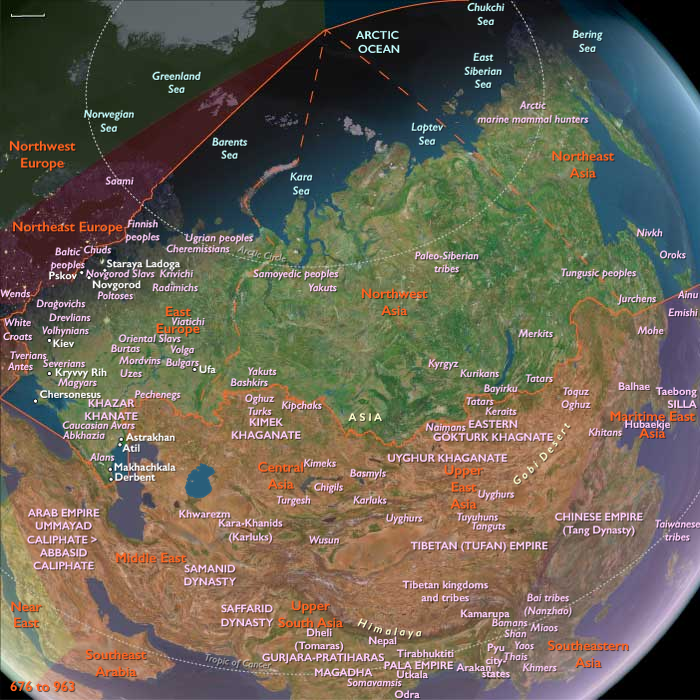
And at that very moment, in 862, the Russian Rurik arrives in the Eastern Baltic, builds the fortress of Ladoga and later moves to Novgorod.
Roerik of Dorestad reappeared in Frankish chronicles in 870, when his Friesland demesne was returned to him by Charles the Bald; in 882 he is already mentioned as dead.
The Russian chronicle places the death of Rurik of Novgorod at 879.
According to Western sources, the ruler of Friesland was converted to Christianity by the Franks.
This may have parallels with the Christianization of the Rus', as reported by Patriarch Photius in 867.
Rurik’s successors (the Rurik Dynasty), will soon move the capital to Kiev and found the state of Kievan Rus (which will persist until 1240, the time of Mongol invasion) and ultimately the Tsardom of Russia, which they will rule until 1598.
Locations
People
Groups
- Finns
- Franks
- Estonians
- Slavs, East
- Christianity, Chalcedonian
- Krivichs
- Veps, or Vepsians
- Varangians
- Rus' people
- Novgorod, Principality of
- Rurik dynasty
Subjects
Regions
Subregions
Years: 879 - 879
Locations
People
Groups
- Finns
- Franks
- Estonians
- Slavs, East
- Christianity, Chalcedonian
- Krivichs
- Veps, or Vepsians
- Varangians
- Rus' people
- Novgorod, Principality of
- Rurik dynasty
Subjects
Regions
Subregions