Salomon de Bray had established himself in…
1635 CE
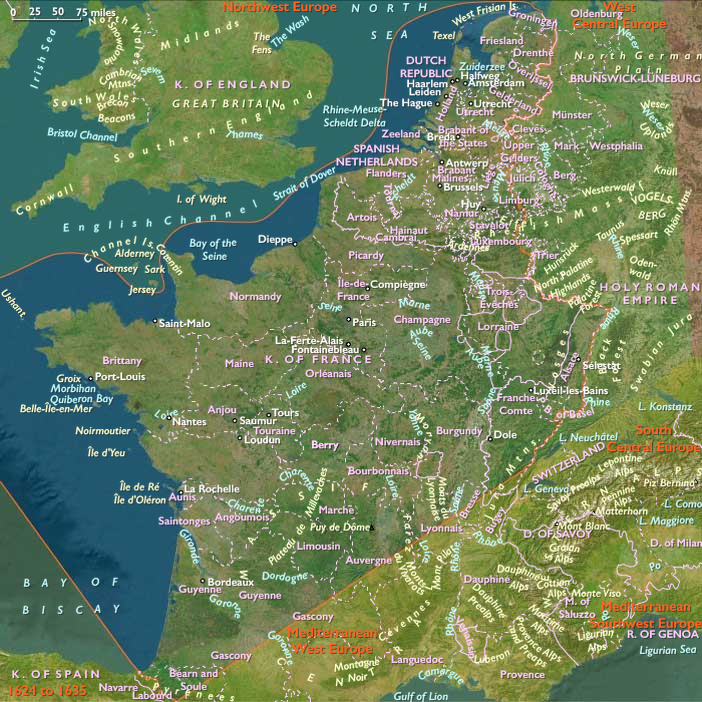
Salomon de Bray had established himself in Haarlem before 1617, where he is registered as being a member of the schutterij that year in the St. Adrian's cloveniers.
He had probably followed draftsmanship and painting lessons in the small academy started by Karel van Mander, Hendrick Goltzius and Cornelis van Haarlem, and where he married in 1625.
He is registered as a pupil of Goltzius and Cornelis van Haarlem, but he probably started his training in Amsterdam with Jan Pynas, Nicolaes Moeyaert and Pieter Lastman.
He paints history paintings, portraits and landscapes.
As a Catholic, he probably also makes altar pieces for the Haarlem underground Catholic churches known as mission stations, or staties.
He is a member of the Chamber of rhetoric called "De Wijngaertranken".
This is probably how he met his wife Anna, the sister of the painter Jan and the poet Jacob Westerbaen.
They had married in 1625 and in 1630 he had become a member of the Haarlem Guild of St. Luke.
He has cooperated with fellow Haarlem lukasguild member Jacob van Campen in the decoration of Huis ten Bosch in The Hague.
His works draw on the spirit of the Dutch classicism beginning at this time, and are comparable with those of Pieter de Grebber.
De Bray is also active as a designer of silverwork, as a poet, as an architect and as a town planner for the city council of Haarlem.
He designs an ambitious plan to expand the city on the North side (it will be partially implemented in the decades after his death).
He had become headman of the Guild of St. Luke and even prepared a new charter for the guild (that is never to be ratified) in 1631.
As an architect, he has been involved in the construction or expansion of Haarlem's City Hall, Zijlpoort, and St. Annakerk (Church of St. Anne), and Nijmegen's city orphanage.
One of his poems is set to music by his friend the composer Cornelis Padbrué.
Images

Salomon de Bray: Young girl, 1635, Louvre.
Locations
People
Regions
West Europe
View →Subregions