
Samuel Colt's U.S. revolver patent gives him…
December 1837 CE
Colt will never claim to have invented the revolver; his design is a more practical adaption of Collier's earlier revolving flintlock incorporating a locking bolt to keep the cylinder in line with the barrel.
The invention of the percussion cap makes ignition more reliable, faster, and safer than the older flintlock design.
Colt's great contribution is to the use of interchangeable parts.
Knowing that some gun parts are made by machine, he envisions that all the parts on every Colt gun to be interchangeable and made by machine, later to be assembled by hand.
His goal is the assembly line.
Although by the end of 1837 the Arms Company will have made over one thousand weapons, there have been no sales.
Following the Panic of 1837, the company's underwriters had been reluctant to fund the new machinery that Colt needs to make interchangeable parts, so he had gone on the road to raise money.
Demonstrating his gun to people in general stores did not generate the sales volume he needed, so with another loan from his cousin, Selden, he went to Washington, D.C., and demonstrated it to President Andrew Jackson.
Jackson approved of the gun and wrote Colt a note saying so.
Presidential approval in hand, Colt had pushed a bill through Congress endorsing a demonstration for the military, but failed to obtain an appropriation for military purchase of the weapon.
A promising order from the state of South Carolina for fifty to seventy-five pistols was canceled when the company did not produce them quickly enough.
Constant problems for Colt were the provisions of the Militia Act of 1808, which states that any arms purchased by a State militia have to be in current service in the United States Military.
This Act prevents state militias from allocating funds towards the purchase of experimental weapons or foreign weapons.
Colt undermines his own company by his reckless spending.
Selden constantly chastises him for using corporate funds to buy an expensive wardrobe or making lavish gifts to potential clients.
Selden twice cuts off Colt from company money for spending it on liquor and fancy dinners; Colt thinks getting potential customers inebriated will generate more sales.
People
Groups
Commodities
Regions
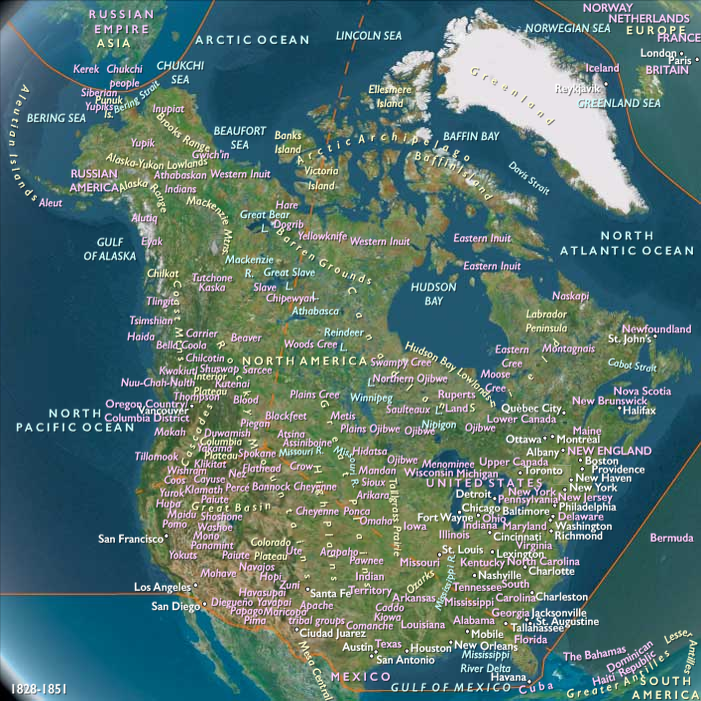
Northern North America
View →Subregions
