Washington and Jefferson College, today a private…
March 1794 CE
The three men, all graduates from the College of New Jersey (now Princeton University), had come to present-day Washington County to plant churches and spread Presbyterianism to the American frontier beyond the Appalachian Mountains.
John McMillan, the most prominent of the three founders because of his strong personality and longevity, had come to the area in 1775 and built his log cabin college in 1780 near his church in Chartiers.
Thaddeus Dod, known as a keen scholar, built his log cabin college in Lower Ten Mile in 1781.
Joseph Smith taught classical studies in his college, called "The Study," at Buffalo.
Washington Academy was chartered by the Pennsylvania General Assembly on September 24, 1787.
The first members of the board of trustees included Reverends Dod and Smith.
After a difficult search for a headmaster, in which the trustees consulted Benjamin Franklin, the trustees had unanimously selected Thaddeus Dod, considered to be the best scholar in western Pennsylvania.
Amid financial difficulties and unrest from the Whiskey Rebellion, the Academy holds no classes from 1791 to 1796.
In 1792, the Academy had secured four lots at Wheeling and Lincoln street from William Hoge and began construction on the stone Academy Building.
During the Whiskey Rebellion, portions of David Bradford's militia camp on a hillside that will later become home to the unified Washington & Jefferson College.
In October 1792, after a year's delay from its official incorporation resulting from "trouble with Indians," McMillan had been chosen as the headmaster and Canonsburg was chosen as the location for the "Canonsburg Academy."
At a subsequent unknown date, McMillan transferred his students from the log cabin to Canonsburg Academy.
Canonsburg Academy is chartered by the General Assembly on March 11, 1794, thus placing it firmly ahead of its sister school, Washington Academy, which is without a faculty, students, or facilities.
Groups
Subjects
Regions
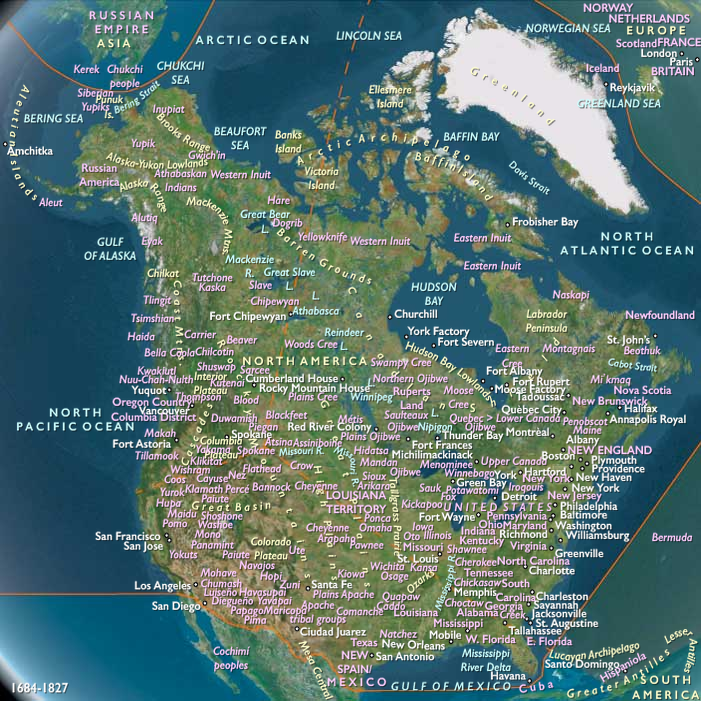
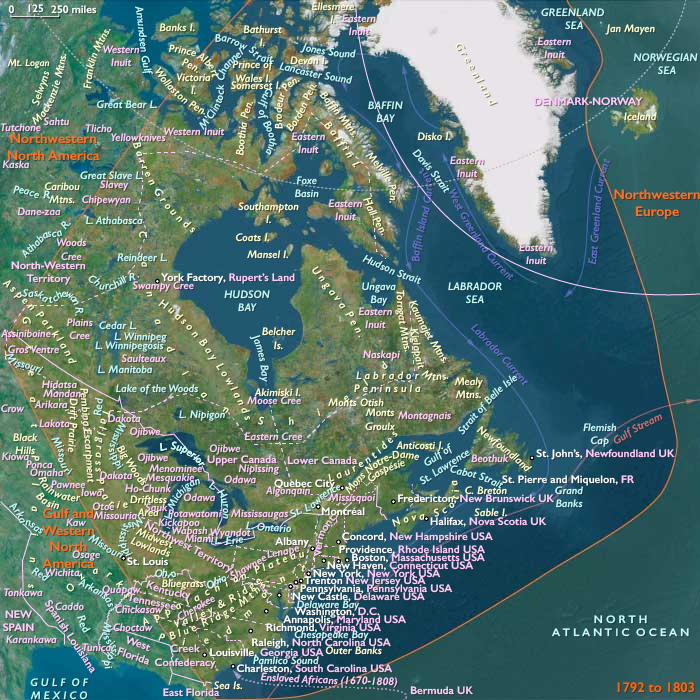
Northern North America
View →Subregions