Santa Anna makes one last attempt to …
Years: 1847 - 1847
October
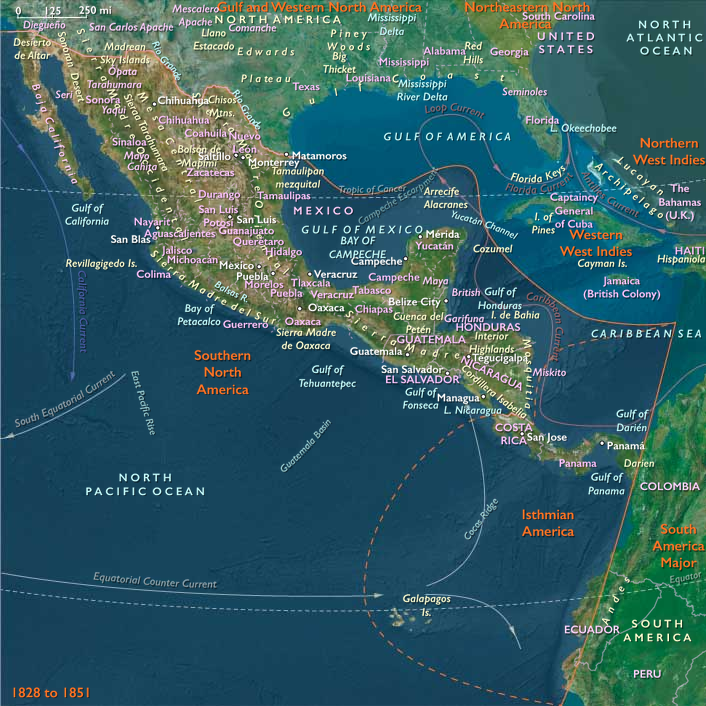
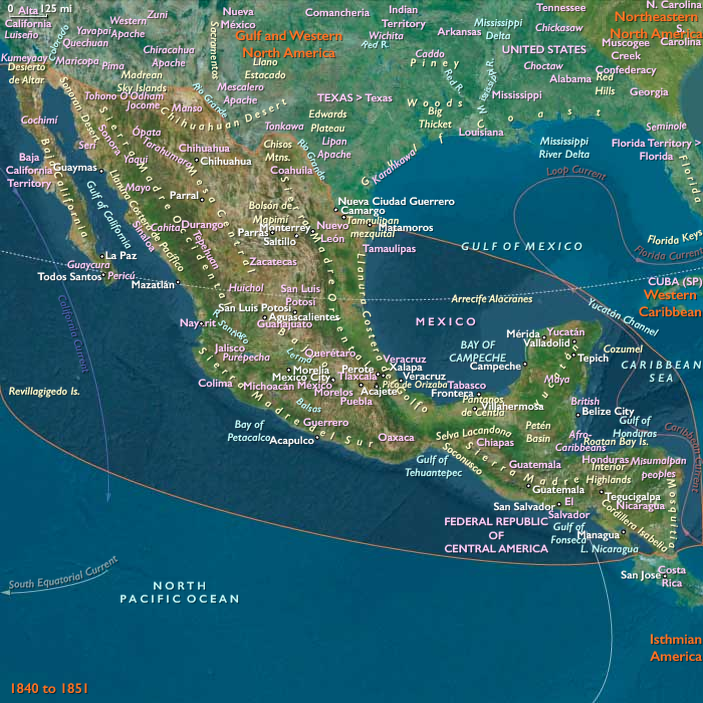
Santa Anna makes one last attempt to defeat the Americans, by cutting them off from the coast, in September.
General Joaquín Rea begins the Siege of Puebla, soon joined by Santa Anna, but they fail to take it before the approach of a relief column from Veracruz under Brigadier Joseph Lane prompts Santa Anna to stop him.
Puebla is relieved by Lane on October 12, 1847, following his defeat of Santa Anna at the Battle of Huamantla on October 9, 1847.
The battle is Santa Anna's last.
Following the defeat, the new Mexican government led by Manuel de la Peña y Peña asks Santa Anna to turn over command of the army to General José Joaquín de Herrera.
Locations
People
Groups
- United States of America (US, USA) (Washington DC)
- Mexico, Second Federal Republic of
- California Territory
Topics
- Jacksonian Democracy (United States)
- “Manifest Destiny” and American Expansion; 1840-1851
- Mexican-American War
Subjects
Regions
Subregions
Related Events
Filter results
Showing 5 events out of 5 total
The steamship Persia is wrecked off Corsica on January 2, 1890; one hundred and thirty lives are lost.
Mediterranean West Europe (1972–1983 CE): Regional Development, Social Change, and Cultural Revitalization
Between 1972 and 1983 CE, Mediterranean West Europe—comprising southern France (below an imaginary line from approximately 43.03476° N, 1.17208° W to 46.45234° N, 6.07689° E), Corsica, and Monaco—experiences sustained regional development, significant social transformation, and cultural renewal, shaped by broader European integration and evolving local identities.
Monaco: Economic Diversification and Global Status
Under Prince Rainier III, Monaco further expands its economy beyond its traditional reliance on casinos and luxury tourism. The principality actively attracts international finance, establishing itself as a global banking center known for discretion and favorable taxation policies. Monaco also invests heavily in real estate, infrastructure modernization, and cultural initiatives, enhancing its global reputation and solidifying its status as a desirable international residential destination.
Southern France: Economic Integration and Social Progress
Southern France continues its integration into France's national economy, emphasizing technology, aviation, and tourism. Cities like Toulouse, home to Airbus since its founding in 1970, become major hubs of aerospace innovation, contributing significantly to regional economic prosperity. Meanwhile, Marseille and Nice strengthen their roles as vibrant cultural and commercial gateways, attracting significant migration from North Africa and the broader Mediterranean, reshaping local demographics, and prompting diverse cultural dialogues and social challenges.
During this era, the region also experiences substantial infrastructure improvements, notably motorway construction and the modernization of rail and air transport, significantly enhancing connectivity with both domestic and European markets.
Corsica: Autonomy Movements and Cultural Resurgence
Corsica sees intensified advocacy for greater autonomy and cultural recognition during the 1970s and early 1980s. The rise of movements such as the Front de Libération Nationale Corse (FLNC), established in 1976, highlights local demands for political decentralization, protection of the Corsican language, and cultural autonomy. While sporadic violence marks this period, Corsica's political identity remains predominantly tied to democratic advocacy, resulting in greater administrative decentralization from Paris.
Parallel to political developments, Corsica also experiences a revival of interest in its cultural heritage, with growing investment in preserving Corsican language, music, and traditional practices. This cultural revitalization resonates across the island and fosters greater regional pride and cohesion.
Cultural Renewal and Mediterranean Identity
Across Mediterranean West Europe, cultural life continues to thrive, with renewed appreciation for regional identities and Mediterranean traditions. Festivals, artistic exhibitions, and heritage preservation programs expand significantly, particularly emphasizing the Mediterranean's unique historical role as a crossroads of cultural exchange.
Cities along the French Riviera, especially Nice, further solidify their reputations as cultural centers, hosting international film festivals, art biennials, and attracting prominent global artists and intellectuals.
Legacy of Stability and European Integration
By 1983, Mediterranean West Europe consolidates its economic diversification, regional development, and cultural resurgence within the broader European context. Monaco emerges as a secure international financial hub; southern France firmly integrates into Europe's economic core while confronting demographic shifts and social changes; and Corsica continues navigating the delicate balance between autonomy and national integration. This period establishes foundations for the region's sustained stability, robust economic growth, and distinctive Mediterranean identity well into subsequent decades.

Mediterranean West Europe (1984–1995 CE): European Integration, Economic Expansion, and Cultural Dynamism
From 1984 to 1995 CE, Mediterranean West Europe—comprising southern France (below an imaginary line from approximately 43.03476° N, 1.17208° W to 46.45234° N, 6.07689° E), Corsica, and Monaco—experiences substantial economic growth, deeper integration within the European Union, and vibrant cultural developments, bolstered by political stability and modernization.
Southern France: Economic Growth and European Integration
Southern France enjoys robust economic expansion driven by the increasing interconnectedness provided by the European Union (EU). Cities such as Marseille, Toulouse, and Nice benefit significantly from improved infrastructure and heightened trade facilitated by the EU's single market policies. Tourism flourishes, supported by enhanced transportation networks and the region's rich cultural heritage, further establishing southern France as a premier international destination. Concurrently, regional governments invest in preserving cultural traditions, blending contemporary European influences with distinctive local customs.
Monaco: International Prestige and Economic Stability
During this period, Monaco solidifies its reputation as a global center for luxury tourism and finance, attracting international businesses and affluent residents drawn by favorable tax policies and sophisticated lifestyle offerings. The principality experiences economic prosperity under the stable governance of the Grimaldi family, who maintain Monaco's distinctive international identity while skillfully navigating integration with European economic systems. Cultural events, notably the Monte Carlo Grand Prix, enhance Monaco’s international prestige and continue to bolster its tourism-driven economy.
Corsica: Economic Development and Cultural Preservation
Corsica sees significant improvements in economic infrastructure, supported by targeted EU regional development programs. Tourism remains a critical economic driver, with substantial investments in facilities that cater to increasing international visitation. Parallel to economic development, Corsica emphasizes cultural preservation, promoting its unique identity and traditions through education, arts, and local governance initiatives. Efforts to balance regional autonomy with national integration foster greater stability and growth.
Cultural Dynamism and Urban Revitalization
Across Mediterranean West Europe, urban centers experience revitalization marked by vibrant cultural activities. Marseille, recognized as a major cultural hub, further establishes its artistic prominence through festivals, museums, and galleries. Nice continues to develop as a cosmopolitan city blending traditional Mediterranean charm with contemporary artistic expression, attracting international artists and intellectuals. The region’s cultural dynamism is reflected in diverse artistic, literary, and architectural initiatives, enhancing quality of life and international reputation.
By 1995, Mediterranean West Europe emerges as an economically prosperous, culturally vibrant, and politically stable region, significantly benefiting from European integration. The period marks a notable chapter of growth, modernity, and cultural enrichment, positioning the area favorably for ongoing development within the broader European landscape.
Mediterranean West Europe (1996–2007 CE): Technological Advancement, European Integration Deepens, and Cultural Flourishing
From 1996 to 2007 CE, Mediterranean West Europe continues to thrive economically, culturally, and technologically, significantly influenced by deepening European integration, technological advancements, and sustained political stability.
Southern France: Innovation and Economic Diversification
Southern France experiences substantial technological advancement and economic diversification. Major cities like Marseille, Toulouse, and Nice emerge as centers of technological innovation, especially in aerospace, biotechnology, and information technology sectors. Toulouse, in particular, strengthens its position as Europe's leading aerospace hub, home to significant developments by Airbus. Meanwhile, the region continues to flourish culturally, hosting numerous international festivals and events that attract global tourism and investment.
Monaco: Financial Hub and Sustainable Development
Monaco reinforces its status as an international financial and luxury destination, with significant investments in sustainable development and environmental protection. Under the leadership of Prince Albert II, who ascends the throne in 2005, the principality prioritizes ecological initiatives, including marine conservation and renewable energy projects, enhancing Monaco's international reputation for responsible governance and ecological sustainability. Monaco’s commitment to cultural enrichment and international diplomacy further cements its influential global position.
Corsica: Regional Autonomy and Cultural Vitality
Corsica continues its pursuit of regional autonomy within the French administrative framework, fostering economic growth and cultural vitality. Infrastructure investments expand, supporting tourism and local industries, while regional authorities place renewed emphasis on preserving Corsican language, culture, and heritage. Educational and cultural institutions promote regional identity, contributing to social cohesion and economic resilience.
Cultural and Technological Integration
The period is marked by profound cultural flourishing and technological integration across Mediterranean West Europe. Cities such as Marseille and Nice continue their urban and cultural revitalization, becoming significant European cultural capitals. Enhanced digital connectivity and technology infrastructure foster innovation and economic growth, supporting local startups and international businesses alike.
By 2007, Mediterranean West Europe stands as a technologically advanced, culturally dynamic, and economically integrated region, deeply embedded within the broader framework of the European Union. The era underscores the region's adaptability and growth, laying a robust foundation for continued prosperity and global engagement.
Mediterranean West Europe (2008–2019 CE): Economic Resilience, Sustainability Initiatives, and Cultural Innovation
From 2008 to 2019 CE, Mediterranean West Europe demonstrates economic resilience, pursues ambitious sustainability goals, and continues cultural innovation amidst global challenges, solidifying its role as a dynamic European region.
Southern France: Navigating Economic Challenges and Sustainability
Southern France effectively navigates the aftermath of the 2008 global financial crisis, leveraging strong European Union support and robust regional policies to recover economically. Cities such as Toulouse, Marseille, and Nice further diversify their economies, focusing on sectors like renewable energy, sustainable tourism, and advanced manufacturing. Toulouse's aerospace sector continues to thrive despite global economic pressures, contributing significantly to the regional and national economy. Concurrently, local governments adopt aggressive sustainability initiatives, enhancing environmental protections and climate resilience.
Monaco: Environmental Leadership and Economic Diversification
Monaco intensifies its environmental leadership under Prince Albert II, emphasizing sustainable urban planning, marine biodiversity conservation, and carbon neutrality. The principality maintains its position as a premier global financial and luxury hub, attracting environmentally conscious investments and residents. Initiatives such as the annual Monaco Ocean Week and significant investments in green technology reinforce Monaco's global reputation for environmental stewardship and economic diversification.
Corsica: Strengthening Regional Identity and Sustainability
Corsica continues enhancing regional autonomy and promoting cultural heritage, with increased emphasis on sustainable tourism and environmental preservation. Infrastructure improvements and renewable energy projects, supported by EU regional development funds, boost local economic resilience. Efforts to preserve Corsican culture, language, and traditions remain robust, reinforced through educational programs, cultural festivals, and heritage conservation initiatives.
Cultural Innovation and Social Cohesion
The region experiences continued cultural innovation, with cities like Marseille and Nice investing in creative industries, digital arts, and cultural festivals, enhancing their international appeal and fostering social cohesion. Urban revitalization projects and investments in public infrastructure enhance the quality of life, attracting residents, businesses, and tourists alike.
By 2019, Mediterranean West Europe emerges as economically resilient, environmentally proactive, and culturally innovative. The era highlights the region's capacity to adapt to global challenges, underscoring its importance within Europe’s broader socio-economic and cultural landscape.
Years: 1847 - 1847
October
Locations
People
Groups
- United States of America (US, USA) (Washington DC)
- Mexico, Second Federal Republic of
- California Territory
Topics
- Jacksonian Democracy (United States)
- “Manifest Destiny” and American Expansion; 1840-1851
- Mexican-American War