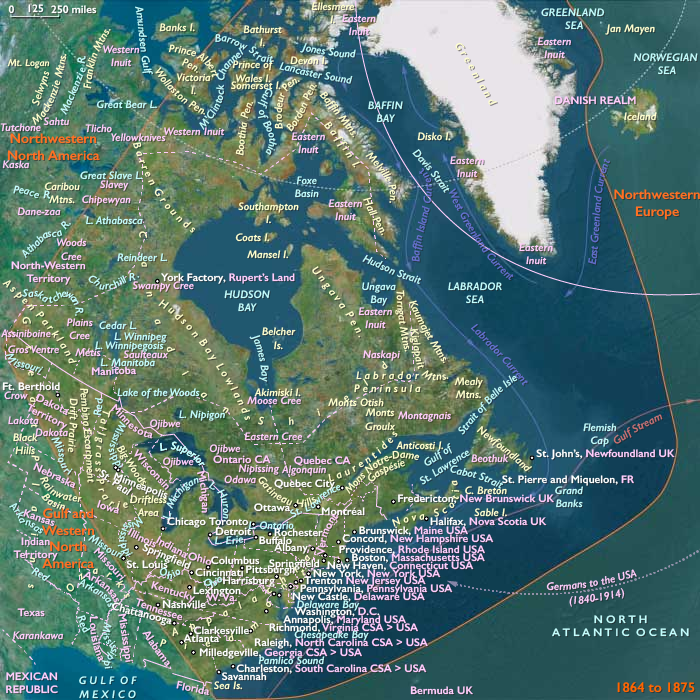
Schofield's advance guard arrives in Franklin at…
November 1864 CE
Schofield's advance guard arrives in Franklin at about 4:30 a.m. on November 30.
Jacob Cox, a division commander temporarily commanding the XXIII Corps, immediately begins preparing strong defensive positions around the deteriorated entrenchments originally constructed for a previous engagement in 1863.
Schofield decides to defend at Franklin with his back to the river because he has no pontoon bridges available that would enable his men to cross the river.
Schofield needs time to repair the permanent bridges spanning the river, but by mid-afternoon, nearly all the supply wagons are across the Harpeth and on the road to Nashville.
By noon, the Union works form an approximate semicircle around the town.
A gap in the line occurs where the Columbia Pike enters the outskirts of the town, left open to allow passage of the wagons.
Just behind the center of the formidable line stands the Carter House, appropriated as Cox's headquarters.
Two Union brigades from Wagner's division are positioned about a half mile forward of the main line.
Wagner, perhaps misunderstanding his orders, orders his three brigades to stop halfway to the Union line and dig in as best they can on the flat ground.
Col. Emerson Opdycke considers Wagner's order to be ridiculous and refuses to obey it; he marches his brigade through the Union line and into a reserve position behind the gap through which the Columbia Pike passs, leaving the brigades of Colonels John Q. Lane, and Joseph Conrad in front.
Hood's army begins to arrive on Winstead Hill, two miles (three kilometers) south of Franklin, around 1 p.m.
Hood orders a frontal assault in the dwindling afternoon light—sunset will be at 4:34 p.m. this day—against the Union force, a decision that causes dismay among his top generals.
Some popular histories assert that Hood acted rashly in a fit of rage, resentful that the Federal army had slipped past his troops the night before at Spring Hill and that he wanted to discipline his army by ordering them to assault against strong odds.
Recent scholarship by Eric Jacobson discounts this as unlikely, as it was not only militarily foolish, but Hood was observed to be determined, not angry, by the time he arrived in Franklin.
Regardless of Hood's personal motivations, his specific objective is to try to crush Schofield before he and his troops can escape to Nashville.
The Confederates begin moving forward at 4 p.m., with Cheatham's corps on the left of the assault and Stewart's on the right.
Lee's corps, and almost all of the army's artillery, have not yet arrived from Columbia.
Hood's attacking force, about nineteen thousand to twenty thousand men, is arguably understrength for the mission he has assigned—traversing two miles of open ground with only two batteries of artillery support and then assaulting prepared fortifications.
The devastated Confederate force was left in control of Franklin, but its enemy had escaped again.
Although he had briefly come close to breaking through in the vicinity of the Columbia Turnpike, Hood is unable to destroy Schofield or prevent his withdrawal to link up with Thomas in Nashville.
And his unsuccessful result comes with a frightful cost.
The Confederates suffer 6,252 casualties, including 1,750 killed and 3,800 wounded.
An estimated two thousand others suffer less serious wounds and return to duty before the Battle of Nashville.
But more importantly, the military leadership in the West is decimated, including the loss of perhaps the best division commander of either side, Patrick Cleburne.
Fourteen Confederate generals (six killed or mortally wounded, seven wounded, and one captured) and 55 regimental commanders are casualties.
Union losses are reported as only 189 killed, 1,033 wounded, and 1,104 missing.
It is possible that the number of casualties was underreported by Schofield because of the confusion during his army's hasty nighttime evacuation of Franklin.
The Union wounded are left behind in Franklin.
People
Groups
Topics
Regions
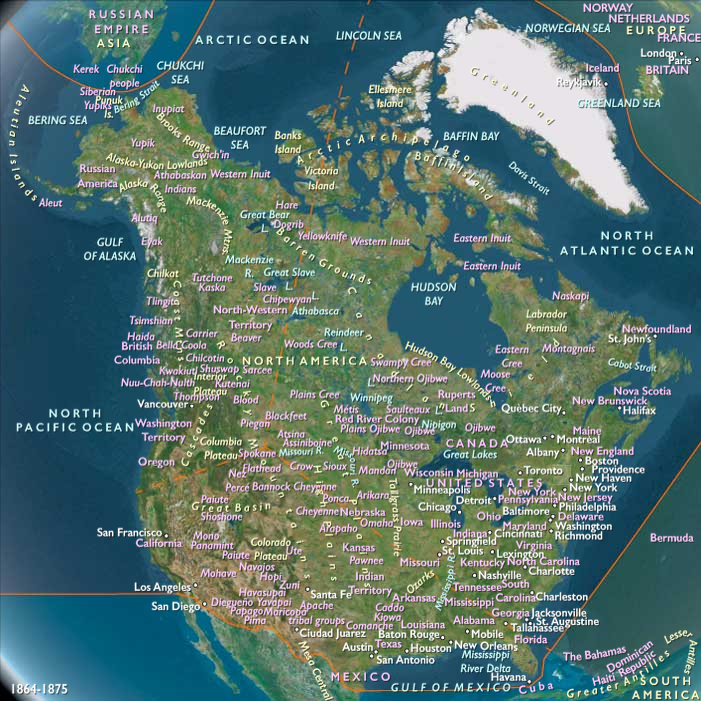
Northern North America
View →Subregions