
Seaton Delaval Hall, a noted country house…
1728 CE
Seaton Delaval Hall, a noted country house in Northumberland, England, between Seaton Sluice and Seaton Delaval, had been designed by the late Sir John Vanbrugh in 1718 for Admiral George Delaval, whose family had owned the estate since the time of the Norman conquest.
Admiral Delaval, having made his fortune from bounty while in the navy, had purchased the estate from an impoverished kinsman. (He had also served as a British envoy during the reign of Queen Anne.)
The Admiral had originally wanted Vanbrugh to modernize and enhance the existing mansion, but upon viewing the site, Vanbrugh felt he could do nothing and advised complete demolition of all except the ancient chapel near to the mansion.
The resulting new mansion is to be the last country house Vanbrugh designs—it is regarded as his finest work.
The style of architecture is known as English Baroque, which Vanbrugh had evolved from the more decorated and architecturally lighter continental baroque popular in Europe.
The design is of a center block, or corps de logis, containing the state and principal rooms, and two flanking arcaded and pedimented wings containing the stables in the east wing, and secondary and service accommodation in the west wing.
Neither architect nor patron has lived to see its completion in 1728; it will pass through a succession of heirs, being lived in only intermittently.
Images

Seaton Delaval Hall – central block drawn before completion, as Vanbrugh envisaged the house. The statues on the pediments were never executed. (Engraving from Colen Campbell, Vitruvius Britannicus vol. 3, 1725.)
Regions
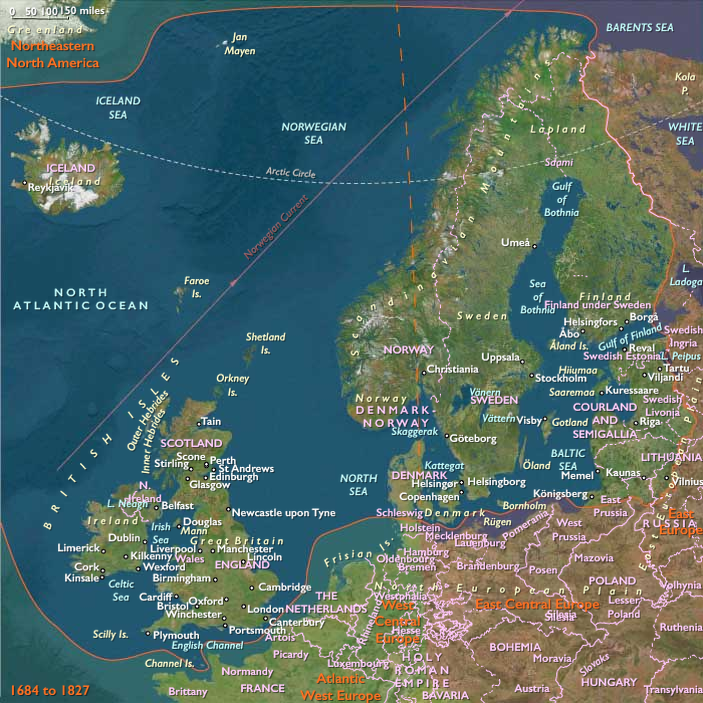
North Europe
View →Subregions
